
If you have been shopping for grow lights for your succulent collection, you have probably encountered the term “full-spectrum” on nearly every product listing. But what does full-spectrum actually mean, and more importantly, does it matter for succulents? With so many lighting options available, from cheap red-blue LED bars to premium full-spectrum fixtures, understanding the science behind light spectra can help you make better decisions for your plants and avoid wasting money on ineffective solutions.
The short answer is yes, full-spectrum grow lights are generally better for succulents than narrow-spectrum alternatives. But the reasons why are more nuanced than simply “more colors equals better.” The relationship between light wavelengths and succulent physiology involves photosynthesis efficiency, photomorphogenesis, color pigmentation, and long-term plant health. This article breaks down exactly how full-spectrum lighting benefits your succulents and which Koray Lighting products deliver the best spectral output for these unique plants.
What Does Full-Spectrum Mean for Grow Lights?
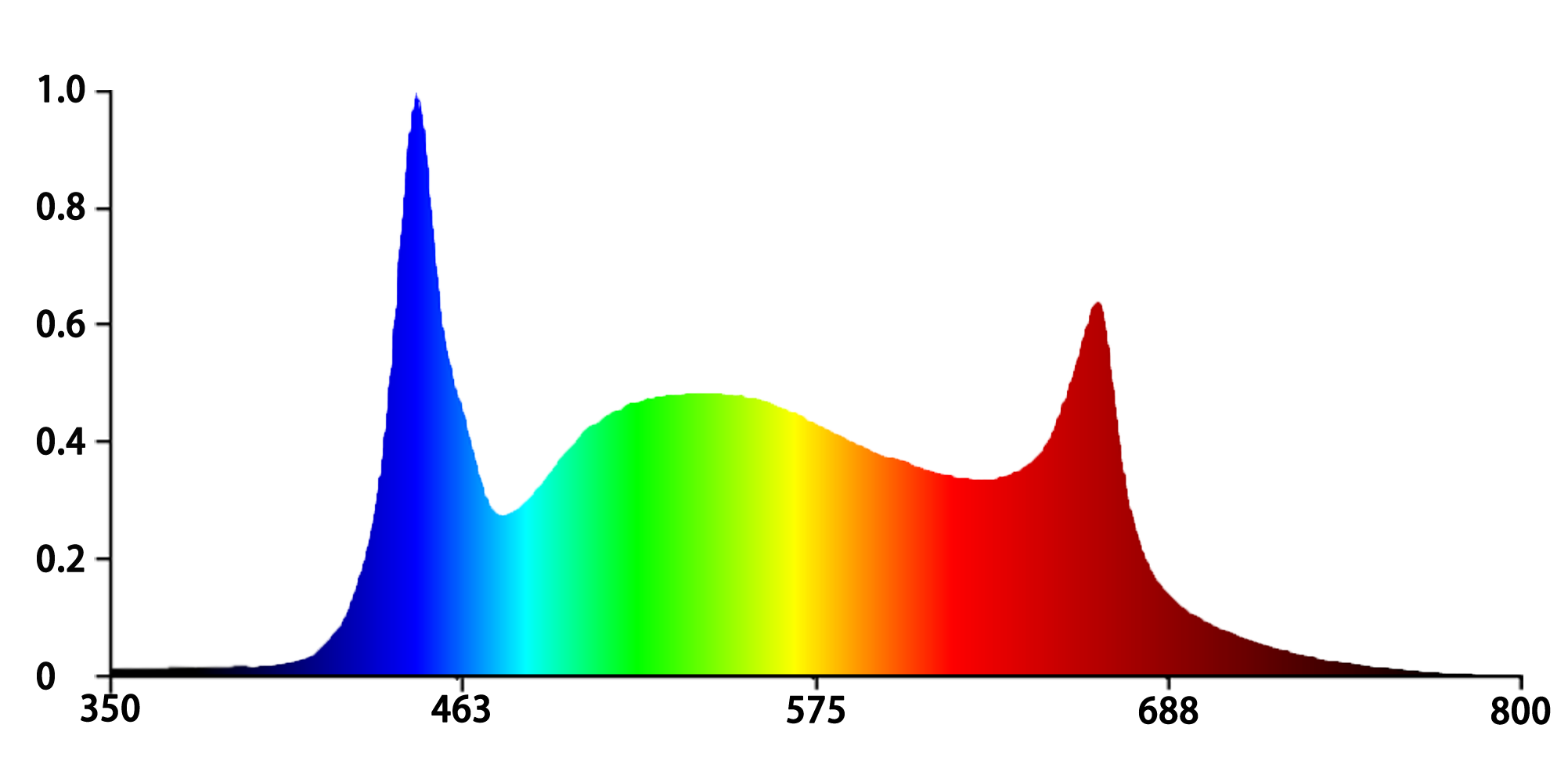
In the context of horticultural lighting, “full-spectrum” refers to a light source that emits significant energy across the entire photosynthetically active radiation range, from 400 to 700 nanometers. This encompasses violet and blue light (400-500nm), green light (500-600nm), orange and red light (600-700nm), and everything in between. Natural sunlight is the reference full-spectrum source, with relatively smooth output across all PAR wavelengths plus significant energy beyond the PAR range into ultraviolet and infrared.
A full-spectrum grow light attempts to replicate this balanced output using LED technology. Rather than combining only red and blue diodes, which creates the characteristic purple “blurple” light, full-spectrum fixtures use phosphor-converted LEDs or multi-chip designs that produce a smooth, continuous spectrum. The result is light that appears white or warm-white to the human eye while delivering the full range of wavelengths plants use for photosynthesis and development.
Koray Lighting’s S91 spectrum is an excellent example of full-spectrum done right. With a Ra95 color rendering index, the S91 reproduces light quality remarkably close to natural sunlight, providing succulents with balanced wavelengths while making your plant display look natural and visually appealing in home or retail settings.
How Different Light Wavelengths Affect Succulent Growth
Each wavelength range within the PAR spectrum triggers different physiological responses in succulent plants. Understanding these responses helps explain why full-spectrum lighting produces better overall results than narrow-spectrum alternatives.
Blue light (400-500nm) is the primary driver of compact growth and stomatal regulation. When succulents receive adequate blue light, they produce shorter internodes, thicker leaves, and more tightly packed rosettes. Blue light also triggers phototropism, directing the plant to grow toward the light source. Insufficient blue light results in the stretched, leggy growth that is the hallmark of etiolation in succulents.
Red light (600-700nm) is the most efficient wavelength for driving photosynthesis, thanks to the absorption peaks of both chlorophyll a and chlorophyll b. Beyond photosynthesis, red light plays a crucial role in triggering anthocyanin production, the pigments responsible for red, purple, pink, and orange coloration in succulents. Many succulent collectors specifically seek out red-heavy spectra to enhance their plants’ stress coloration, which is one of the most visually striking aspects of succulent cultivation.
Green light (500-600nm), often dismissed as less important because plants reflect more green than red or blue, actually plays significant roles in plant development. Green light penetrates deeper into leaf canopies than red or blue, reaching lower leaves that would otherwise be shaded. It also influences stem elongation, leaf expansion, and overall plant architecture. In succulent cultivation, green light contributes to the even, full appearance of healthy specimens.
Full-Spectrum vs Red-Blue Only: The Evidence for Succulents
Red-blue LED combinations, often called “blurple” lights, have been used in horticulture for decades based on the understanding that chlorophyll absorbs red and blue light most strongly. However, research over the past fifteen years has consistently shown that plants grown under red-blue-only light often exhibit abnormal morphology compared to those grown under full-spectrum or white light. Leaves may be thinner, stems elongated, and overall plant architecture less natural.
For succulents, these morphological differences are particularly undesirable. The compact, geometric forms that make succulents so appealing depend on balanced light signaling across multiple wavelength ranges. Blue light keeps growth compact, red light drives photosynthetic efficiency and coloration, and green light ensures even development throughout the plant canopy. Removing any of these components produces plants that may photosynthesize adequately but look noticeably different from those grown under balanced light.
Full-spectrum lights also offer practical advantages. They produce light that appears white to the human eye, making them far more pleasant in home and commercial environments. The high color rendering of Koray’s S91 spectrum (Ra95) means your succulents display their true colors accurately, which is essential for retail displays, photography, and simply enjoying your collection under natural-looking illumination.
Koray Lighting Products with Full-Spectrum Output for Succulents
Koray Lighting offers several full-spectrum products well-suited for succulent cultivation across different scales and environments.
The PAR30Z-20W with S91 spectrum is the most accessible entry point. At 20W with a standard E27 base, this compact fixture delivers full-spectrum warm-white light with Ra95 color rendering. It is ideal for small succulent collections on shelves, desks, or display cabinets. The PAR30Z form factor focuses light in a directional beam, concentrating PPFD on the area below while the S91 spectrum ensures balanced plant growth and natural color presentation.
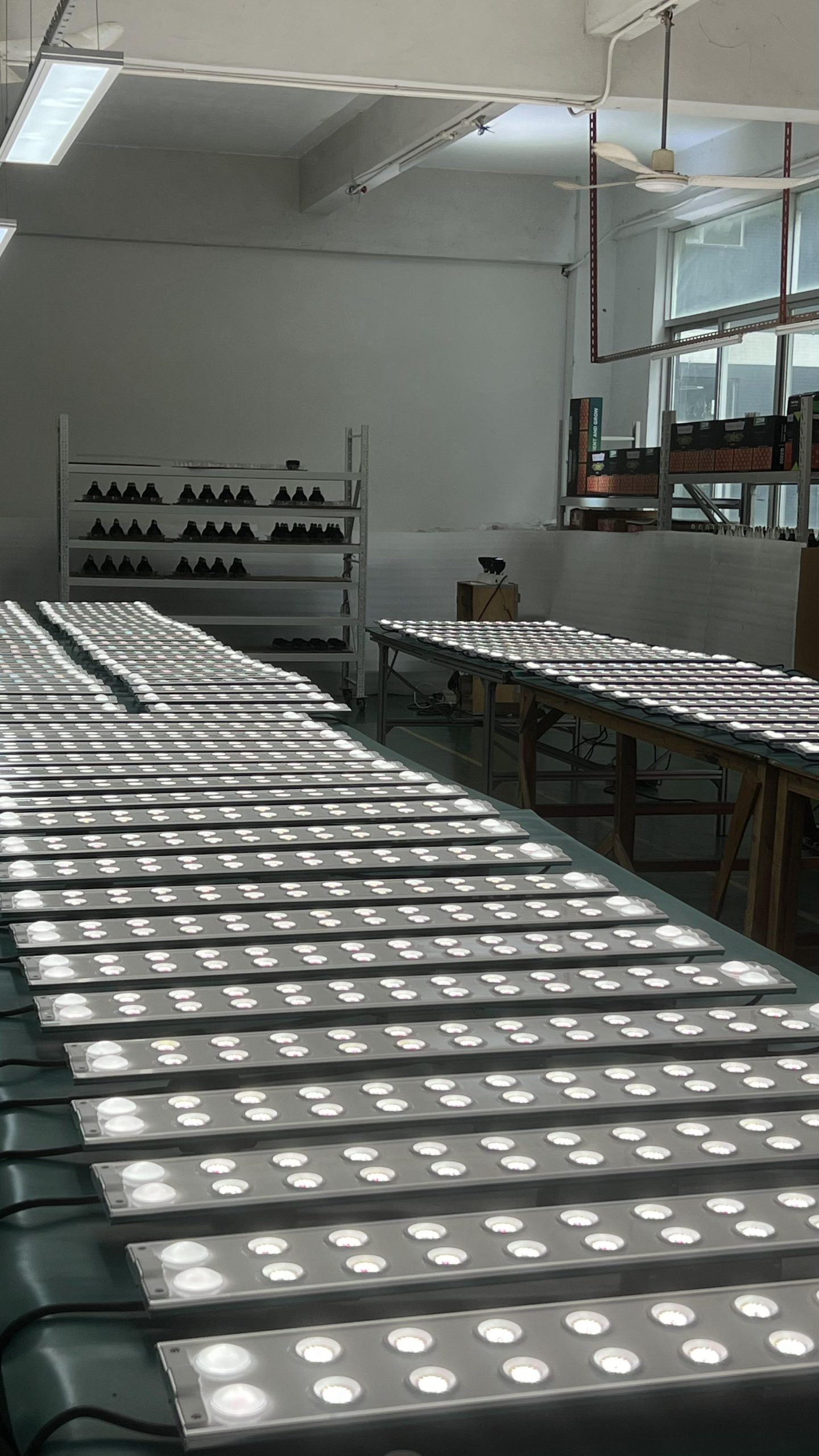
The G138 series bar lights are available with the S91 spectrum in 60cm, 90cm, and 120cm lengths, making them suitable for larger succulent displays and vertical rack systems. With PPFD up to 760 μmol/m²/s at 0.2m (depending on spectrum variant), the G138 delivers commercial-grade performance in a slim, IP65-rated form factor. The K6C spectrum variant offers enhanced red output specifically tuned for succulent color enhancement while maintaining full PAR coverage.
For growers who want the flexibility to adjust spectrum between growth stages, Koray’s products with the F175 spectrum provide a universal full-spectrum output suitable for virtually all succulent species. The T10 floor lamp with F175 spectrum delivers 230 PPFD at 0.2m with adjustable height from 0.25 to 0.98 meters, covering a 0.7 × 1.3m area. This makes it an excellent choice for medium-sized succulent collections where flexibility and full-spectrum quality are priorities.
Practical Considerations When Choosing Full-Spectrum Lights
When selecting a full-spectrum grow light for succulents, consider three key factors: spectral quality, PPFD output, and coverage area. Spectral quality determines how well the light supports balanced growth and color. Koray’s S91 and K6C spectra are specifically engineered for ornamental plants and succulents, providing the wavelength balance these species need.
PPFD output determines how much light reaches your plants at a given distance. Higher PPFD allows you to achieve target DLI with shorter photoperiods or greater mounting distances. For succulents, aim for 200 to 500 PPFD at the canopy depending on species requirements.
Coverage area determines how many plants you can illuminate effectively. Koray’s secondary optics technology ensures uniform PPFD distribution across the entire coverage area, eliminating hot spots that could damage individual plants while ensuring every succulent in your collection receives consistent light levels. This uniformity is one of the key advantages of Koray’s engineered optical systems over generic LED alternatives.
In conclusion, full-spectrum grow lights are indeed better for succulents in nearly every measurable way. They produce more natural growth, better coloration, and healthier plants over time. Combined with Koray Lighting’s precision-engineered optics and spectrum-specific designs, full-spectrum LED growing gives succulent enthusiasts the tools to achieve professional-quality results in any indoor environment.

Leave A Comment