
How Many Watts of LED Light Per Strawberry Plant? The Definitive Calculator
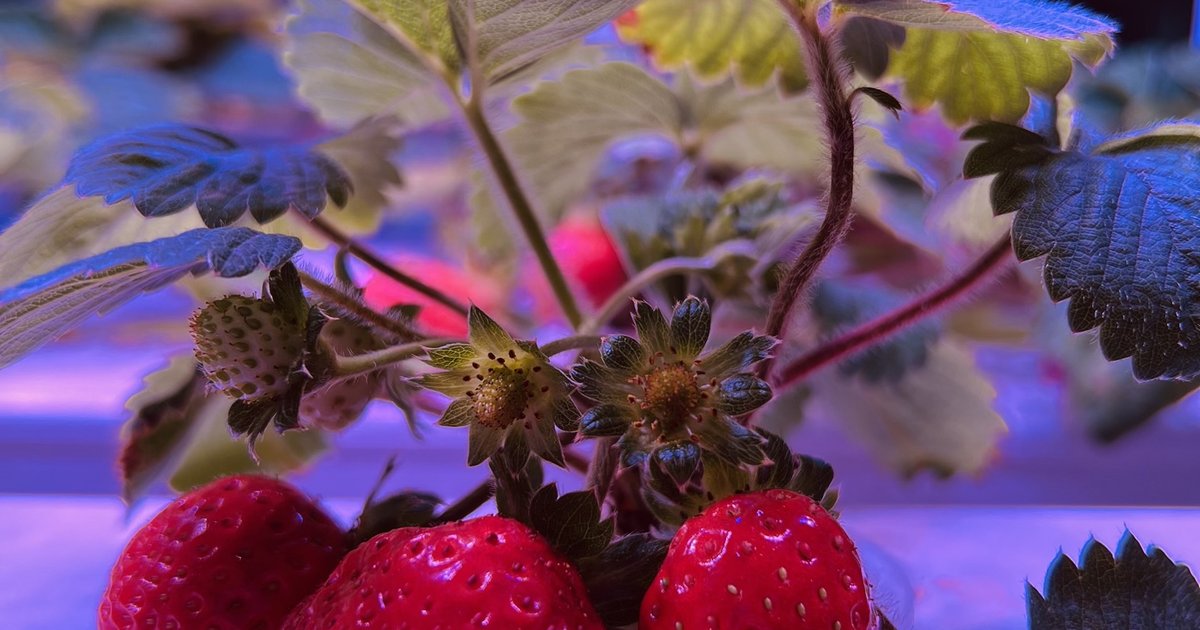
One of the most practical questions indoor strawberry growers ask is how much LED power they actually need per plant. Too little wattage means weak growth and no fruit; too much wastes electricity and can stress the plants. The answer depends on several factors — LED efficacy, growing area, photoperiod, and target DLI — but with a few straightforward calculations, you can dial in the perfect wattage for your setup. This guide breaks down the math, the science, and the real-world product recommendations.
Understanding the Wattage-to-PPFD Relationship
The connection between LED wattage and plant performance is not direct — it is mediated by efficacy, measured in micromoles per joule (μmol/J). A 60W LED bar with an efficacy of 3.0 μmol/J produces 180 μmol/s of photosynthetic photons (PPF). The same 60W bar at 2.5 μmol/J produces only 150 μmol/s. So when comparing products, wattage alone tells you very little; what matters is how efficiently the LED converts electrical energy into usable light for your plants.
For strawberries, the target is an average PPFD of 250-400 μmol/m²/s across the growing area, maintained for 12-16 hours per day. This delivers a DLI of 12-16 mol/m²/d, which research has shown is optimal for fruiting in most everbearing and day-neutral varieties.
Calculating Watts Per Plant
Let us work through a practical example. Suppose you have a standard vertical farm shelf that is 1.2 meters long and 0.3 meters wide, giving a growing area of 0.36 square meters. You want to achieve an average PPFD of 300 μmol/m²/s. The total PPF required is: 300 μmol/m²/s × 0.36 m² = 108 μmol/s.
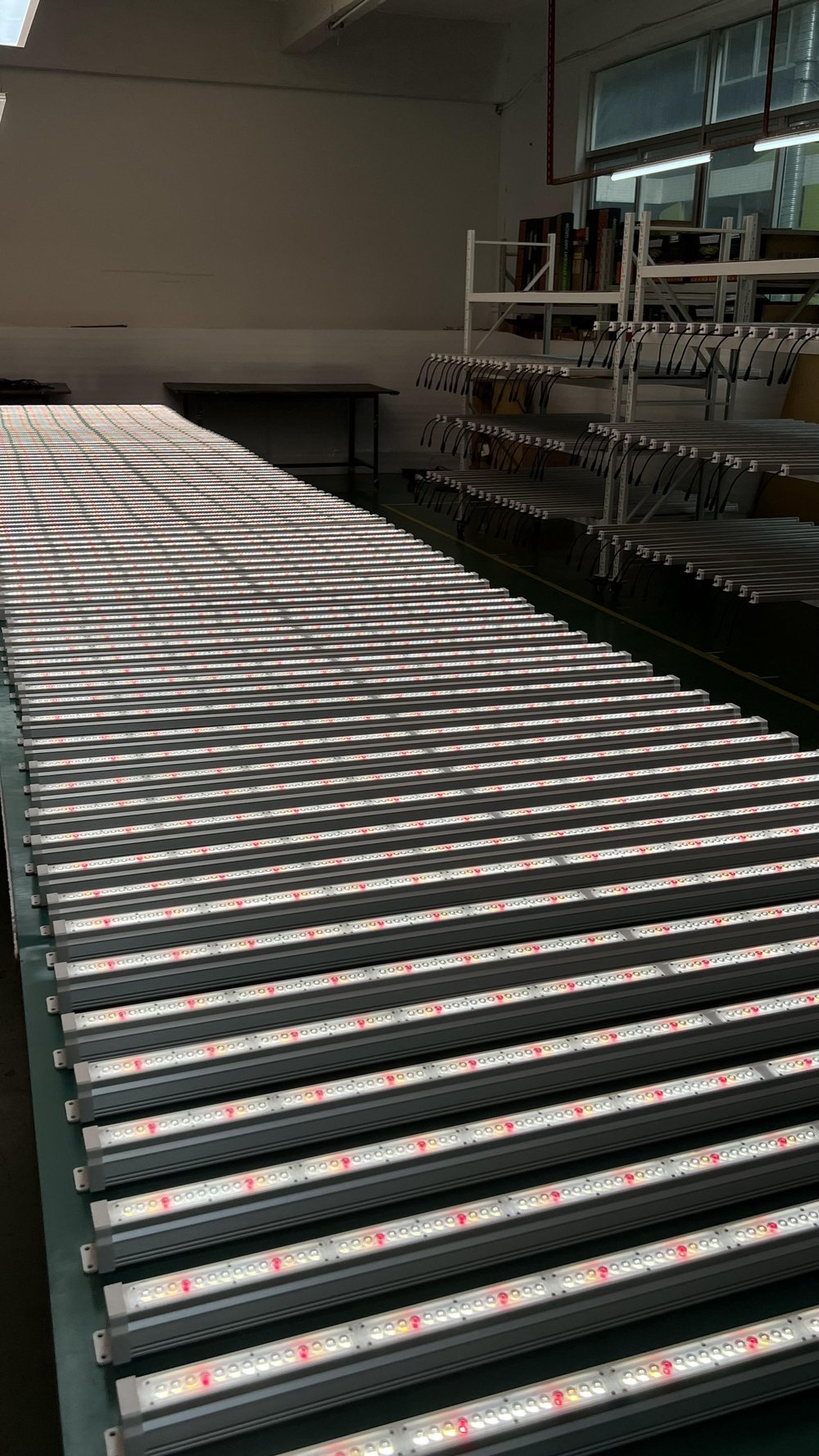
If you use the Koray GE35-120T-F175, which delivers 150 μmol/s at 60W (efficacy 2.5 μmol/J), a single bar provides more than enough PPF for the entire shelf. Since a 1.2-meter shelf typically holds 4-5 strawberry plants spaced 25-30cm apart, the effective wattage per plant is approximately 12-15W. However, because light distribution is not perfectly uniform, it is wise to use two bars at reduced power or a single bar at full power with reflective side walls to ensure even coverage.
Wattage Guidelines for Different Scales
For home growers using a single shelf or small setup, plan for 20-30W of high-efficacy LED per strawberry plant. This accounts for some light loss to reflection and distance. A 40W LED bar positioned 0.2-0.3 meters above the canopy will comfortably fruit 2-3 plants.
For commercial vertical farms, the calculation shifts slightly because economies of scale allow tighter spacing and shared light between adjacent shelves. In a typical 4-tier vertical system growing strawberries, each tier might use two GE35-120T-F175 bars at 60W each, serving 8-10 plants per tier. The effective wattage per plant drops to about 12-15W, but the PPFD remains in the optimal 280-350 μmol/m²/s range thanks to the high efficacy and uniform light distribution of the Koray secondary optics.
Why Efficacy Matters More Than Raw Wattage
Consider two LED bars that both consume 60W: one delivers 2.0 μmol/J (120 μmol/s PPF) and the other delivers 3.0 μmol/J (180 μmol/s PPF). The second bar produces 50% more photosynthetic light for the same electricity cost. Over a year of 14-hour daily operation, the difference adds up to hundreds of kilowatt-hours in saved electricity — and visibly healthier, more productive strawberry plants.
Koray Lighting’s GE35 series achieves efficacy ratings of 2.5-3.5 μmol/J depending on the spectrum and lens configuration. The V6 version of the GE35-120 pushes efficacy to 3.5 μmol/J at 52W, delivering 180 μmol/s of PPF — enough to fruit 4-5 strawberry plants on a single shelf while consuming less power than a standard incandescent bulb would use in heat.
Adjusting Wattage for Growth Stages
Strawberry seedlings and young runners need less light than mature fruiting plants. During the establishment phase (first 3-4 weeks), target a PPFD of 150-200 μmol/m²/s, which requires roughly 10-15W per plant. Once the plants begin flowering and setting fruit, increase to 300-400 μmol/m²/s by raising the LED power or reducing the hanging distance. Many commercial growers use dimmable LEDs like the GE35 series with 0-10V dimming to adjust output precisely for each growth stage, saving energy during early development and maximizing output during peak fruiting.
Key Takeaways
The sweet spot for strawberry LED wattage is 20-40W per plant using high-efficacy (2.5+ μmol/J) full-spectrum LEDs. For vertical farming systems, this translates to approximately 100-150W per square meter of shelf area. The Koray GE35 series, with its combination of high efficacy, IP64 waterproofing, and multiple spectrum options, offers an efficient and reliable lighting solution for strawberry growers at every scale.

Leave A Comment