
Why Root-Zone Temperature Is Not Air Temperature
A climate controller holds one sensor in the air. The root system lives in a different thermal body: a wetted substrate or a nutrient solution, 10 to 40 cm below that sensor, in contact with a container wall, a trough, a slab or a floor. The two exchange heat slowly, for physical rather than horticultural reasons. Air has low density and low volumetric heat capacity; a saturated substrate is roughly three thousand times denser in thermal terms and moves heat mainly by conduction. The result is a lag every grower recognises but few quantify: after lights-on the air can climb 5–6 °C (9–11 °F) in twenty minutes while the root core takes two to four hours to follow, and the same asymmetry repeats at lights-off.
Root-zone temperature (RZT) therefore behaves as a second control loop. It has its own set point, its own sensor depth, its own time constant measured in hours, and its own disturbances: radiation absorbed at the substrate surface, conduction from a warm floor or an unshaded trough wall, the temperature of the irrigation water, evaporative loss from a wet surface, and a small metabolic contribution from root respiration. Air temperature enters that list only indirectly, as the boundary condition for convection at the surface.
This is why a room can hold a correct air set point all day and still produce cold-root symptoms: slow expansion, purple stems on phosphorus-sensitive crops, poor calcium movement into new tissue, and a substrate that stays wet far longer than the irrigation schedule assumes. Water viscosity rises and root hydraulic conductance falls as temperature drops, so a cold root zone takes up water and nutrients more slowly at exactly the moment the shoot is asking for more.
The horticultural literature treats the root zone as a distinct variable rather than a by-product of air temperature. Work on solution-cultured lettuce published by ISHS documented measurable effects of root-zone temperature on growth and water uptake at otherwise comparable aerial conditions (https://ishs.org/ishs-article/449_27/ and USDA Agricultural Research Service publications on soil temperature and root growth describe the same separation between soil thermal status and shoot environment (https://www.ars.usda.gov/research/publications/publication/?seqNo115=84166 Neither source supports a single universal optimum; both support treating RZT as an input you set and measure.
What LEDs Change Below the Canopy
Replacing high-pressure sodium with LED changes the below-canopy heat balance before it changes photosynthesis. An HPS lamp emits a broad spectrum with a substantial near-infrared component, and the housing itself runs hot enough to load the room’s convective loop. A meaningful share of that energy reaches the crop surface as radiation that is not used in photosynthesis but is absorbed as heat. LED fixtures deliver a narrower beam with far less infrared, and their waste heat leaves largely through the driver and heatsink, often outside the canopy.
At an identical air temperature, irrigation schedule and substrate, container substrate under LED commonly runs 2–4 °C (3.6–7.2 °F) cooler than under HPS. That is a range, not a constant, and four conditions move it: air velocity (0.5–1.0 m/s pushes substrate toward air temperature, still air lets evaporative cooling dominate); substrate water content (wet substrate conducts heat down from the surface, dry substrate insulates the core); container material (dark plastic in direct beam conducts heat to the root ball, white or reflective sleeves do not); and surface exposure (an open pot loses heat across its whole surface, a sleeved slab mainly at the planting holes).
There is a second, less obvious LED effect. Because the fixtures are thin, they are often mounted lower and in denser arrays than the HPS they replace, which raises the radiation load on the substrate surface while leaving the infrared load low. The surface can therefore be warm to the touch while the core at 5 cm is cold, and an infrared check will suggest the opposite of what is happening.
Target Root-Zone Ranges by Crop Group
No single number covers all crops. The useful statement is a band with a condition attached: it applies to actively cropped, well-oxygenated substrate during the light period. During propagation, a cold treatment or a summer heat event, the band shifts.
| Crop group | Target RZT during light period | Risk below the band | Risk above the band | Suggested irrigation water temperature |
|---|---|---|---|---|
| Lettuce and leafy greens (solution or slab) | 18–22 °C (64–72 °F) | Slow expansion, tipburn linked to calcium movement, weak root activity | Bolting pressure, soft growth, dissolved oxygen below 6 mg/L | Within 3 °C (5.4 °F) of the solution set point |
| Tomato, pepper, cucumber (rockwool or coir) | 19–23 °C (66–73 °F) | Poor phosphorus and potassium uptake, purple stems, weak root hair formation | Pythium and Fusarium pressure, fruit-set problems under combined heat stress | 18–22 °C (64–72 °F) |
| Culinary herbs (basil, mint, coriander) | 20–24 °C (68–75 °F) | Slow rooting after transplant, yellowing of lower leaves | Rapid stretch, weak stems, high transpiration demand | 19–23 °C (66–73 °F) |
| Seedlings in plugs | 20–24 °C (68–75 °F) | Uneven emergence, stalled plugs, purple cotyledons | Damping-off pressure, leggy hypocotyls with low light | 20–24 °C (68–75 °F) |
| Strawberry and small fruit (coir or bag) | 16–20 °C (61–68 °F) | Slow crown development, poor calcium to new leaves | Root rot pressure, reduced dissolved oxygen, soft fruit | 16–20 °C (61–68 °F) |
| Microgreens and baby leaf in shallow trays | 18–22 °C (64–72 °F) | Slow, uneven stands, pale cotyledons | Damping-off, rapid tray drying at the surface | 18–22 °C (64–72 °F) |
Two boundaries sit outside every row. Below roughly 15 °C (59 °F), root extension and the uptake of phosphorus and potassium slow sharply, and nitrogen uptake becomes inefficient relative to the nitrogen supplied. Above roughly 28 °C (82 °F) in substrate, or 26 °C (79 °F) in recirculating solution, root pathogens gain a decisive advantage and oxygen solubility has already fallen below the comfortable range. Both boundaries concern the root environment, not the air, and a room can cross either one while its air sensor reads a perfect number.
The Oxygen Coupling: Warm Roots, Less Dissolved Oxygen
Oxygen links root temperature to light intensity, and it is the variable most often left out of the discussion. Root respiration is oxidative; demand rises with temperature at roughly the Q10 of about 2 that governs most plant metabolism. Supply moves the other way, because gas solubility falls as water warms.
| Water temperature | Saturated dissolved oxygen, freshwater at 1 atm | Relative root oxygen demand |
|---|---|---|
| 20 °C (68 °F) | ≈9.1 mg/L | Baseline |
| 25 °C (77 °F) | ≈8.3 mg/L | ≈1.4× baseline |
| 30 °C (86 °F) | ≈7.6 mg/L | ≈2× baseline |
Those are saturation values for clean freshwater at one atmosphere; a solution with high electrical conductivity carries slightly less, and one with active biofilm carries much less because the biofilm consumes oxygen before the root does. The direction of the columns is what matters: every 5 °C (9 °F) of warming costs roughly 0.8–0.9 mg/L of saturation capacity while raising demand by around forty percent.
This is the mechanism behind the midday collapse growers often attribute to light. A plant under high PPFD transpires hard, its root temperature climbs because the solution has been sitting in a warm room, and its oxygen demand peaks at the hour supply is lowest. The shoot wilts although moisture is adequate and the air is not excessively hot. Reducing PPFD helps, but treats the symptom; the cause is a warm, under-aerated root zone. The same logic explains why root rot appears first at the warmest point of a gutter — the return end, where solution has travelled farthest and warmed most.
How High PPFD Moves Root Temperature in Both Directions
The intuitive claim that more light makes roots warmer is wrong as a general statement, because two mechanisms push in opposite directions and their balance depends on the room.
The cooling mechanism is evaporative. Higher PPFD raises transpiration, and evaporation from substrate and canopy removes latent heat. In a well-ventilated room with exposed substrate, raising PPFD from 400 to 800 µmol/m²/s can lower near-surface substrate temperature by 1–2 °C (1.8–3.6 °F) at constant air temperature, because the vapour leaving the tray carries the heat with it.
The warming mechanism is operational. Higher PPFD forces more frequent irrigation, and each event delivers water at whatever temperature the tank holds. If the tank sits in a warm room, more frequent shots mean more warm water and a substrate that tracks room temperature more closely. Higher PPFD also usually means more fixtures and more electrical load in the same volume, raising the room’s sensible heat and therefore the boundary condition.
Between the two sits air movement. In a still room the substrate decouples from the air and drifts cold under LED; with 0.5–1.0 m/s at canopy level it follows air temperature within 1–2 °C (1.8–3.6 °F). Identical fixtures therefore produce opposite complaints in two facilities that both report a correct air temperature.
The conclusion is that PPFD is not a thermal set point. A light plan sets the daily light integral; root-zone temperature is set by water temperature, air velocity, surface exposure and floor contact. Light targets sit at DLI 12–20 mol/m²/d and PPFD 400–800 µmol/m²/s for fruiting crops, with lower values in propagation — but those numbers describe the shoot, and none predicts the root core.
How to Measure Root-Zone Temperature Correctly
Most bad RZT decisions come from a bad measurement, and the errors are systematic rather than random.
Depth. The reading that matters is the container centre at 5 cm (2 in) below the surface, or the geometric centre of a rockwool block. Surface temperature under direct beam runs 3–6 °C (5.4–10.8 °F) above the core, so an infrared gun aimed at the surface overstates root temperature by an amount that varies with moisture and airflow. An infrared thermometer measures radiation from the top millimetre, not the root environment.
Points. Use three probes per channel: inlet end, mid-run and return end. In a slab or gutter the gradient along the run is often larger than the day-to-night difference, and the return end is where oxygen is lowest and temperature highest.
Time. Log a 24-hour curve rather than a spot check. A single afternoon reading hides the lights-off drop, which in a poorly insulated room can reach 4–6 °C (7.2–10.8 °F) and is where cold-root damage actually occurs. A ten-minute-interval logger with a stainless needle probe costs less than a week of lost growth.
Instrument. A calibrated thermocouple or thermistor inserted to depth and left five minutes to equilibrate is adequate. Bimetal dial thermometers drift and respond too slowly for a substrate with a two-hour time constant.
Context. Record canopy-height air temperature, irrigation water temperature at the emitter and air velocity at canopy level alongside the root reading. Without those three a root-zone number cannot be interpreted.
Night Root Temperature and the Carbon Cost of Warm Roots
At night, root temperature becomes an economic variable rather than a comfort variable. Root maintenance respiration continues through the dark period and scales with temperature at a Q10 of about 2, so a root zone held 5 °C (9 °F) warmer roughly doubles the carbon the root system burns while the plant fixes none.
The arithmetic is uncomfortable in warm climates. A root zone at 25 °C (77 °F) over a ten-hour night consumes roughly twice the maintenance carbon of one at 20 °C (68 °F), and that carbon leaves the day’s assimilate before any of it reaches fruit, leaf or stem. A crop can look well lit and still yield below its light budget because the night is spending what the day earned.
Two consequences follow. Night air temperature and night root temperature are separate set points: cooling air to 18 °C (64 °F) while the slab sits at 24 °C (75 °F) achieves little, because the substrate’s thermal mass holds the heat through the dark period. And pre-night irrigation with cool water pulls root temperature down more effectively than air cooling, provided the water is not cold enough to shock the roots. The counter-case matters as much: in a cold climate on a cold floor, night root temperature can fall below 15 °C (59 °F) and stay there, suppressing uptake for the first two hours of the next light period and producing the pale, slow-starting morning that growers read as a light problem.
Fixing a Cold or a Hot Root Zone
Cold root zone. Order interventions by energy cost. First, cut surface evaporation and floor contact: set containers on insulated matting rather than bare concrete, and use white sleeves on troughs that catch direct beam. Second, bring irrigation water within 3 °C (5.4 °F) of the target with an inline heater or heated tank — cheaper than heating the room. Third, add root-zone heating mats or pipes at 20–24 °C (68–75 °F) surface temperature, controlled by a substrate probe rather than an air probe. Fourth, as a last resort, raise night air temperature, the least efficient option because it heats a whole volume to change one small mass.
Hot root zone. Cooling is harder because heat is generated inside the system. Shade and insulate the tank and any exposed pipe run first: a black tank in a sunlit corridor can add 3–5 °C (5.4–9 °F) before the water reaches the plants. Then increase canopy-level air velocity so the substrate tracks air rather than accumulating heat, use a chiller on the recirculating volume set to hold 18–20 °C (64–68 °F) with an insulated return line, and shorten the irrigation interval so solution does not sit in warm gutters between events.
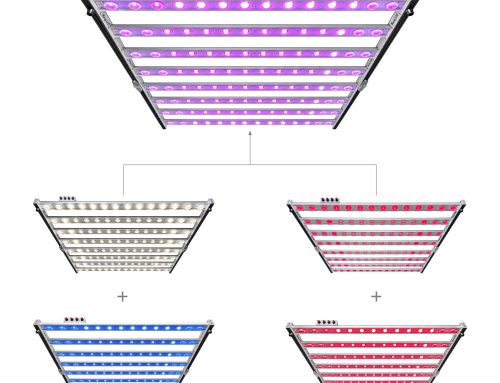
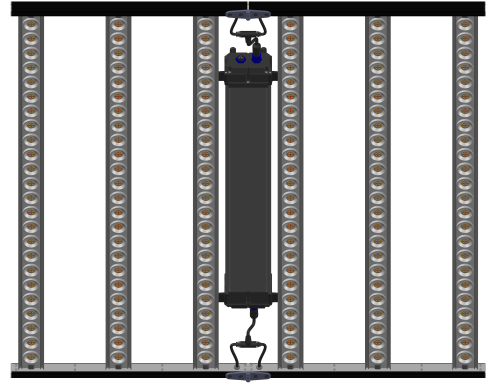
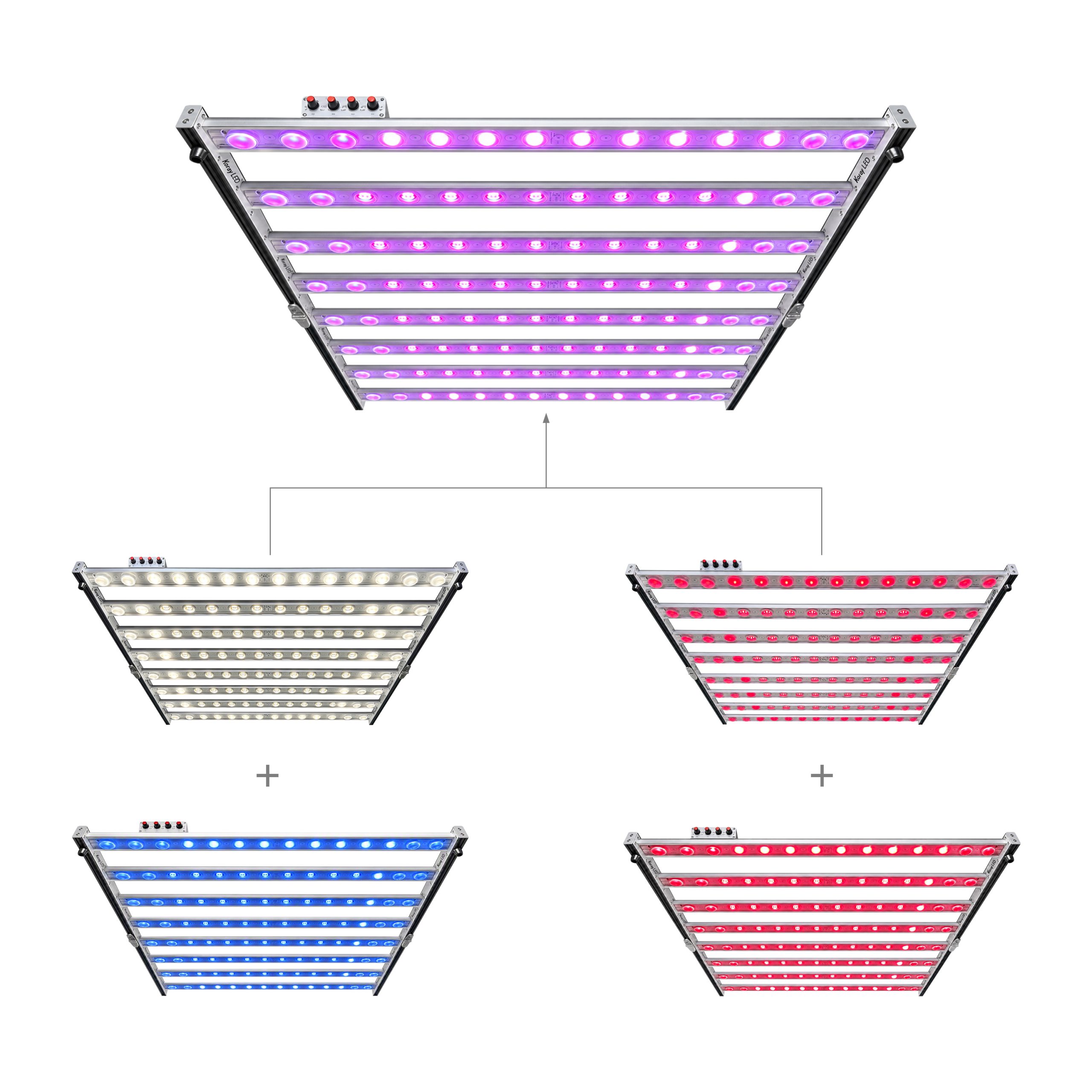
For rooms specified from scratch, the thermal question is easier to answer before fixtures are chosen than after. Koray Lighting has supplied commercial LED fixtures for 17 years, and the data that matters for root-zone planning — delivered PPFD at a stated hanging height, wattage, and thermal design — is published per model at https://koraylights.com/ rather than condensed into one headline number. A fixture with a defined beam angle and known mounting height lets a designer compute surface irradiance, and surface irradiance is the radiation term in the substrate heat balance; without it, root-zone behaviour in a new room is guesswork.
Common Mistakes
- Using air temperature as a proxy for root temperature. They differ by −4 to +3 °C (−7 to +5 °F) depending on fixture type, airflow and container, and the sign flips when HPS is replaced by LED.
- Reading the surface. An infrared gun on wet substrate reads the evaporation-cooled top millimetre in one tray and the warm dry shoulder in the next. Both are wrong for the root core.
- Assuming higher PPFD means warmer roots. Transpiration cooling and irrigation frequency pull in opposite directions; airflow decides which wins.
- Changing the nutrient recipe before checking the root environment. Cold roots take up phosphorus and potassium slowly; the deficiency is real, but the cause is thermal.
FAQ
What root-zone temperature should I target under LED grow lights?
For fruiting crops in substrate, 19–23 °C (66–73 °F) at 5 cm depth during the light period; for lettuce in solution or slab, 18–22 °C (64–72 °F); for herbs, 20–24 °C (68–75 °F). Keep irrigation water within 3 °C (5.4 °F) of that target and hold night root temperature no more than 2 °C (3.6 °F) above the day value, since warmer roots at night raise maintenance respiration.
Why is my substrate cooler after switching from HPS to LED?
Because LED delivers far less infrared radiation to the substrate surface, so less heat lands on the container at the same air temperature — typically 2–4 °C (3.6–7.2 °F) cooler with good air movement and wet substrate. The fix is warmer irrigation water, insulation from the floor and 0.5–1.0 m/s of air movement, not more light.
How deep should I measure root-zone temperature?
At the container centre, 5 cm (2 in) below the surface, or at the centre of a rockwool block. Use three probes per channel — inlet, middle and return — and log a full 24-hour curve. Surface readings run 3–6 °C (5.4–10.8 °F) above the core under direct beam, which is enough error to justify a redesign that is not needed.
Does higher PPFD make the root zone warmer?
Not reliably. Higher PPFD raises transpiration and surface evaporation, which cools the substrate, while also forcing more frequent irrigation, which can deliver warm water more often. In a ventilated room with exposed substrate the net effect is often cooling; in a still, warm room with a warm tank it is warming. Measure rather than assume.
How do I cool a nutrient solution without chilling the roots?
Shade and insulate the tank and pipe run first, since a sunlit black tank can add 3–5 °C (5.4–9 °F) before the water reaches the crop. Then use a chiller set to hold 18–20 °C (64–68 °F) on the recirculating volume, insulate the return line, and increase canopy-level air velocity. Avoid dropping supply water below 15 °C (59 °F); cold shock suppresses water uptake for hours.



Leave A Comment