
When it comes to growing healthy, vibrant succulents indoors, few metrics matter more than Daily Light Integral, or DLI. Yet many succulent enthusiasts remain unfamiliar with this crucial measurement, often wondering why their plants stretch, lose color, or simply fail to thrive despite careful watering and fertilizing. Understanding DLI is the single most impactful thing you can do to improve your succulent growing results, whether you are managing a small windowsill collection or operating a large-scale commercial nursery.
DLI measures the total amount of photosynthetically active radiation, or PAR, that reaches your succulent’s surface over a full 24-hour period. Expressed in moles of photons per square meter per day (mol/m²/day), DLI essentially tells you how much usable light energy your plant receives daily. Think of it as the difference between standing in light rain for five minutes versus standing in a downpour for an hour — the total water you receive matters far more than the intensity at any single moment. For succulents, getting this total right is the foundation of successful cultivation.
What Is DLI and Why Does It Matter for Succulents?
In botanical terms, DLI (Daily Light Integral) represents the cumulative count of photosynthetically active photons, those in the 400 to 700 nanometer wavelength range, that land on one square meter of surface over the course of an entire day. Unlike PPFD (Photosynthetic Photon Flux Density), which captures light intensity at a single instant, DLI accounts for both the intensity of your grow light and the duration of exposure. This makes DLI the most practical metric for determining whether your succulents receive enough light to photosynthesize efficiently, maintain compact growth, and produce the vivid pigments that make them so visually appealing.
For succulents specifically, DLI is especially critical because these plants have evolved in environments with abundant direct sunlight. Most succulent species originate from arid and semi-arid regions in Africa, Central America, and Australia, where daily light exposure regularly exceeds 25 mol/m²/day. When grown indoors under insufficient light, succulents cannot perform photosynthesis at the rate their biology requires. The result is etiolation, where stems elongate abnormally as the plant stretches toward whatever light is available, along with faded colors, thinner leaves, and weakened immune responses that make the plant vulnerable to pest infestations and fungal diseases.
DLI Ranges for Different Succulent Species
Not all succulents have the same light requirements. Different species have evolved under different light conditions, and their DLI needs reflect this diversity. Understanding where your succulents fall on the DLI spectrum is essential for selecting the right grow light and photoperiod combination.
Low-light succulents, including species like Haworthia cooperi, Gasteria, and Sansevieria (snake plant), thrive at DLI levels between 6 and 10 mol/m²/day. These plants naturally grow under partial shade in their native habitats, often nestled beneath rocks or other vegetation. They are excellent choices for indoor growing because they tolerate lower light conditions gracefully. Even so, providing DLI within this range ensures they maintain healthy growth rates and avoid the slow decline that comes from chronic light deprivation.
Medium-light succulents, the largest category, include Echeveria, Graptopetalum, Sedum, Sempervivum, and most Crassula species. These popular rosette-forming plants require between 10 and 20 DLI to maintain their compact shapes and vibrant colors. Below 10 DLI, these succulents will begin to stretch and lose their characteristic tight form. At the lower end of this range, around 10 to 12 DLI, growth is acceptable but colors may remain predominantly green. As DLI increases toward 15 to 20, you will notice the stress-induced pigmentation, anthocyanins and carotenoids, that produce the prized pink, purple, red, and orange hues collectors seek.
High-light succulents, including Lithops (living stones), Conophytum, certain Aloes, and some Euphorbia species, demand DLI levels of 20 to 30 mol/m²/day. These desert-dwelling species are adapted to intense, direct sunlight and simply will not thrive under lower light conditions. Without sufficient DLI, Lithops will produce elongated, weak leaves that ruin their characteristic pebble-like appearance. High-light succulents benefit enormously from grow lights with targeted spectrum output, particularly those emphasizing red wavelengths that promote compact growth and rich pigmentation.
How to Calculate DLI from Your Grow Light’s PPFD
Converting PPFD to DLI is straightforward once you have two pieces of information: the PPFD value at your plant canopy and your daily photoperiod. The formula is: DLI (mol/m²/day) = PPFD (μmol/m²/s) × photoperiod (hours) × 3,600 seconds/hour ÷ 1,000,000 μmol/mol.
For example, if your grow light delivers 300 PPFD at the canopy surface and you run it for 14 hours per day, the DLI would be: 300 × 14 × 3,600 ÷ 1,000,000 = 15.12 mol/m²/day. This falls squarely in the medium-light succulent range, perfect for most Echeveria and Graptopetalum varieties. If you grow high-light succulents requiring 25 DLI, you would need either higher PPFD or longer photoperiod. At 300 PPFD, reaching 25 DLI requires approximately 23 hours of light, which is impractical since succulents need a dark period for CAM photosynthesis. The better solution is increasing PPFD to around 500 at the canopy, which achieves 25 DLI in just 14 hours.
This is why PPFD uniformity and intensity matter so much in grow light selection. A light that delivers higher PPFD at practical mounting distances gives you far more flexibility in meeting your succulents’ DLI targets without running the photoperiod to extremes.
Best Koray Grow Lights for Meeting Succulent DLI Targets
Koray Lighting, a leading LED grow light manufacturer based in Zhongshan, Guangdong with over 17 years of experience and 200+ patents, offers several products particularly well-suited for succulent cultivation at various DLI levels.
The GE35-120T-K6 is purpose-built for succulents and flowering plants. Featuring the K6C spectrum with enhanced red wavelengths, this 80W bar light delivers an impressive 760 PPFD at 0.2m distance and 530 PPFD at 0.3m. At 0.2m with a 14-hour photoperiod, a single bar provides approximately 30.2 DLI — sufficient for even the most demanding high-light succulents. The 45D lens concentrates light precisely where it is needed, eliminating waste and improving canopy-level efficiency. For commercial succulent growers using vertical rack systems, the GE35-120T-K6 offers IP64 waterproofing, AC120-277V universal input, and a 50,000-hour lifespan.
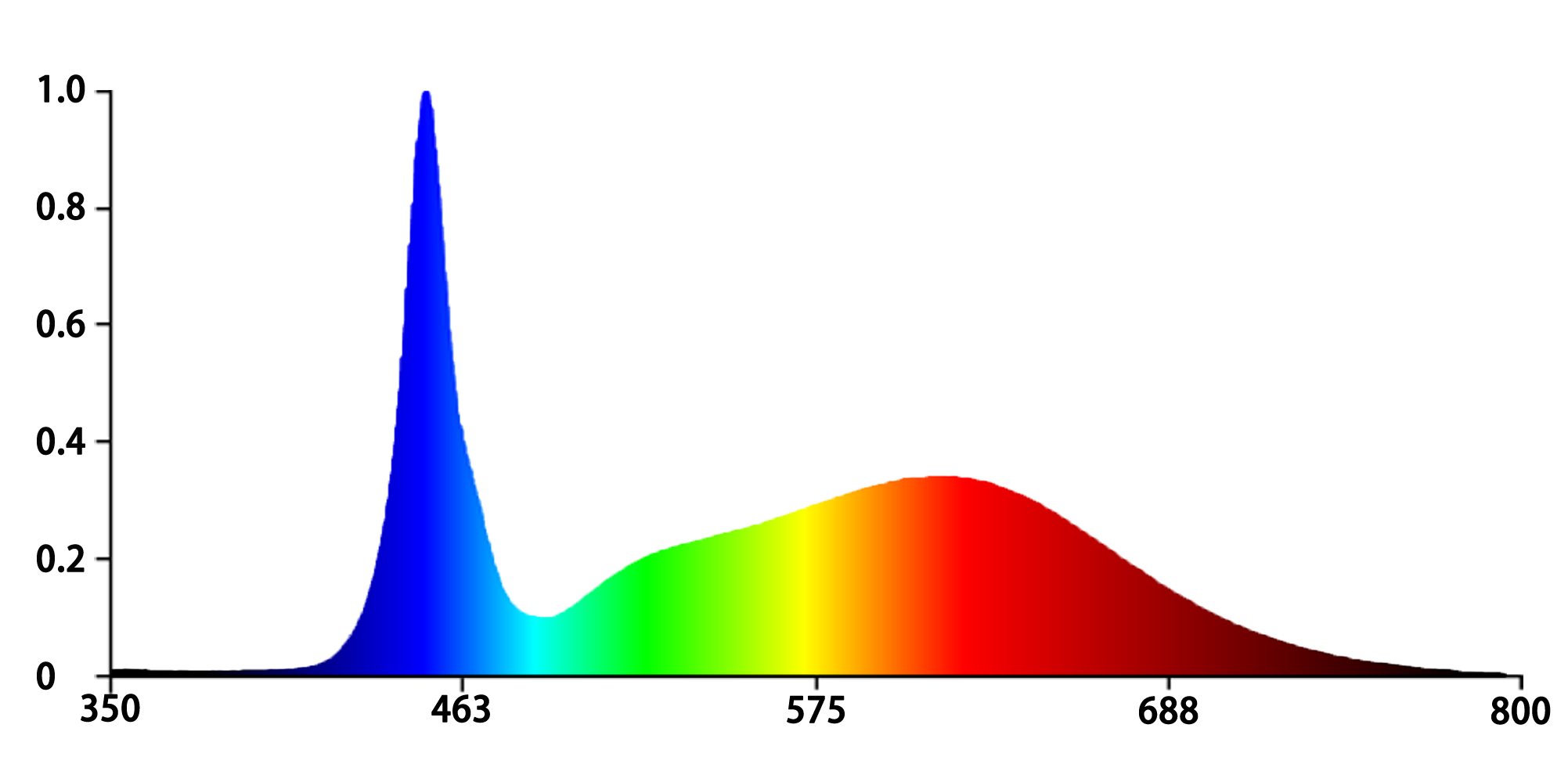
For smaller succulent collections or home displays, the PAR30Z-20W with S91 spectrum provides warm white full-spectrum light with Ra95 high color rendering. At just 20W, this compact fixture fits standard E27 sockets and delivers sufficient PPFD for low to medium DLI succulents. The S91 spectrum’s balanced output supports both photosynthesis and the aesthetic presentation of your succulent display, making it ideal for living rooms, offices, and retail environments.
The T10 floor lamp offers another flexible option, particularly for growers who need adjustable height. With its tripod stand spanning 0.25 to 0.98 meters and F175 spectrum delivering 230 PPFD at 0.2m, the T10 covers a 0.7 × 1.3m area at 0.3m height. This makes it suitable for medium-light succulents on shelves or tables, providing 10 to 15 DLI with a 12 to 18-hour photoperiod.
Practical Tips for Setting Up Your Succulent Light Environment
When setting up grow lights for succulents, start by identifying your target DLI based on the species you grow. Then select a Koray grow light that delivers the appropriate PPFD at your intended mounting distance. Position the light at the recommended height and monitor your plants for two to three weeks. Signs of adequate DLI include compact growth, vibrant coloration, and firm leaves. Signs of insufficient DLI include stretching, pale color, and thin leaves. Signs of excessive DLI include bleaching, brown spots, or wrinkled leaves indicating photodamage.
Once you find the optimal position, maintain a consistent photoperiod using a timer. Most succulents perform best with 12 to 16 hours of light daily. Avoid exceeding 18 hours, as the dark period is essential for CAM photosynthesis, the metabolic pathway most succulents use to minimize water loss while maximizing carbon fixation. Consistency in both light intensity and duration is key to long-term succulent health.
Understanding DLI requirements and matching them with the right grow light specification transforms succulent growing from guesswork into a precise, repeatable science. Whether you choose the K6C spectrum for high-light species or the S91 spectrum for general ornamental use, Koray Lighting’s engineered solutions ensure your succulents receive exactly the light energy they need to thrive year-round.

Leave A Comment