
How to Prevent Etiolation in Succulents Indoors: A Complete Guide to Proper Lighting
One of the most frustrating experiences for indoor succulent growers is watching once-compact, beautifully colored plants gradually stretch, pale, and lose their characteristic form. This condition, known as etiolation, is the single most common problem faced by growers who attempt to cultivate succulents indoors without adequate lighting. The good news is that etiolation is entirely preventable once you understand its causes and invest in proper grow light equipment.
This guide covers everything you need to know about preventing etiolation in indoor succulents — from understanding the science behind why it happens, to selecting the right grow lights, positioning them correctly, and recovering plants that have already stretched.
What Is Etiolation and Why Does It Happen to Succulents?
Etiolation is the process by which plants stretch and elongate when they do not receive sufficient light. In succulents, it manifests as a rapidly elongating stem, increased spacing between leaves (longer internodes), pale or yellowish new growth, and a general loss of the compact rosette shape that makes these plants so attractive.
The biological mechanism behind etiolation involves the plant hormone auxin. In low-light conditions, auxin accumulates on the shaded side of the stem, promoting cell elongation on that side and causing the stem to bend toward whatever light is available. At the same time, the plant allocates energy to rapid vertical growth in an evolutionary attempt to reach better light conditions above the canopy.
For succulents, which have evolved in high-light environments — open deserts, rocky hillsides, and high-altitude regions — indoor light levels are almost always insufficient without supplemental lighting. A south-facing window might deliver 100-200 μmol/m²/s of PPFD on a clear day, dropping to 20-50 μmol/m²/s on overcast days or during winter months. Most succulents need 300-800 μmol/m²/s to maintain compact form, so the gap between available light and required light is enormous.
How to Identify Early Signs of Etiolation in Succulents
Catching etiolation early is critical because once the stem has elongated, that growth cannot be reversed. Watch for these warning signs in your succulent collection:
New growth appearing significantly lighter in color than mature leaves is often the first indicator. Leaves beginning to point downward or curl away from the light source, rather than maintaining their upward or horizontal orientation, signal that the plant is stretching. Increased spacing between leaves on the stem — if the distance between consecutive leaves suddenly becomes much larger than it was in previous growth, etiolation has begun. The stem itself becomes visible between leaf clusters, taking on a thin, pale, or yellowish appearance. The entire plant leans or tilts dramatically toward the nearest window or light source.
If you observe any of these signs, your succulents are telling you they need more light — and they need it soon.
The Critical Role of Light Intensity (PPFD) in Preventing Stretching
The most effective way to prevent etiolation is ensuring your succulents receive adequate PPFD (Photosynthetic Photon Flux Density) at the canopy level. PPFD measures the number of photosynthetically active photons hitting each square meter of your plant per second, expressed in μmol/m²/s.
For most common succulent genera, the PPFD requirements to maintain compact, non-etiolated growth are as follows. Light-demanding species including Echeveria, Graptopetalum, Pachyphytum, and Crassula need 400-800 μmol/m²/s. Medium-light species like Sedum, Sempervivum, and Aloe perform well at 300-500 μmol/m²/s. Shade-tolerant species such as Haworthia, Gasteria, and Sansevieria can maintain form at 150-300 μmol/m²/s.
To put these numbers in context, a typical south-facing windowsill delivers perhaps 100-200 μmol/m²/s on a sunny afternoon — far below what most succulents need. This is why dedicated grow lights are essential for any serious indoor succulent collection.
Choosing the Right Grow Light to Prevent Etiolation
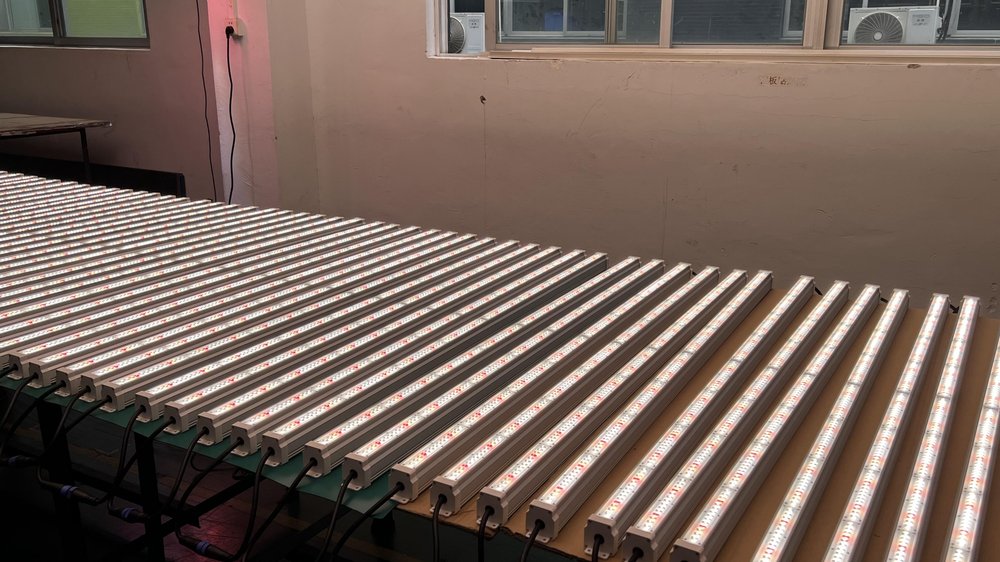
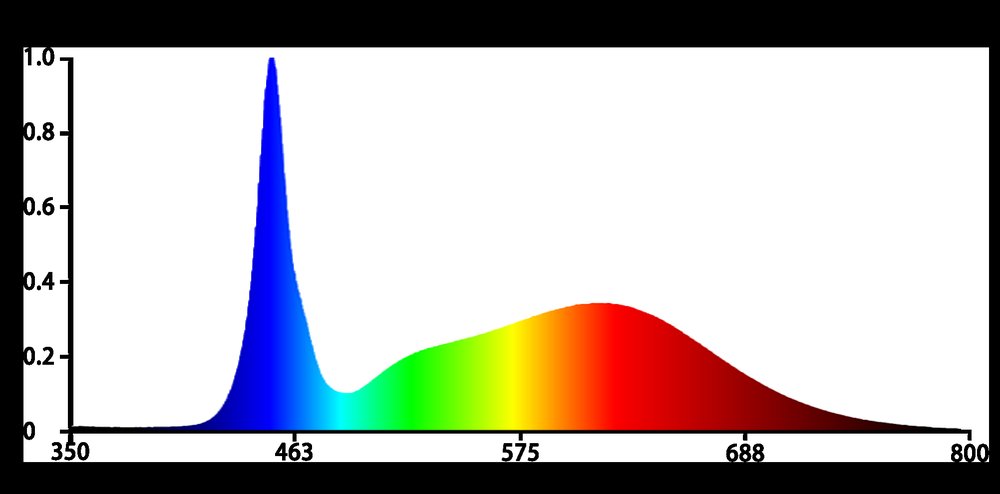
Not all grow lights are created equal when it comes to preventing succulent etiolation. You need a fixture that delivers high PPFD at close mounting distances, provides a full spectrum including both blue and red wavelengths, and offers even coverage across your growing area.
The Koray GE35-120T-K6 is an outstanding choice for succulent growers who need to prevent etiolation. This 80W bar light delivers 760 μmol/m²/s at just 0.2m mounting distance, thanks to its focused 45° lens that concentrates photons directly onto the plant canopy. The K6 spectrum provides enhanced red wavelengths that promote both compact growth and vibrant coloration. With IP64 waterproof rating and 50,000-hour lifespan, it is built for long-term reliability in humid succulent growing environments.
For growers with limited shelf clearance, the Koray PT8T-V3 tube light offers exceptional performance in a slim form factor. At just 33x35mm cross-section, it fits in tight spaces while delivering 416 μmol/m²/s at 0.15m and 316 μmol/m²/s at 0.2m. The V3 spectrum achieves an industry-leading 2.9 μmol/J efficiency, meaning more light output per watt of electricity. The IP66 waterproof rating makes it safe for use in high-humidity environments, and up to 10 tubes can be daisy-chained from a single power connection.
For small home collections, the Koray PAR30Z-20W with S91 spectrum provides a simple, effective solution. It screws into a standard E27 socket, delivers 220 μmol/m²/s at 0.2m, and features a zoomable lens that lets you adjust beam angle from narrow to wide. At just 20W, it is energy-efficient for targeted lighting of individual plants or small shelf sections.
Proper Light Positioning and Duration Strategies
Once you have selected appropriate grow lights, correct positioning is essential. For most succulent setups, mount LED grow lights 15-30cm (6-12 inches) above the plant canopy. At this distance, high-output fixtures like the GE35-120T-K6 deliver well over the PPFD needed to prevent etiolation. For lower-output fixtures, position them at the closer end of this range — around 15-20cm.
On multi-tier shelf systems, the top shelf receives the most light while lower shelves receive progressively less due to light falloff and shading from upper plants. Place your most light-demanding succulents (Echeveria, Graptopetalum) on the top shelf, and more shade-tolerant species (Haworthia, Gasteria) on lower shelves. Consider adding reflective material (white Mylar or flat white paint) to shelf walls to bounce light downward and reduce shadowing.
Run your grow lights for 12-16 hours per day. Use an automated timer to maintain consistent schedules — succulents respond poorly to irregular lighting patterns. Consistency in both duration and intensity is key to preventing the hormonal triggers that cause etiolation.
How to Recover Already-Etiolated Succulents
If your succulents have already stretched, the elongated growth cannot be reversed — but you can take steps to improve their appearance and ensure all future growth is compact and healthy.
The most common recovery method is “beheading.” Cut the rosette head off the stretched stem using a clean, sharp blade. Allow the cut surface to callus over for 2-3 days in a dry, shaded location. Then replant the rosette in well-draining succulent soil. Under proper high-intensity grow light, it will root and begin producing compact new growth within 2-4 weeks. The remaining stem often produces multiple new offsets (baby plants) around the cut point, which you can separate and propagate once they develop their own roots.
Alternatively, for mildly etiolated plants, simply increase your light intensity gradually over 1-2 weeks. Move the grow light 5cm closer every 2-3 days, monitoring for signs of light stress (bleaching, brown spots). Once you reach the optimal distance, maintain that position and all new growth will be compact.
Conclusion
Preventing etiolation in indoor succulents comes down to three factors: sufficient light intensity (PPFD), proper positioning distance, and consistent daily duration. By investing in high-quality LED grow lights that deliver 300-800 μmol/m²/s at the canopy and running them for 12-16 hours per day, you can grow compact, colorful, stunning succulents year-round — regardless of your local climate or available natural light.
Koray Lighting’s GE35-K6, PT8T-V3, and PAR30Z-S91 products are specifically designed to deliver the high PPFD and optimized spectrum that succulents need. With Koray’s secondary optics technology ensuring even coverage without hot spots, and industry-leading energy efficiency keeping operating costs low, there has never been a better time to grow beautiful indoor succulents with professional-grade lighting.

Leave A Comment