
Do Succulents Need Red or Blue Light More? The Complete Guide to Succulent Lighting
Succulents have become some of the most popular plants for indoor growing, prized for their striking rosette shapes, vivid colors, and relatively low maintenance requirements. Whether you are a hobbyist with a small windowsill collection or a commercial grower operating a vertical succulent farm, one question comes up constantly: do succulents need red or blue light more? The answer is not as simple as choosing one color over the other. Both red and blue wavelengths play essential but distinct roles in succulent physiology, and understanding how they work together is the key to growing compact, colorful, healthy plants indoors.
In this comprehensive guide, we will break down the science behind red and blue light for succulents, explain how different species respond to various light spectra, and recommend specific grow light products that deliver the right balance for optimal results.
Understanding Photosynthesis and the PAR Spectrum in Succulents
Like all green plants, succulents rely on photosynthesis to convert light energy into chemical energy. The wavelengths of light that drive photosynthesis fall within the Photosynthetically Active Radiation (PAR) range of 400-700nm. Within this range, different wavelengths trigger different biological responses.
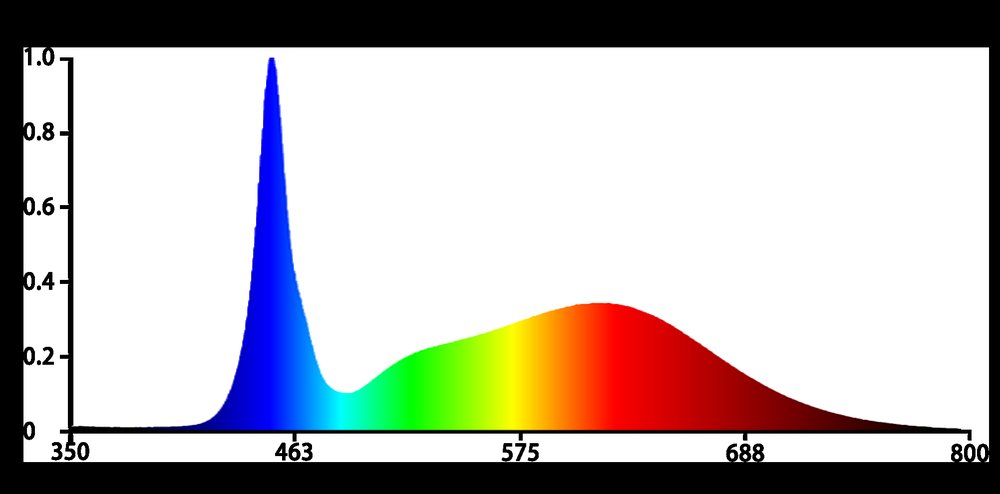
Blue light (400-500nm) promotes compact, sturdy growth. It stimulates chlorophyll production, encourages thick leaf development, and helps maintain the tight rosette formations that succulent enthusiasts prize. When succulents receive insufficient blue light, they exhibit etiolation — stretching, pale coloration, and elongated internodes that destroy their ornamental value.
Red light (600-700nm) drives flowering, fruiting, and the production of accessory pigments like anthocyanins and carotenoids. These pigments are responsible for the stunning red, purple, orange, and pink hues that many succulent species display under optimal conditions. Red light also contributes significantly to overall photosynthetic output because chlorophyll absorbs red wavelengths very efficiently.
The trick for succulent growers is finding the right balance between these two ranges. Too much blue without adequate red produces healthy but visually平淡 green plants. Too much red without sufficient blue leads to stretched, leggy growth with poor form. The ideal approach is a full-spectrum light source that provides both ranges in proportions tailored to succulent biology.
The Role of Blue Light in Succulent Growth and Form
Blue light is often called the “structural” wavelength because of its profound effect on plant morphology. In succulents, blue light triggers several critical responses. It promotes phototropism — the directional growth toward light — while simultaneously reducing stem elongation. This combination keeps plants compact and oriented toward the light source rather than stretching upward in search of more intensity.
Research in photomorphogenesis has shown that blue light receptors called cryptochromes and phototropins regulate cell elongation in plant stems. When blue light is abundant, these receptors signal cells to stop elongating, resulting in shorter internodes and denser leaf arrangement. For succulent growers, this is exactly the response we want: tight rosettes, compact stems, and the overall “bonsai-like” appearance that makes succulents so appealing.
Blue light also drives chloroplast development and chlorophyll synthesis, which keeps succulent leaves a healthy, vibrant green. Species like Haworthia and Gasteria, which naturally grow in partially shaded environments, respond particularly well to higher blue light proportions and can thrive under cooler color temperatures around 5000-6500K.
The Role of Red Light in Succulent Coloration and Flowering
While blue light controls form, red light controls color — and for many succulent growers, color is the entire point. The vivid reds, deep purples, fiery oranges, and delicate pinks that make Echeveria, Graptopetalum, Sedum, and Crassula so photogenic are all produced by accessory pigments that respond directly to red light exposure.
Anthocyanins, the pigments responsible for red, purple, and blue coloration in succulent leaves, are synthesized in response to high light intensity and particularly enhanced by red wavelengths. Carotenoids, which produce yellow, orange, and brown tones, also benefit from red light exposure. This is why succulents grown under full-spectrum LEDs with enhanced red consistently display more vibrant and diverse coloration than those grown under cool-white fluorescent tubes alone.
Red light also plays a critical role in flowering. Many succulent species, including Echeveria and Sedum, are photoperiodic — they initiate flowers in response to specific day/night cycles. Red light is the primary wavelength detected by phytochrome pigments that regulate flowering, so adequate red exposure is essential if you want your succulents to bloom.
Which Succulent Species Prefer Red vs. Blue Light?
Different succulent genera have evolved under different light conditions, and their preferences vary accordingly. High-light species from open, exposed habitats — such as Echeveria, Graptopetalum, Pachyphytum, and most Crassula — benefit from spectra with enhanced red. These plants naturally receive intense direct sunlight that is rich in both red and blue wavelengths, and they use the red component to develop their characteristic stress colors.
Shade-tolerant species from more sheltered environments — such as Haworthia, Gasteria, and Sansevieria — do well under spectra with slightly higher blue proportions. In their natural habitat, these plants grow under rocks, in crevices, or beneath nurse plants, where light is filtered and skewed toward the blue range. They maintain compact form and healthy coloration under moderate PPFD with good blue content.
For mixed succulent collections, a balanced full-spectrum light that covers both red and blue ranges effectively serves all species. You can then adjust intensity and duration based on each species’ specific DLI (Daily Light Integral) requirements.
Why Light Intensity (PPFD) Matters More Than Spectrum Ratio Alone
Here is a crucial point that many growers overlook: the total amount of light your succulents receive — measured as PPFD (Photosynthetic Photon Flux Density) in μmol/m²/s — matters more than the precise ratio of red to blue photons. A succulent receiving 500 μmol/m²/s of balanced full-spectrum light will almost always outperform one receiving 200 μmol/m²/s of perfectly optimized red-blue ratio light.
DLI (Daily Light Integral) represents the total number of moles of photons a plant receives per square meter per day. Most common succulent genera require the following DLI ranges:
Echeveria, Graptopetalum, and Pachyphytum need 30-50 mol/m²/day for compact growth and vibrant color. Crassula and Kalanchoe thrive at 25-40 mol/m²/day. Sedum and Sempervivum perform well at 20-35 mol/m²/day. Shade-tolerant Haworthia and Sansevieria need only 10-20 mol/m²/day.
To achieve these DLI targets, you need grow lights that deliver sufficient PPFD at your chosen mounting distance for 12-16 hours per day. This is where high-efficiency LED fixtures make a dramatic difference over traditional lighting.
Best Koray Grow Lights for Succulents: Product Recommendations
The Koray GE35-120T-K6 is specifically engineered with the K6 spectrum that emphasizes red wavelengths ideal for flowering plants and succulents. This 80W bar light delivers an impressive PPFD of 760 μmol/m²/s at 0.2m distance, with a 45° lens that concentrates light output directly onto the plant canopy. The K6 spectrum’s enhanced red content makes it a top choice for growers focused on color-critical succulent species like Echeveria and Graptopetalum. With a PPE of 2.9 μmol/J and IP64 waterproof rating, the GE35-120T-K6 combines efficiency with durability in humid growing environments.
For smaller setups or home growers, the Koray PAR30Z-20W with S91 spectrum provides warm full-spectrum light (approximately 3000K) that is ideal for ornamental succulents. It delivers PPFD of 220 μmol/m²/s at 0.2m and 140 μmol/m²/s at 0.3m, fits standard E27 sockets, and features a zoomable lens for adjustable beam angle. The high CRI95 rating allows you to see true plant colors, making it easier to monitor health and coloration. At just 20W, it is perfect for targeted lighting of individual plants or small collections.
For larger commercial operations, the Koray G80-650W foldable grow light delivers commercial-grade PPFD across a wide coverage area. Its Koray secondary optics system eliminates center hot spots — a critical feature when mounting lights close to succulent canopies. The G80-650W outperforms competing 1000W fixtures while consuming 35% less electricity, saving over 800 kWh per year.
Setting Up Your Succulent Grow Light System
When designing a succulent growing area, consider shelf dimensions, mounting height, and the specific DLI requirements of your plant species. For a typical multi-tier succulent shelf using 1.2m bar lights, the GE35 series offers excellent coverage. At 0.2m mounting height, a single GE35-120T-K6 delivers 760 μmol/m²/s — more than enough for even the most light-demanding Echeveria varieties. You can reduce power or increase distance for less demanding species.
Run your grow lights for 12-16 hours per day using an automated timer. Consistency is critical for succulents, which rely on predictable light/dark cycles for proper metabolic function. Irregular lighting schedules can trigger stress responses including etiolation, leaf drop, or failure to color.
LED vs. Fluorescent Grow Lights for Succulents
Many growers still use T5 or T8 fluorescent tubes for succulent lighting, but modern LED alternatives offer dramatic improvements. LED grow lights deliver significantly higher PPFD per watt of electricity consumed, typically providing 400-800+ μmol/m²/s at 0.2m compared to 200-400 μmol/m²/s for equivalent fluorescent fixtures. LEDs also generate less radiant heat, allowing closer mounting without risk of heat damage to delicate succulent leaves.
Lifespan is another major advantage. Quality LED grow lights like the Koray GE35 series last 50,000 hours — roughly 5-7 years of continuous operation — compared to 10,000-20,000 hours for fluorescent tubes. This means fewer replacements, lower maintenance costs, and more consistent light output over the product’s entire life.
Conclusion
The answer to whether succulents need red or blue light more is that they need both, working together in the right proportions and at sufficient total intensity. Blue light maintains the compact form and structural integrity that defines healthy succulent growth. Red light brings out the stunning color pigmentation that makes succulents so visually captivating. The total light intensity (PPFD) and daily duration (DLI) matter just as much as the spectral balance.
Modern LED grow lights like Koray’s K6 spectrum products are specifically designed with enhanced red content ideal for succulents and flowering plants. By choosing the right fixture, setting proper mounting distances, and maintaining consistent daily schedules, you can grow succulents with tight rosettes, vivid colors, and outstanding overall health — regardless of your local climate or available natural sunlight.

Leave A Comment