
What Grow Light Is Best for Echeveria? The Definitive Indoor Lighting Guide
Echeveria is arguably the most beloved genus in the succulent world. With their stunning rosette shapes, powdery farina coatings, and an extraordinary palette of colors ranging from pastel blue-green to deep burgundy red, these Mexican and Central American natives have captivated plant enthusiasts worldwide. However, growing Echeveria indoors presents a significant challenge: these plants demand high light intensity to maintain their compact form and spectacular coloration. Without proper lighting, Echeveria quickly become stretched, pale, and unrecognizable compared to their sun-grown counterparts.
This comprehensive guide covers everything you need to know about selecting and using grow lights for Echeveria — including light intensity requirements, optimal spectrum choices, specific product recommendations from Koray Lighting, and practical setup advice for both home growers and commercial operations.
Understanding Echeveria’s Natural Light Requirements
In their native habitat, Echeveria species grow on rocky slopes, cliff faces, and high-altitude plateaus across Mexico, Guatemala, and parts of Central America. These environments deliver intense, direct sunlight for most of the day — often exceeding 1,000 μmol/m²/s of PPFD at midday. Echeveria have evolved to thrive under these conditions, developing thick, water-storing leaves, protective farina coatings, and vivid pigment production as adaptations to high-light, relatively dry conditions.
When we bring Echeveria indoors, the light levels drop dramatically. A bright south-facing window might deliver 200-400 μmol/m²/s for a few hours on a clear afternoon, but average daily PPFD is typically far lower. This creates a massive gap between what Echeveria need and what they receive, resulting in the etiolation, color loss, and general decline that frustrates so many indoor growers.
To grow Echeveria successfully indoors, you need to replicate their natural light conditions as closely as possible. This means providing PPFD of 400-800 μmol/m²/s at the canopy level for 12-16 hours per day, achieving a Daily Light Integral (DLI) of 30-50 mol/m²/day.
Why Spectrum Matters for Echeveria Color and Form
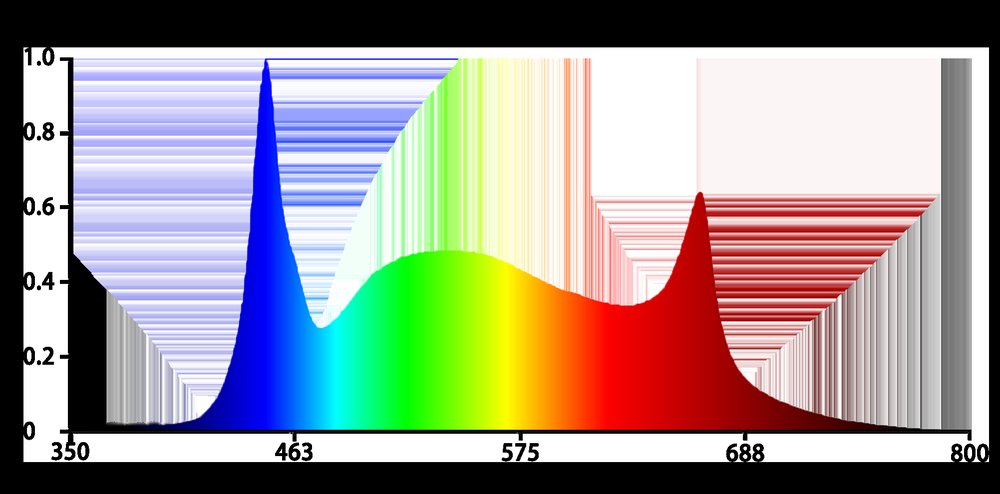
Beyond raw intensity, the spectral composition of your grow light has a profound effect on Echeveria’s appearance. Different wavelengths trigger different biological responses that directly impact the qualities we value most in these plants.
Blue light (400-500nm) is essential for maintaining compact rosette form. It suppresses stem elongation and promotes tight leaf arrangement — the hallmark of a well-grown Echeveria. Without adequate blue light, Echeveria stretch rapidly, producing elongated stems with widely spaced leaves that destroy their ornamental value.
Red light (600-700nm) drives the production of anthocyanin and carotenoid pigments — the compounds responsible for the red, purple, pink, orange, and yellow hues that make Echeveria so spectacular. Enhanced red spectrum triggers “stress coloration,” the same protective pigments these plants produce under intense natural sunlight. This is why Echeveria grown under full-spectrum LEDs with enhanced red consistently display more vivid and diverse colors than those grown under basic white LEDs or fluorescent tubes.
The K6 spectrum, available on Koray’s GE35 series bar lights, is specifically designed with enhanced red content that excels at bringing out color in succulents and flowering plants. Combined with adequate blue light for form, the K6 spectrum delivers the spectral balance that Echeveria respond to most dramatically.
Best Koray Grow Lights for Echeveria: Detailed Recommendations
The Koray GE35-120T-K6 is the top recommendation for dedicated Echeveria growers. This 80W bar light uses the K6 spectrum with enhanced red wavelengths specifically tuned for succulent and flowering plant cultivation. It delivers an impressive 760 μmol/m²/s at 0.2m distance, with a 45° lens that focuses light output directly onto the plant canopy for maximum intensity. The PPE of 2.9 μmol/J means high efficiency, and the IP64 waterproof rating ensures reliable operation in humid growing environments. At 900mm length, it covers a standard shelf width perfectly, and multiple bars can be installed per tier for larger setups.
For home growers with smaller Echeveria collections, the Koray PAR30Z-20W with S91 spectrum offers an accessible entry point. The S91 spectrum provides warm full-spectrum light (approximately 3000K) with good red content for color development. It delivers 220 μmol/m²/s at 0.2m and 140 μmol/m²/s at 0.3m, with a zoomable lens for adjustable beam angle. The standard E27 base means you can use it with any compatible socket or pendant fixture. At just 20W and with CRI95 for accurate color rendering, it is ideal for desk or shelf-top use with 3-6 small Echeveria plants.
For commercial Echeveria production, the Koray G120N (RX-G120) foldable grow light delivers professional-grade performance. Available in 630W and 750W configurations, it covers up to 1.5×1.5m per fixture at flowering PPFD levels. The IP66 waterproof rating and Koray secondary optics (no center hot spots) make it suitable for close-canopy mounting over large Echeveria production racks. With PPE of 2.7-2.9 μmol/J, it provides exceptional energy efficiency at commercial scale.
Setting Up Your Echeveria Grow Light System
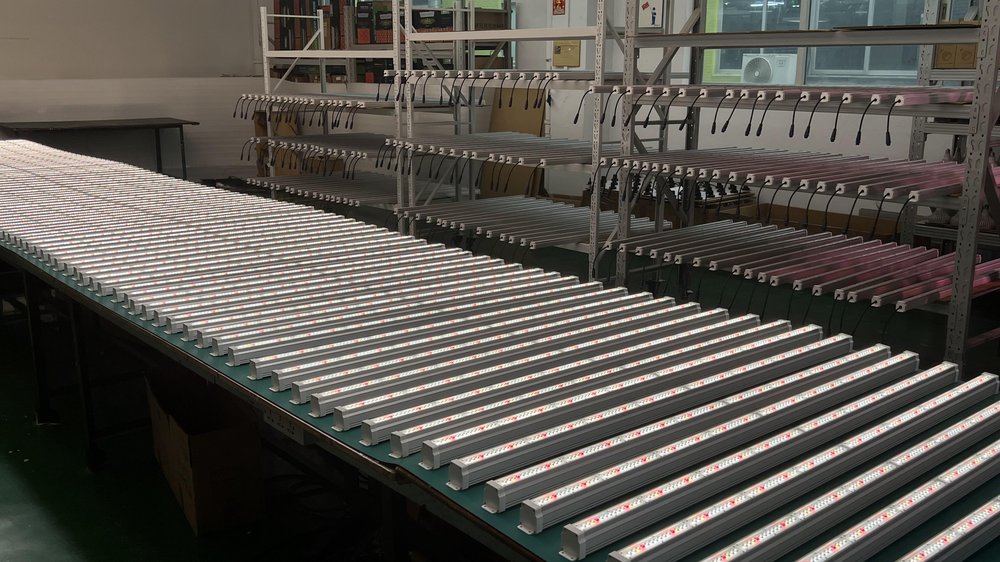
A well-designed Echeveria growing setup considers shelf dimensions, mounting height, air circulation, and the specific needs of different varieties. For a standard 1.2m x 0.6m shelf with 2-3 tiers, use 2-3 GE35-120T-K6 bars per tier, mounted 15-25cm above the canopy. This delivers 500-760 μmol/m²/s across the entire shelf — sufficient for even the most light-demanding Echeveria varieties.
Ensure adequate air circulation between tiers using small fans. Echeveria are susceptible to fungal issues if air becomes stagnant, especially in humid environments. Good airflow also strengthens stem tissue and helps maintain compact growth patterns.
Use an automated timer to maintain 12-16 hours of light per day. Consistency is essential — Echeveria respond to regular light/dark cycles, and irregular schedules can trigger stress responses including etiolation, leaf drop, or failure to produce vibrant colors.
Seasonal Care Tips for Indoor Echeveria
Echeveria’s light needs change slightly with the seasons, even when grown entirely indoors under artificial lighting. In fall and winter, when many Echeveria species naturally enter their peak coloration period (cooler temperatures combined with high light produce the most intense colors), you may want to increase light duration to 14-16 hours and ensure PPFD is at the higher end of the recommended range.
In spring and summer, when temperatures rise, ensure your growing area has adequate ventilation. High temperatures combined with high light intensity can cause heat stress. If your growing area exceeds 30°C (86°F), consider reducing light intensity slightly or improving air movement.
Water Echeveria carefully — allow soil to dry completely between waterings, and avoid getting water on the leaves, especially under grow lights where water droplets can act as tiny magnifying glasses and cause burn spots. The farina coating on many Echeveria varieties is also easily damaged by handling or water contact, so water at the soil level whenever possible.
Common Mistakes to Avoid When Lighting Echeveria
The most common mistake is using insufficient light intensity. Many growers assume a single small LED bulb or a basic desk lamp will be enough for Echeveria, but these typically deliver less than 100 μmol/m²/s — far below the 400+ needed. The result is almost always etiolation and color loss within weeks.
Another frequent error is inconsistent lighting schedules. Running grow lights for varying hours each day, or forgetting to turn them on, confuses the plant’s internal clock and can trigger stress responses. Always use an automated timer for reliable, consistent operation.
Mounting lights too far from the canopy is the third common mistake. Light intensity drops rapidly with distance — doubling the distance reduces PPFD to roughly one-quarter. For Echeveria, keep lights within 15-25cm of the canopy to ensure adequate intensity reaches the plants.
Conclusion
Growing beautiful, compact, colorful Echeveria indoors is entirely achievable with the right grow light setup. The key is providing high PPFD (400-800 μmol/m²/s), a spectrum with enhanced red for coloration (such as the K6 spectrum), and consistent daily duration of 12-16 hours.
Koray Lighting’s GE35-120T-K6, PAR30Z-20W with S91 spectrum, and G120N commercial fixtures are all excellent choices for Echeveria cultivation at different scales. With Koray’s secondary optics technology ensuring even coverage, industry-leading energy efficiency, and 50,000-hour lifespan, you can enjoy stunning Echeveria year-round — regardless of your local climate or available natural sunlight.

Leave A Comment