
Understanding the RX-G80-1000W Coverage Performance
When investing in a commercial-grade grow light like the Koray Lighting RX-G80-1000W, one of the first questions growers ask is: how much growing space can it actually cover? The answer depends on several factors including growing environment, plant type, mounting height, and whether you use reflective walls. In this comprehensive guide, we break down the exact coverage specifications of the G80-1000W based on real-world testing data and explain how to maximize your growing area.
Koray Lighting has established itself as a leading manufacturer of horticultural lighting since 2009, with over 200 patents and products exported to more than 60 countries. The RX-G80 series represents the company’s flagship foldable commercial grow light platform, designed specifically for medicinal plant cultivation, vertical farming, and large-scale greenhouse operations.
Core Coverage Specifications of the G80-1000W
The Koray RX-G80-1000W delivers a total PPF (Photosynthetic Photon Flux) output of up to 2,700 μmol/s, making it one of the most powerful single-unit grow lights in its class. Here are the key coverage metrics:
For flowering-stage coverage, the G80-1000W effectively covers a 1.5 x 1.5 meter area (approximately 5 x 5 feet) when mounted at a height of 0.3 meters (12 inches), maintaining an average PPFD of 900-1,000 μmol/m²/s across the canopy. This is the sweet spot for high-light crops like tomatoes, peppers, and medicinal flowers that demand intense photon delivery during bloom.
For vegetative-stage coverage, the same fixture can cover up to 2.0 x 2.0 meters (approximately 6.5 x 6.5 feet) at 0.5 meters mounting height, delivering 400-600 μmol/m²/s — ideal for leafy greens, lettuce, and young plants that require moderate light levels.
When grown in a reflective environment such as a grow tent with Mylar walls, the effective coverage expands by approximately 15-20% due to reflected photons reaching the lower canopy from the sides. Many commercial operators using the G80-1000W in 1.2 x 1.2 meter (4 x 4 foot) tents report excellent edge-to-edge uniformity.
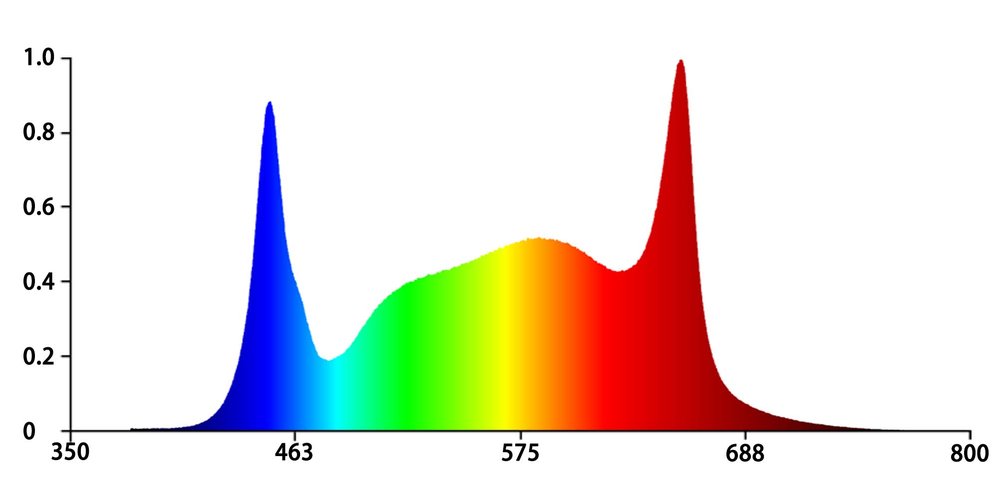
How Koray’s Secondary Optical System Improves Coverage Uniformity
One reason the G80-1000W achieves such impressive coverage is Koray’s proprietary secondary optical system. Unlike conventional quantum board lights that use bare LEDs and produce a intense center hotspot, the RX-G80 series uses specially engineered lenses to distribute photons evenly across the entire growing area.
This means the PPFD at the edges of your canopy is much closer to the center value compared to competing products. In a 64-point measurement test conducted in a dark room without reflective walls (1.2 x 1.2 meter area), the G80-800W model delivered an average PPFD of 1,250 μmol/m²/s at 0.3 meters — with less than 15% variation between center and edge points. The 1000W model scales this performance proportionally.
The practical benefit is that you can mount the light closer to your canopy (as close as 8 inches / 0.2 meters) without risking heat damage or light burn — something that HPS and poorly designed LED fixtures simply cannot do. This close-mounting capability is what allows the G80-1000W to deliver such high PPFD values over a large area.
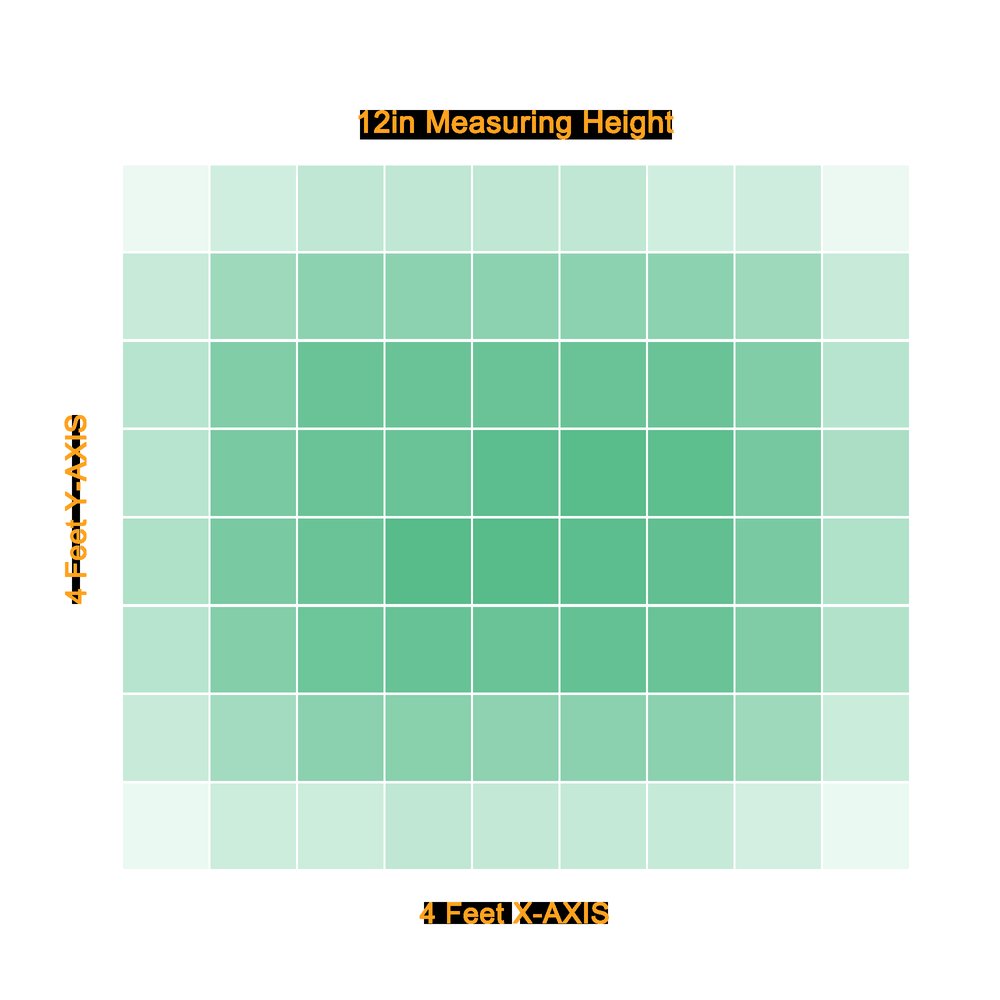
Coverage Comparison: G80-1000W vs. Competitors
To put the G80-1000W’s coverage in perspective, consider how it compares to other popular commercial grow lights in the 1000W class:
Traditional 1000W HPS (High Pressure Sodium) fixtures typically cover about 1.2 x 1.2 meters for flowering, but with significant intensity drop-off at the edges — often 30-40% lower PPFD at the perimeter compared to center. They also generate enormous amounts of heat, requiring at least 1 meter of clearance from the canopy.
Competing LED quantum boards in the 1000W range often claim similar coverage on paper, but many lack the sophisticated optics of the Koray RX-G80. Without proper secondary optics, these lights create a “hot spot” in the center that can stress plants directly underneath while leaving edge plants under-lit. The Koray G80-1000W eliminates this problem entirely.
When compared directly to the Lumatek Zeus 1000W, the Koray G80-800W (a lower-wattage variant) already matches or exceeds its PPFD output — while consuming 200W less power. The G80-1000W extends this advantage even further, offering class-leading coverage with superior uniformity.
Recommended Coverage Configurations by Growing Method
For single-layer bench growing, one G80-1000W per 2.0 x 2.0 meter section provides excellent vegetative coverage. For flowering, reduce to 1.5 x 1.5 meters per fixture to maintain the 900+ μmol/m²/s that high-value crops demand.
For multi-tier vertical farming, the G80-1000W can be mounted at 0.3-0.5 meters above each tier. At these distances, each fixture covers approximately 1.5 x 1.5 meters for flowering or 2.0 x 2.0 meters for vegetative growth. The foldable design of the RX-G80 makes it easy to configure the fixture to fit within standard shelving dimensions.
For grow tent cultivation (1.2 x 1.2 meters / 4 x 4 feet), a single G80-1000W is more than sufficient for both vegetative and flowering stages. The excess capacity means faster growth rates and the ability to push light intensity higher during critical bloom weeks without exceeding safe PPFD thresholds.
For greenhouse supplemental lighting, multiple G80-1000W fixtures can be spaced 2.5-3.0 meters apart (depending on natural light levels) to create a uniform light floor across your entire greenhouse footprint.
Factors That Affect Real-World Coverage
Several variables influence the actual coverage you’ll achieve with the G80-1000W in practice:
Mounting height is the most significant factor. Every 10 cm increase in height reduces the PPFD by approximately 15-20% and expands the coverage footprint. Finding the right balance between intensity and area is key to optimizing your setup.
Reflective walls can boost effective PPFD by 10-20%, especially at the edges of your growing area. White painted walls, Mylar, or reflective film all contribute to better light utilization.
Light depreciation over the fixture’s 50,000-hour lifespan is minimal with the LM301H EVO LEDs used in the RX-G80 series. After 50,000 hours, the LEDs still maintain over 90% of their original output — meaning your coverage area remains consistent year after year.
Maximizing Your G80-1000W Coverage with Smart Controls
The RX-G80-1000W supports multiple dimming methods including PWM, resistor-based, and 0-10V analog dimming. It is also fully compatible with the HortiGuru APP, allowing you to adjust intensity, set schedules, and monitor energy consumption remotely.
By dimming the fixture during early vegetative stages (when plants need only 200-400 μmol/m²/s), you can effectively extend the coverage area while saving energy. As plants transition to flowering, increase the intensity to deliver the full 900-1,200 μmol/m²/s over a smaller footprint.
Conclusion: Is the G80-1000W Right for Your Grow?
The Koray Lighting RX-G80-1000W offers outstanding coverage for commercial growers who demand high PPFD, uniform distribution, and energy efficiency. With a flowering coverage of 1.5 x 1.5 meters and vegetative coverage up to 2.0 x 2.0 meters, it handles everything from single-tent grows to large-scale vertical farms.
Combined with Koray’s secondary optical system (no center hotspot), 50,000-hour lifespan, ETL/CE/RoHS/FCC certifications, and HortiGuru smart control compatibility, the G80-1000W represents a compelling choice for serious growers looking to maximize both yield and efficiency.
For more information about the RX-G80 series and other Koray Lighting products, visit www.koraylights.com.





Leave A Comment