
Why Energy Efficiency Matters in Commercial Growing
Electricity is the single largest operational expense for indoor and greenhouse growers. A commercial facility running dozens of grow lights 12-18 hours per day can spend tens of thousands of dollars annually on power alone. This is exactly why the Koray Lighting RX-G80-650W has become such a popular choice — it delivers the same PPFD output that competitors achieve at 800W or even 1000W, while consuming dramatically less energy.
In this article, we’ll walk through the exact calculations showing how much electricity the G80-650W saves per year compared to traditional HPS lights and competing LED fixtures, and translate those kilowatt-hours into real dollar savings.
G80-650W Energy Specifications
The Koray RX-G80-650W is part of the RX-G80 foldable commercial grow light series. Here are the key energy-related specifications:
The fixture consumes exactly 650 watts at full output, running on AC100-277V with a Meanwell driver and power factor greater than 0.9. Despite the relatively modest power draw, it leverages Koray’s proprietary secondary optical system to deliver PPFD values that rival much higher-wattage fixtures from other brands.
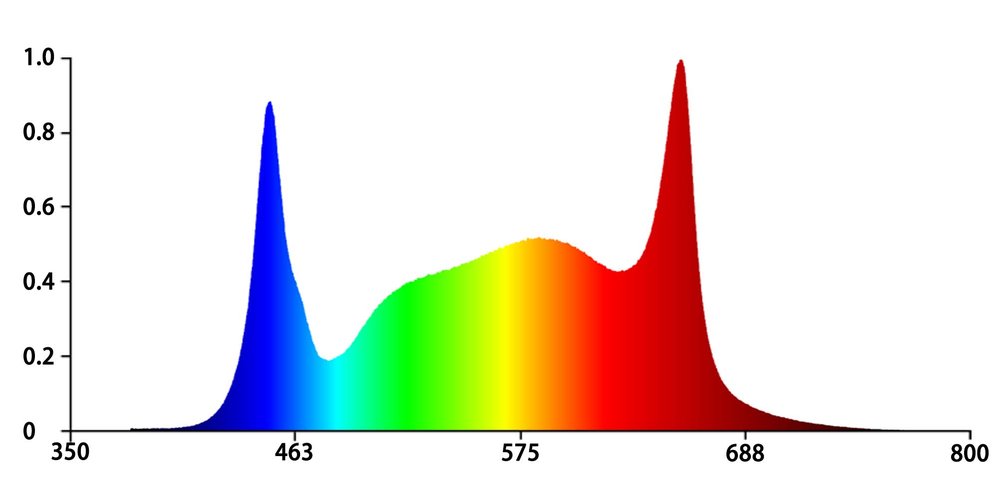
The LM301H EVO LEDs used in the G80-650W achieve a PPE (Photon Photon Efficacy) of up to 2.9 μmol/J, meaning every watt of electricity is converted into a high volume of photosynthetically active photons. This is significantly better than older LED technologies and vastly superior to HPS lighting.
Annual Electricity Savings vs. HPS 1000W
The most dramatic savings come when replacing a traditional 1000W HPS (High Pressure Sodium) fixture with the G80-650W. Here’s the math:
A 1000W HPS light running 16 hours per day, 365 days per year consumes: 1,000W × 16h × 365 = 5,840 kWh per year. However, HPS systems also require significant cooling, and the ballast adds another 10-15% power draw, bringing the real-world consumption to approximately 6,500-6,700 kWh per year.
The G80-650W running the same schedule consumes: 650W × 16h × 365 = 3,796 kWh per year. Since LEDs produce far less radiant heat, cooling costs are also reduced by an estimated 20-30%, saving an additional 500-800 kWh in HVAC costs.
This means the total annual savings per fixture when switching from HPS 1000W to the G80-650W is approximately 2,700-3,100 kWh per year. At a commercial electricity rate of $0.12 per kWh, that translates to $324-$372 per fixture per year — or over $3,000 in savings over the fixture’s 50,000-hour (approximately 8.5 year at 16h/day) lifespan.
Annual Electricity Savings vs. Competing LED 1000W Fixtures
Even when compared to other LED fixtures in the 1000W class, the G80-650W offers significant advantages. Koray’s data shows that the G80-800W variant already outperforms the Lumatek Zeus 1000W in PPFD output while consuming 200W less power. The G80-650W extends this efficiency principle even further.
A competing 1000W LED fixture running 16 hours per day consumes approximately 5,840 kWh per year. The G80-650W at the same schedule uses only 3,796 kWh — a difference of 2,044 kWh per year. At $0.12/kWh, that’s $245 saved per fixture annually.
For a commercial facility operating 50 grow lights, switching from 1000W LEDs to the G80-650W saves approximately 102,200 kWh per year — equivalent to the electricity consumption of about 9 average US households. At $0.12/kWh, that’s $12,264 in annual savings.
Savings at Scale: Facility-Level Calculations
Let’s look at what the G80-650W savings look like for different facility sizes, assuming 16 hours/day operation and $0.12/kWh electricity:
For a small grow operation with 10 lights replacing 1000W HPS: annual savings of approximately 27,000-31,000 kWh, worth $3,240-$3,720 per year. The payback period for the initial investment is typically 6-12 months.
For a medium commercial facility with 50 lights replacing 1000W HPS: annual savings of approximately 135,000-155,000 kWh, worth $16,200-$18,600 per year. Over the 8-year operational life of the fixtures, total savings exceed $130,000-$150,000.
For a large-scale vertical farm with 200 lights replacing 1000W HPS: annual savings of 540,000-620,000 kWh, worth $64,800-$74,400 per year. This is enough to significantly impact the facility’s overall profitability and competitive positioning.
Additional Cost Savings Beyond Electricity
The electricity bill is just one part of the savings equation. The G80-650W also reduces costs in several other areas:
Cooling and HVAC costs drop significantly because LEDs convert far less energy into heat compared to HPS. A 1000W HPS fixture puts out roughly 3,400 BTU/hr of heat, while the G80-650W produces only about 2,200 BTU/hr. This 35% reduction in heat output means your air conditioning system works less, lasts longer, and costs less to run.
Maintenance costs are virtually eliminated. HPS bulbs need replacement every 12-18 months at a cost of $50-$150 per bulb, plus labor. The G80-650W uses LEDs rated for 50,000 hours — that’s over 8 years of operation at 16 hours/day with no bulb changes needed.
Insurance costs may also decrease. The RX-G80 series carries ETL, CE, RoHS, and FCC certifications, demonstrating compliance with safety standards. Lower heat output also reduces fire risk, which some insurance providers reward with lower premiums.
How to Maximize Your Energy Savings with the G80-650W
The RX-G80-650W supports PWM, resistor-based, and 0-10V analog dimming, and is fully compatible with the HortiGuru APP for smart control. Here’s how to leverage these features for maximum savings:
Use the dimming function to reduce power during early vegetative stages when plants only need 200-400 μmol/m²/s. Running at 50% power during veg nearly doubles your energy savings for that growth phase.
Set up automated schedules through HortiGuru to match your plants’ exact light cycle needs. Eliminating unnecessary operating hours (for example, reducing from 18h to 12h during certain growth stages) saves an additional 33% on electricity for those periods.
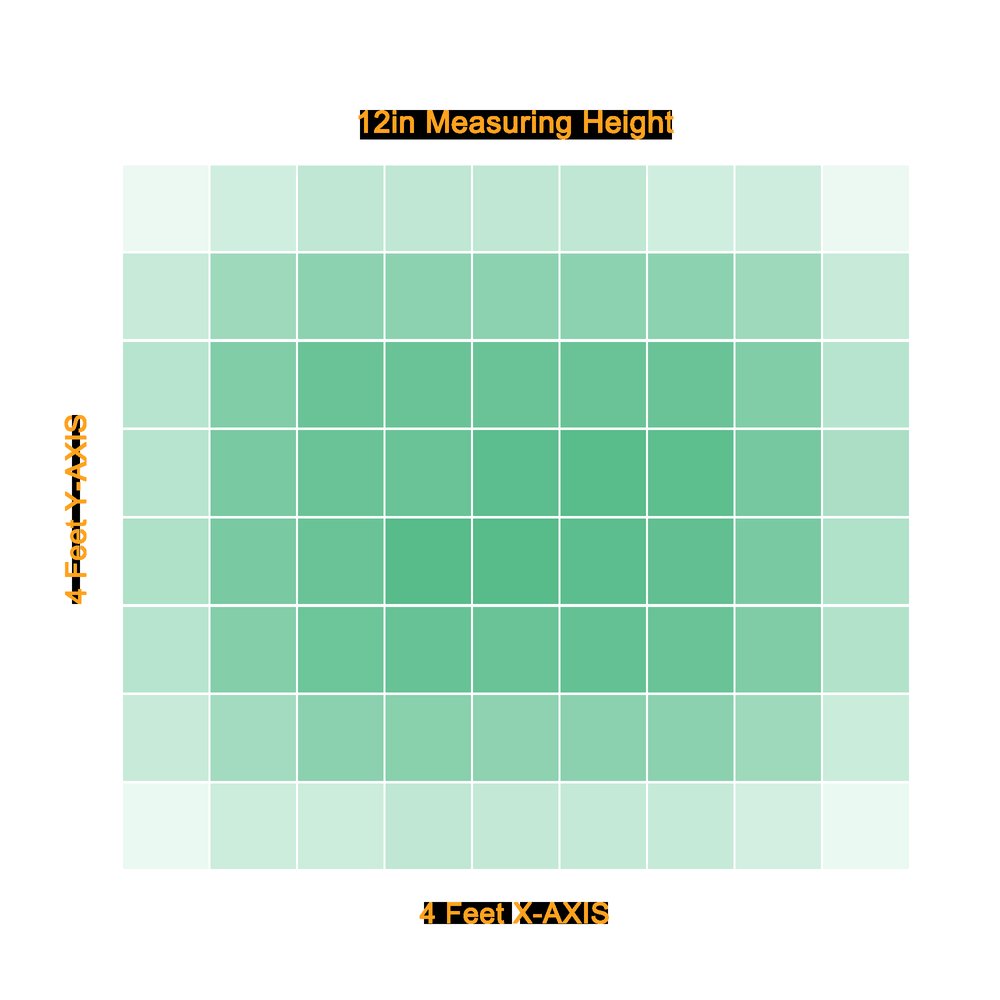
Take advantage of the G80-650W’s high efficacy to mount the fixture closer to the canopy (0.2-0.3 meters). Because Koray’s secondary optical system eliminates the center hotspot, you get uniform coverage at close range without burning your plants — meaning less light is wasted on areas outside your growing area.
Environmental Impact of Switching to the G80-650W
Beyond financial savings, reducing electricity consumption has a meaningful environmental impact. The average US power grid emits approximately 0.4 kg of CO2 per kWh. By saving 2,700-3,100 kWh per fixture per year (compared to HPS), each G80-650W prevents approximately 1,080-1,240 kg of CO2 emissions annually.
For a 50-light facility, that’s 54-62 metric tons of CO2 prevented every year — equivalent to taking 12-14 passenger cars off the road. For sustainability-focused growers, this is a compelling additional reason to choose the Koray G80-650W.
Conclusion: The G80-650W Pays for Itself
The Koray Lighting RX-G80-650W saves approximately 2,700-3,100 kWh per year compared to 1000W HPS, and about 2,000 kWh per year compared to competing 1000W LED fixtures. At commercial electricity rates, this translates to $245-$372 in savings per fixture annually — meaning the fixture typically pays for itself within 6-18 months.
With 50,000-hour lifespan, ETL/CE/RoHS/FCC certifications, Koray secondary optics for uniform coverage, and HortiGuru smart control compatibility, the G80-650W is one of the most cost-effective commercial grow lights available today.
Visit www.koraylights.com to learn more about the RX-G80 series and start calculating your specific savings.



Leave A Comment