
Why Upgrade from T8 Fluorescent Tubes to LED Grow Lights?
If you have been running a plant factory or vertical farm with traditional T8 fluorescent tubes, you already know the frustration of frequent bulb replacements, high electricity bills, and uneven light distribution. The shift from fluorescent to LED technology has been one of the most significant upgrades in controlled-environment agriculture over the past decade. Among the LED alternatives available today, the Koray RX-PT8 plant grow tube stands out as a purpose-built replacement that delivers measurable improvements in every metric that matters to commercial growers.
This article walks through a detailed comparison between the PT8 LED grow tube and conventional T8 fluorescent tubes, covering energy consumption, light output, lifespan, waterproofing, installation flexibility, and total cost of ownership. Whether you operate a small indoor garden or a large-scale vertical farming facility, understanding these differences will help you make an informed upgrade decision.
Power Consumption and Energy Efficiency
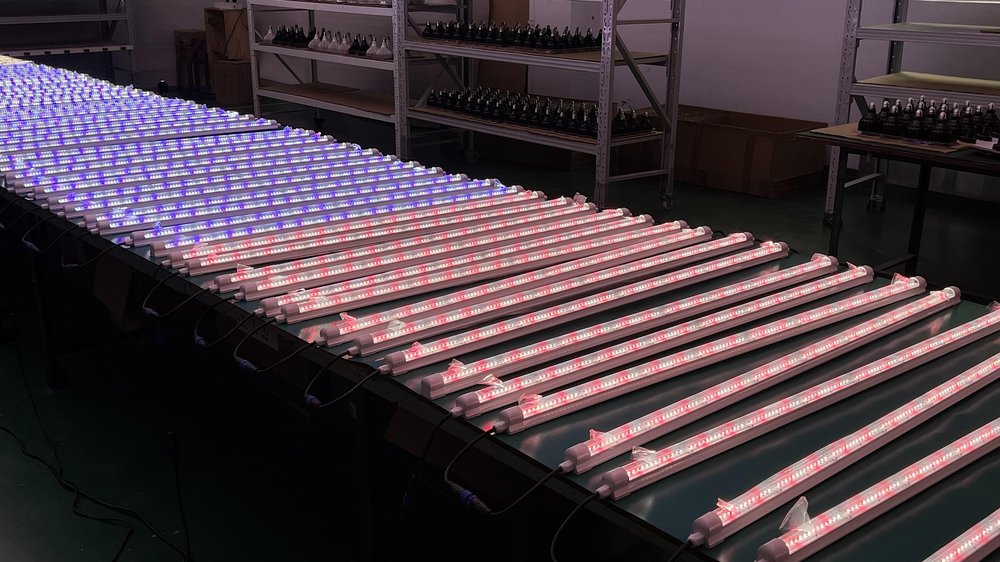
A standard T8 fluorescent tube typically consumes 32 to 36 watts of power for a 1200mm (4-foot) lamp. At first glance, that number seems comparable to the PT8 F175 spectrum variant, which draws just 32W. However, the comparison becomes far more favorable for the PT8 when you look at what that power actually produces.
The PT8 F175 delivers 5,200 lumens and a PPFD of 365 μmol/m²/s at 0.15 meters, while consuming 24% less energy than the previous generation of LED tubes. The V3 spectrum variant pushes efficiency even further, achieving 2.9 μmol/J with 3,880 lumens at only 32W — a 33% reduction compared to older models. When you compare these figures to a fluorescent T8 that wastes significant energy as heat and produces light in all directions (requiring reflectors to redirect photons toward your canopy), the real-world energy savings become substantial.
For a commercial installation with hundreds of tubes running 16 to 18 hours per day, even a modest per-tube wattage reduction translates into thousands of dollars saved annually. The PT8’s high power factor of >0.9 also means less reactive power waste, which matters for facilities with large electrical loads.
Light Output Quality and Distribution
One of the biggest weaknesses of T8 fluorescent tubes is their omnidirectional light emission. A fluorescent tube radiates light in 360 degrees, and without an efficient reflector, a significant percentage of photons never reach the plant canopy. Even with a good reflector system, fluorescent fixtures suffer from hot spots directly below the tube and dim zones between fixtures.
The Koray PT8 uses Koray’s proprietary secondary optics technology, which shapes the light beam to direct photons precisely where they are needed. This results in a single-bar PPFD increase of more than 40% compared to conventional LED tubes without such optics. The light distribution is uniform along the entire 1200mm length, with no flickering (a common issue with magnetic-ballast fluoresents that can stress plants and cause visible banding in camera monitoring systems).
In a practical growing setup, six PT8 bars mounted at 0.3 meters height can cover a 1.2×1.2 meter area with an average PPFD of 300 μmol/m²/s. Achieving the same uniformity with fluorescent T8 tubes would require more fixtures, more reflectors, and more careful spacing — all of which add to installation complexity and cost.
Lifespan and Maintenance
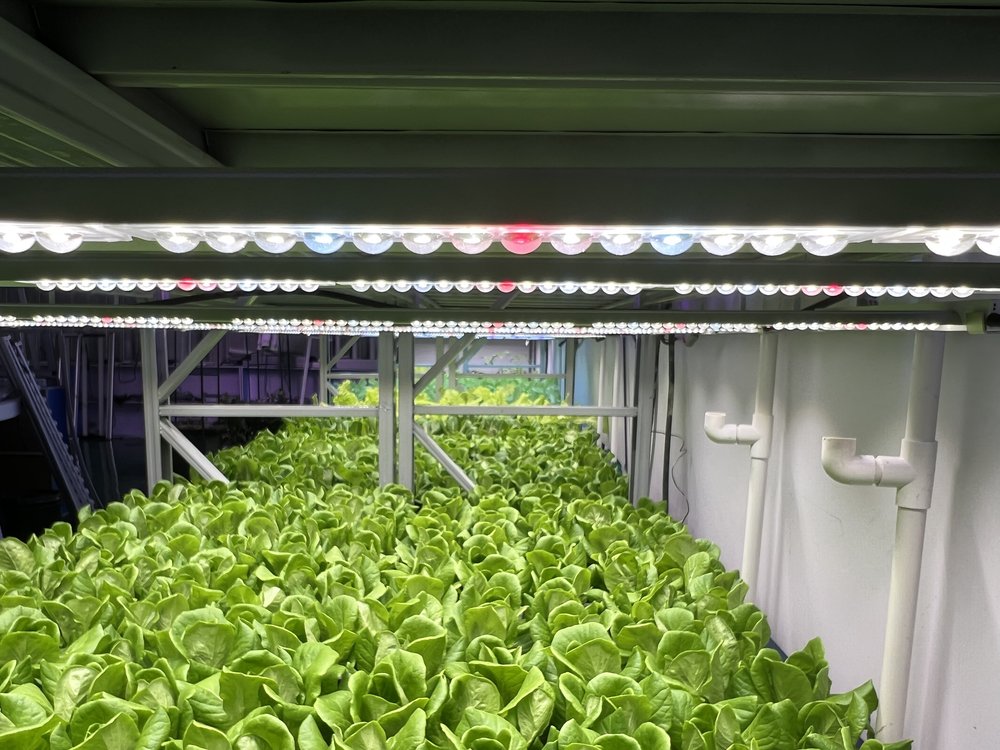
Traditional T8 fluorescent tubes have a rated lifespan of approximately 10,000 to 20,000 hours, depending on the quality of the ballast and how frequently the lamps are switched on and off. In a commercial growing environment where lights run 16+ hours daily, fluorescent tubes may need replacement every 1.5 to 3 years. Each replacement involves labor costs, potential crop disruption, and the hassle of disposing of mercury-containing lamps.
The PT8 series is rated for 35,000 hours of operation, which translates to roughly 6 to 7 years of continuous daily use. That is two to three times the lifespan of a fluorescent tube. Over the life of a growing facility, this means significantly fewer maintenance cycles and lower total cost of ownership. The PT8 also contains no mercury, making disposal simpler and more environmentally friendly.
Waterproofing and Durability
Perhaps one of the most significant practical advantages of the PT8 over fluorescent T8 tubes is its IP66 waterproof rating. The IP66 rating means the PT8 is completely dust-tight and can withstand powerful water jets from any direction. This is critical in commercial growing environments where high humidity, condensation, and regular wash-downs are part of daily operations.
Standard fluorescent T8 tubes are typically rated IP20 at best, meaning they offer no protection against water ingress. In humid environments such as hydroponic greenhouses or tropical plant chambers, fluorescent fixtures can corrode, short-circuit, or fail prematurely. The PT8’s IP66 construction eliminates these concerns entirely, allowing growers to install the lights with confidence in even the most demanding conditions.
The PT8’s compact form factor of 33×35mm cross-section also makes it significantly slimmer than a fluorescent T8 fixture with its reflector and ballast housing. This streamlined design reduces shadow areas on the canopy and allows tighter spacing in vertical rack systems.
Installation Flexibility: Daisy-Chain Wiring
A standard fluorescent T8 fixture requires individual wiring to the mains or a dedicated ballast. In a rack system with dozens of tubes, this means extensive electrical work, numerous wire runs, and multiple ballasts to maintain. The PT8 offers a much simpler solution: up to 10 tubes can be daisy-chained together on a single power feed. With the centralized power supply version, this number doubles to 20 tubes.
This daisy-chain capability dramatically reduces installation time and electrical complexity. For a 4-tier vertical farm rack with 6 PT8 tubes per tier, a single power feed per tier is sufficient. Compare this to a fluorescent setup where each tube or pair of tubes needs its own ballast and wiring connection, and the labor savings become very clear.
The PT8 also supports AC120-277V input, making it compatible with standard electrical systems worldwide without requiring additional transformers.
Spectrum Options for Different Crops
Fluorescent T8 tubes come in limited spectrum options, typically warm white (3000K), cool white (5000K), or specialized grow tubes with a pinkish hue. These fixed spectra cannot be optimized for specific crop types or growth stages.
The PT8 series offers three distinct spectrum variants, each engineered for different growing needs. The F4K spectrum at 36W is optimized for tissue culture and seedling propagation, delivering 6,600 lumens with a balanced output that encourages compact, healthy young growth. The F175 spectrum at 32W is the all-rounder, suitable for most plants including vegetables, herbs, and leafy greens, with 5,200 lumens and high Ra color rendering. The V3 spectrum at 32W is designed for rapid vegetative growth, achieving the highest efficiency at 2.9 μmol/J with 3,880 lumens.
This spectrum flexibility means a commercial grower can install F4K tubes in the propagation area, F175 tubes in the vegetative and production zones, and V3 tubes where fast biomass accumulation is the priority — all using the same form factor and mounting system.
Total Cost of Ownership
When evaluating the true cost of a lighting system, the purchase price is only the beginning. A proper total cost of ownership (TCO) analysis must account for energy consumption, replacement frequency, maintenance labor, and disposal costs.
While the upfront cost of a PT8 LED tube is higher than a fluorescent T8, the payback period is typically under 12 months in a commercial installation. The combination of 24-33% energy savings, 2-3x longer lifespan, reduced maintenance labor, and lower cooling costs (LEDs produce far less radiant heat than fluorescents) means the PT8 delivers a strong return on investment from the very first year of operation.
For a hypothetical 1,000-tube installation running 16 hours per day at an electricity cost of $0.10/kWh, switching from 36W fluorescent T8s to 32W PT8 LEDs saves approximately 14,000 kWh per year. Add in the elimination of biennial tube replacements and the associated labor, and the financial case for upgrading becomes compelling.
Conclusion
The Koray RX-PT8 represents a clear generational leap over traditional T8 fluorescent grow tubes. With its Koray secondary optics for superior light distribution, IP66 waterproofing for demanding environments, daisy-chain installation for simplified wiring, multiple spectrum options for crop-specific optimization, and a 35,000-hour lifespan that dwarfs fluorescent alternatives, the PT8 is the logical choice for any grower serious about efficiency and yield. Whether you are retrofitting an existing facility or designing a new vertical farm from scratch, the PT8 delivers the performance, durability, and energy savings that modern horticulture demands.





Leave A Comment