
Why In-Vitro Tissue Culture Lighting Is Not a Small Indoor Cultivation Room
In-vitro tissue culture, usually shortened to micropropagation, grows plantlets inside a sealed vessel on a gelled medium under aseptic conditions. That single fact changes the lighting problem. The canopy is not a continuous leaf layer a metre below the lamp; it is a field of small, individually sealed vessels sitting centimetres under the fixture, each with its own internal microclimate. Physics inside the vessel differs from physics in a cultivation room: condensed humidity on the vessel wall, restricted gas exchange through the closure, and a photon flux that reaches the medium through both a lid and a gel layer. The published literature treats this as an environment problem rather than a lamp problem — a review in PMC on the effect of LED lighting on the physical environment and microenvironment in plant tissue culture describes how the light source interacts with vessel-level temperature, humidity and gas exchange rather than only with photosynthesis (PMC review on LED lighting in plant tissue culture).
Light quality is the second axis, and it is species-specific. A review article on light-quality-mediated morphogenesis in micropropagation reports that spectral composition influences shoot and root morphogenesis, not merely growth rate, which is why a culture room is usually planned with a controllable and repeatable spectrum rather than a fixed one (PMC review on light quality and micropropagation morphogenesis). A third body of work from Wageningen University & Research reports species-specific responses to LED lighting in plant tissue culture, which is the practical reason a single recipe rarely transfers between crops (Wageningen research on species-specific LED responses in tissue culture).
Together these three points define what a culture-rack luminaire has to do: sit close to the vessel rather than high above a canopy, stay clean in a washdown-oriented room, and deliver a repeatable photon flux at a fixed short distance. Those are the constraints a slim IP66 tube is designed around, and they are the constraints this article plans against.
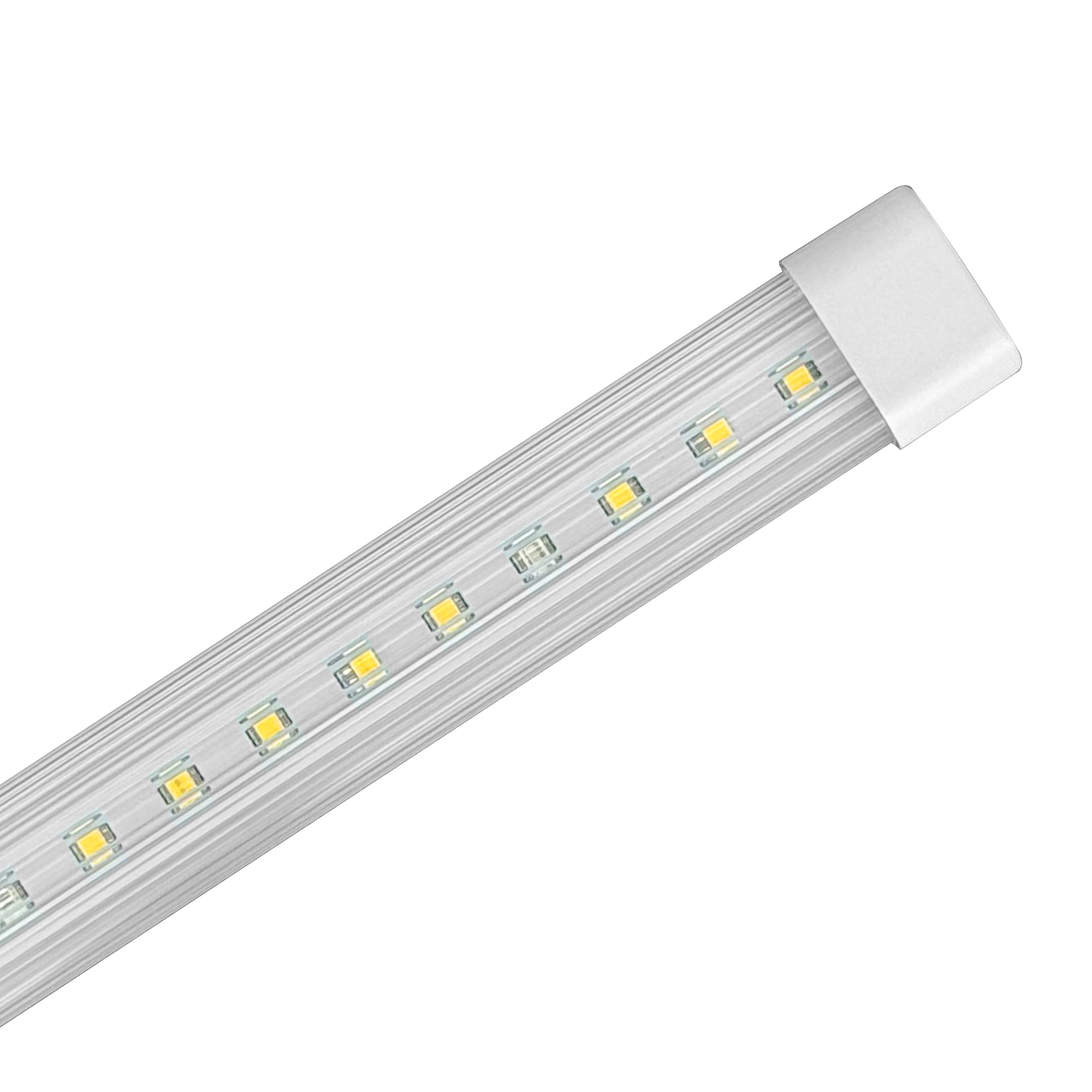
Low Headroom: How a 12 mm Tube Body Changes Rack Geometry
A multi-layer culture rack is dimensioned by its layer pitch — the vertical distance from one shelf surface to the next. Everything between two shelves competes for that space: the vessel, the closure, the air gap the light needs, and the fixture body itself. In a rack where vessels are only a few centimetres tall, the fixture body is not a minor detail; it is subtracted directly from the usable culture height and from the mounting distance available to the light.
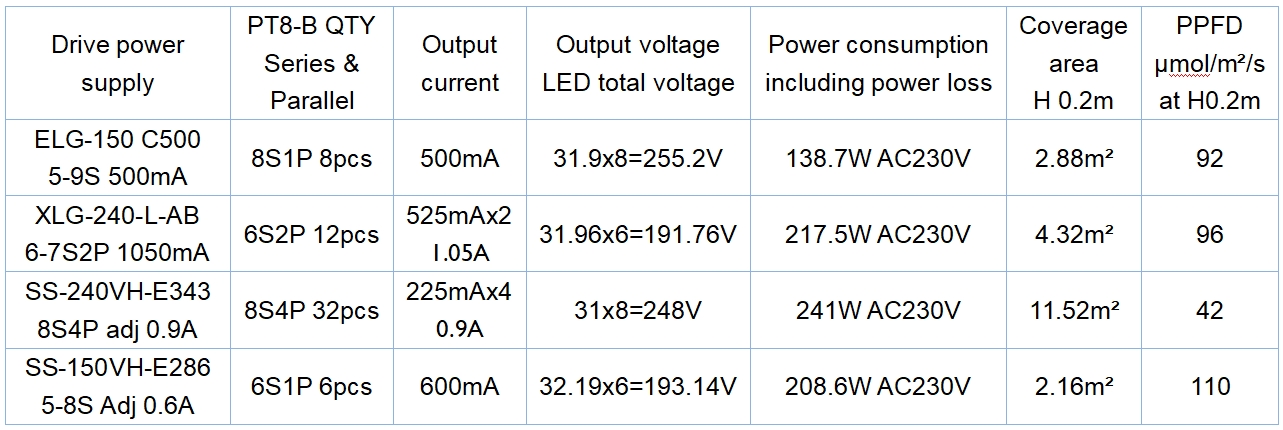
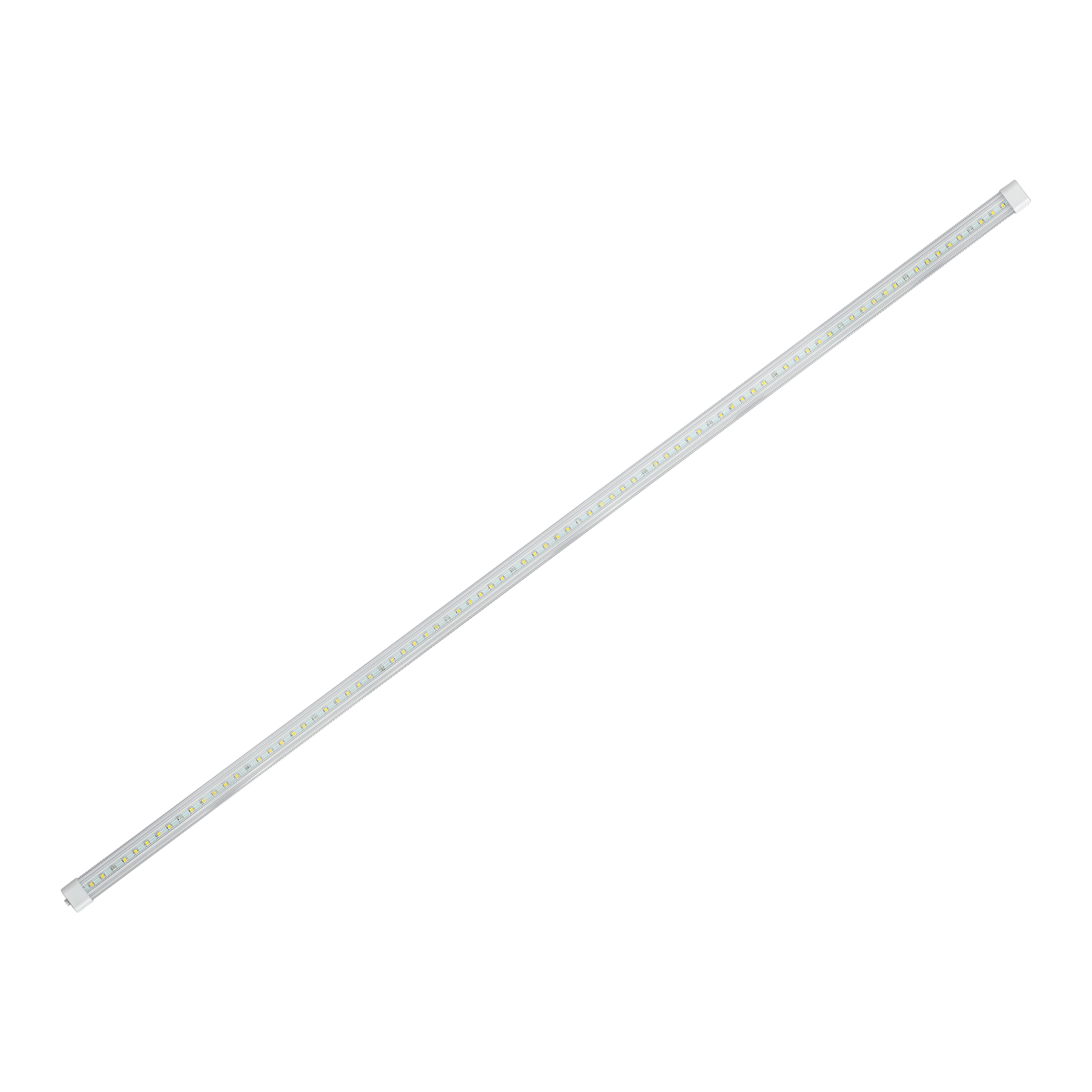
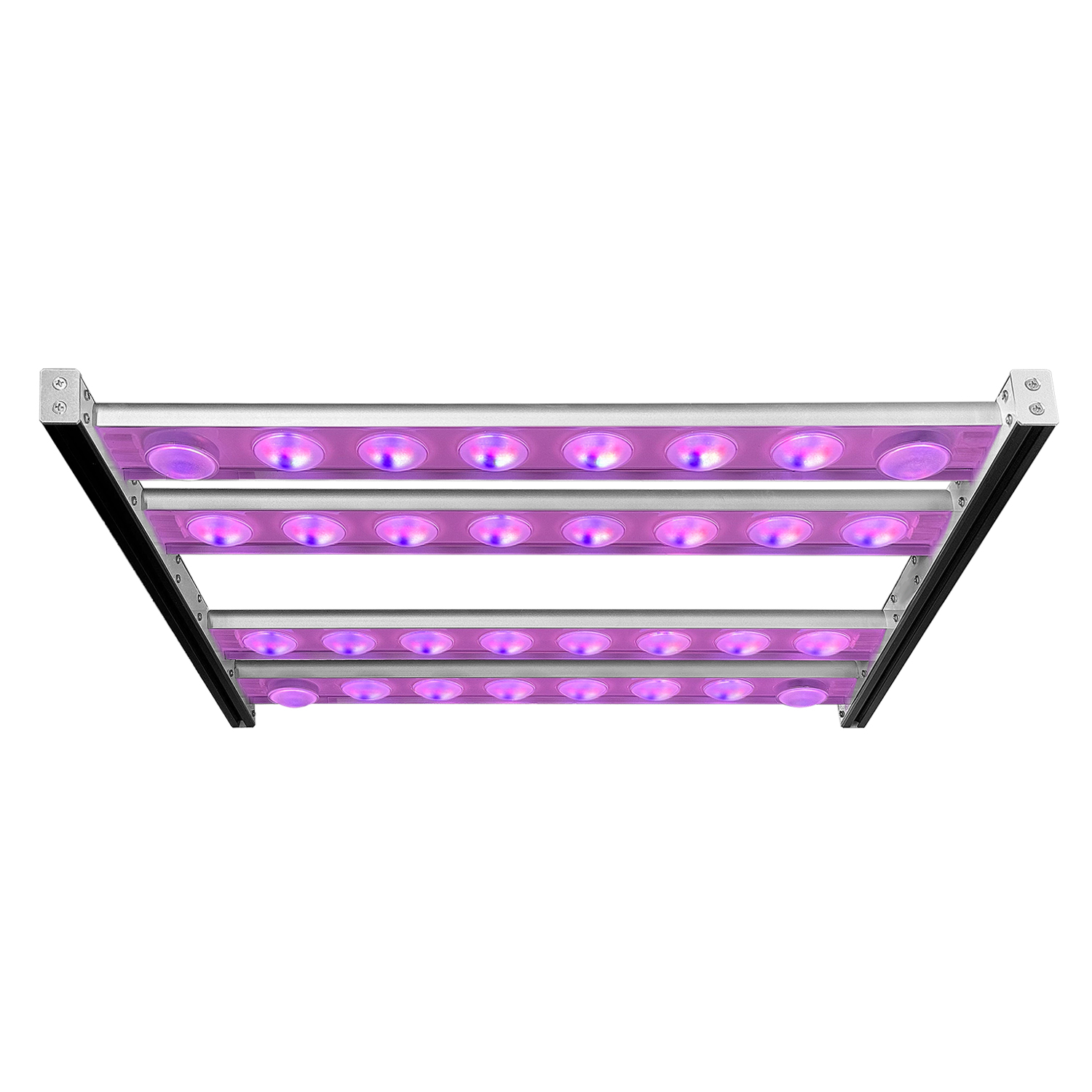
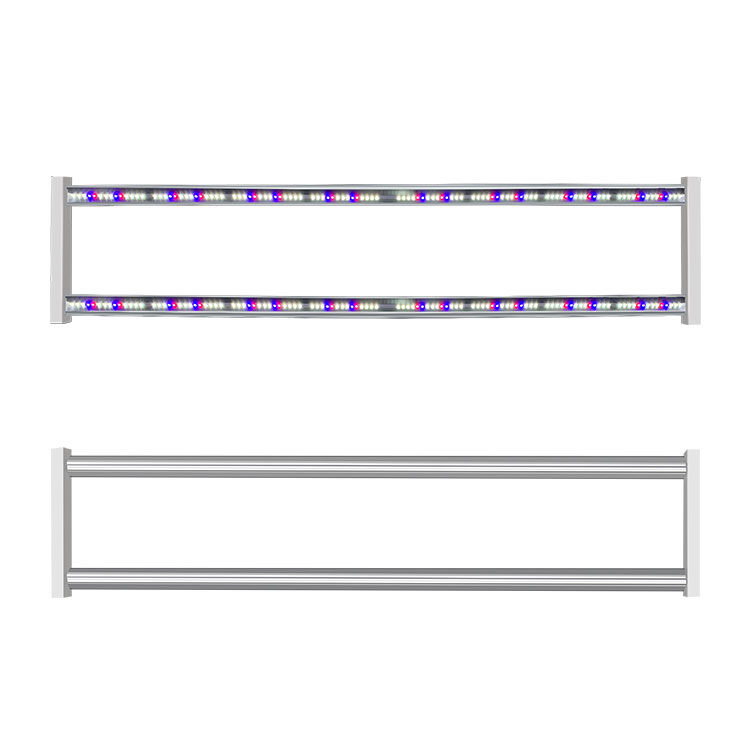
The official PT5-B product page quotes an ultra-thin body thickness of only 12 mm. That is the fixture-side contribution to the layer-pitch budget, and it is small enough to be treated as a thin planar element in the gap rather than as a bulky housing that sets the layer pitch. The same page states that the tube is hung at a height of 0.2 m and reaches a PPFD of up to 110 µmol/m²/s at that distance. The two values belong together: a thin body and a short mounting distance describe a fixture that is meant to sit low over vessels. The official page also lists a photon efficacy of 2.8 µmol/J and states that this is 31% higher than the previous generation. What the official page does not list is the per-tube power rating, the tube length and the area one tube covers, so a rack layout cannot be finalised from the official page alone — the coverage area has to be obtained from the manufacturer rather than interpolated from another tube in the PT5 family.
IP66 and Washdown in a Micropropagation Room
Aseptic work is a cleaning regime before it is a lighting regime. Culture rooms are wiped, misted and sometimes hosed, and the fixtures are inside that envelope. Ingress protection is the standard way to describe how much of that a luminaire tolerates: the first digit covers solids and the second covers water, and IP66 denotes a dust-tight enclosure protected against strong jets of water. The official PT5-B page lists IP66, which is the rating that makes a fixture compatible with a washdown-oriented cleaning routine instead of being a unit that has to be protected from one.
Two practical consequences follow. First, cleaning can include the luminaire surface, which reduces the shaded, contaminated ledge problem that builds up around non-sealed housings. Second, the electrical architecture sits outside the splash zone by design: the official page lists a DC input with a central dimming power supply, so the light tubes themselves are low-voltage elements on the shelf while the power conversion happens away from the vessels. That is an official specification line in this article, not the planning argument; the planning argument here is the combination of a 12 mm body, IP66 washdown tolerance and the published 0.2 m photon values. The official page does not state the operating temperature range or a maximum humidity figure for the tube, so those two items should be confirmed for a room that runs at high relative humidity.
Photon Metrics at the Vessel: PPFD at 0.2 m, Efficacy and Daily Light Integral
Photosynthetic photon flux density, usually written PPFD, is the number of photosynthetically active photons arriving at a surface per second per unit area, expressed in µmol/m²/s. It is a measurement at a stated distance, so a PPFD figure without its height is not a specification. The official PT5-B page states the distance explicitly: at a hanging height of 0.2 m the PPFD reaches 110 µmol/m²/s. Photon efficacy is a different metric: it is the emitted photons per unit of electrical energy, expressed in µmol/J, and it describes conversion efficiency rather than intensity at a surface. The official page lists 2.8 µmol/J, described as 31% higher than the previous generation.
Daily light integral, or DLI, is the total photons delivered over a full day, in mol/m²/day. It is the metric that connects intensity to a protocol, because it is the product of PPFD and the illuminated time. Taking only the official PPFD of 110 µmol/m²/s as an input, sixteen illuminated hours correspond to roughly 6.34 mol/m²/day of delivered light (110 × 3600 × 16 / 1,000,000). That arithmetic is included to show how the published PPFD converts into a daily quantity; the photoperiod itself is a protocol decision, and the official page does not publish an illuminated-hours figure or a DLI target for tissue culture. Photoperiod and spectral recipe remain the grower-side variables, which is why the official dimming arrangement matters: the page lists a central dimming power supply used to adjust light quantity at different culture stages.
Official PT5-B Values and the Conditions Behind Them
The table below reproduces only the values stated on the official PT5-B product page, each with its condition or exact wording. Values that the official page does not publish are listed separately and are not filled in from the PT5 or PT5 Economic models.
| Parameter | Official value | Condition / official wording |
|---|---|---|
| Body thickness | 12 mm | Official wording: ultra thin thickness of only 12 mm |
| Mounting height | 0.2 m | Official wording: suspended at a height of 0.2 m |
| PPFD | Up to 110 umol/m2/s | Measured at the 0.2 m mounting height stated by the official page |
| Photon efficacy | 2.8 umol/J | Official wording: 31% higher than the previous generation |
| Ingress protection | IP66 | Dust tight and protected against strong water jets |
| Power and dimming architecture | DC input with a central dimming power supply | Official wording: used to adjust light quantity across tissue-culture stages; listed here as a specification line, not as the planning spine of this article |
| Rated life | 50,000 hours | Official rating |
| Warranty | 3 years | Official term |
| Certifications | CE / RoHS / FCC | Official marks |
| Stated applications | Multi-layer seedling-raising racks; tissue-culture plantlets; leafy vegetable vegetative growth; cutting and cloning; sowing and seedling raising | Official examples include sundew, lettuce, medicinal plants, Anoectochilus and strawberry |
| Per-tube power rating, tube length and covered area | Official product page does not list | Not filled in from PT5 or PT5 Economic |
| Spectral mix ratio and PPF/PAR | Official product page does not list | No inferred spectrum |
| Series or parallel tube count limit, dimming signal type (0-10V or PWM) | Official product page does not list | Confirm before wiring |
| CCT and Ra | Official product page does not list | Reported as gaps, not estimated |
Culture-Rack Lighting Compared Dimension by Dimension
The comparison below walks through the planning dimensions one at a time: what the official PT5-B values fix, and what a rack planner still has to confirm locally. The third column never carries a number that the official page does not publish.
Where a 12 mm Culture-Rack Tube Fits: Deployment Scenarios
A 12 mm tube hung at 0.2 m suits any rack where the light has to sit inside the same short gap as the vessels. Multi-layer seedling raising is the primary case: many layers, shallow pitch, and a photon flux that has to be repeatable layer to layer. Tissue-culture plantlet rooms are the second case, because the vessels are sealed, the surfaces are cleaned regularly and an IP66 fixture can be wiped or hosed as part of that routine. Cutting and cloning benches and sowing lines are a third, where the official page also lists those uses.
The same page names sundew, lettuce, medicinal plants, Anoectochilus and strawberry among the crops it is used for, which is a reminder that the light recipe rather than the lamp is what changes between crops. Where a species-specific spectral response has to be established, the fixture is the repeatable element in the experiment and the protocol is the variable; the Wageningen work on species-specific LED responses in tissue culture is useful background for planning that trial (Wageningen research on species-specific LED responses). Where a rack is being planned rather than purchased fixture by fixture, the two values to obtain first are the per-tube power and the area one tube covers, because both are absent from the official page and both are needed before tube count per layer can be fixed.
| Planning dimension | PT5-B official value and condition | What the rack planner still has to confirm |
|---|---|---|
| Fixture body thickness in the layer gap | 12 mm (official: ultra thin thickness of only 12 mm) | Total layer pitch minus vessel height and closure |
| Mounting height above the culture surface | 0.2 m (official) | Vessel height plus the vertical clearance the rack allows |
| PPFD at that height | Up to 110 umol/m2/s at 0.2 m (official) | Losses through the vessel lid and gel for the crop in use |
| Photon efficacy | 2.8 umol/J, stated as 31% higher than the previous generation (official) | Electrical load per layer once per-tube power is supplied |
| Ingress protection | IP66 (official) | Whether the room cleaning routine is wipe-down or washdown |
| Dimming for stage changes | DC input with a central dimming power supply (official wording) | Which culture stage each shelf is on at any one time |
| Rated life | 50,000 hours (official) | Duty cycle of the shelf and the replacement schedule |
| Warranty | 3 years (official) | Terms for a multi-shelf installation |
| Certifications | CE / RoHS / FCC (official) | Local market acceptance requirements |
| Per-tube power and covered area | Official product page does not list | Obtain from the manufacturer before fixing tube count per layer |
| Spectral mix ratio, PPF and PAR | Official product page does not list | Species-specific recipe planning for each culture stage |
| Series or parallel tube count limit and dimming signal type | Official product page does not list | Confirmation before the shelf is wired |
Conclusion
Culture-rack lighting is planned from the shelf upwards, and three published values set the frame. The body thickness of 12 mm is the fixture contribution to layer pitch, which in a multi-layer culture rack is the constraint that decides how much vessel height the geometry can carry. IP66 is the rating that lets the luminaire sit inside a wipe-down or washdown cleaning routine instead of being shielded from one. And 110 µmol/m²/s at a stated 0.2 m mounting height is a PPFD figure with its condition attached, paired on the official page with 2.8 µmol/J photon efficacy, a 31% improvement over the previous generation, 50,000 hours rated life and a 3-year warranty. Two numbers that a rack layout normally needs — per-tube power and the area one tube covers — are not published, and neither is the spectral mix or the dimming signal type. Obtain those from the manufacturer and the remaining design work is arithmetic: match tube count to the area each tube lights, then match illuminated hours to the DLI the protocol calls for.
FAQ
How thick is the PT5-B tube, and why does that matter on a rack?
The official product page states an ultra-thin body thickness of only 12 mm. In a multi-layer rack that thickness is subtracted from the layer pitch, so a thinner body leaves more of the gap for the culture vessel, its closure and the air space the light itself needs.
What PPFD does the official page quote, and at what distance?
The official page quotes a PPFD of up to 110 µmol/m²/s at a hanging height of 0.2 m. Because PPFD is only meaningful at a stated distance, the 0.2 m condition is part of the specification.
Is the PT5-B rated for washdown cleaning?
The official page lists IP66 ingress protection, which denotes a dust-tight enclosure protected against strong water jets. That rating is what makes the tube compatible with a wipe-down or washdown cleaning regime in a culture room.
What are the rated life and warranty of the PT5-B?
The official product page lists 50,000 hours rated life and a 3-year warranty, with CE, RoHS and FCC marks. The official page states a photon efficacy of 2.8 µmol/J, described as 31% higher than the previous generation.
Does the official PT5-B page list wattage, tube length, spectrum mix or dimming signal type?
No. The official product page does not list per-tube power, tube length or covered area, spectral mix ratio, PPF or PAR, the series or parallel tube count limit, the dimming signal type, or CCT and Ra. Those items are reported here as gaps and are not filled in from the PT5 or PT5 Economic models.
Why Choose Koray
The PT5-B is manufactured by Zhongshan Koray Opto-Electronic Co., Ltd., which brings 17 years of experience in LED grow-light manufacturing and 300+ domestic and foreign patents to its tissue-culture and seedling-raising tube range.




Leave A Comment