
Understanding Echeveria Light Requirements
Echeveria, one of the most popular succulent genera, demands intense and spectrally balanced light to maintain its iconic rosette shape and vivid coloration. In their natural habitat — rocky hillsides of Central America and Mexico — these plants receive 6 to 8 hours of direct sunlight daily. Replicating that intensity indoors is the single most important factor in keeping Echeveria healthy, compact, and beautifully colored.
When light levels fall short, Echeveria exhibits etiolation: the rosette stretches upward, leaves become sparse, and the plant loses its characteristic tight form. Once etiolated, the damage cannot be reversed — the stretched portion must be beheaded and re-rooted. Prevention through proper lighting is far more effective than correction after the fact.
The Ideal Spectrum for Echeveria
Research and commercial growing experience show that Echeveria thrives under full-spectrum light with emphasis in the blue (400–500 nm) and red (600–700 nm) regions. Blue light promotes compact growth and tight internodal spacing, while red light drives photosynthesis and encourages the production of anthocyanin pigments responsible for stress colors — the pinks, purples, and reds that Echeveria growers prize.
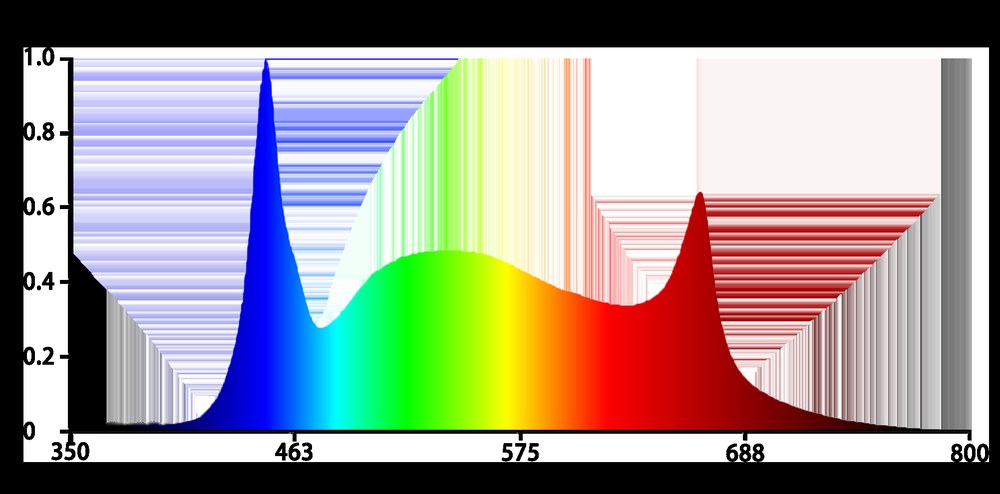
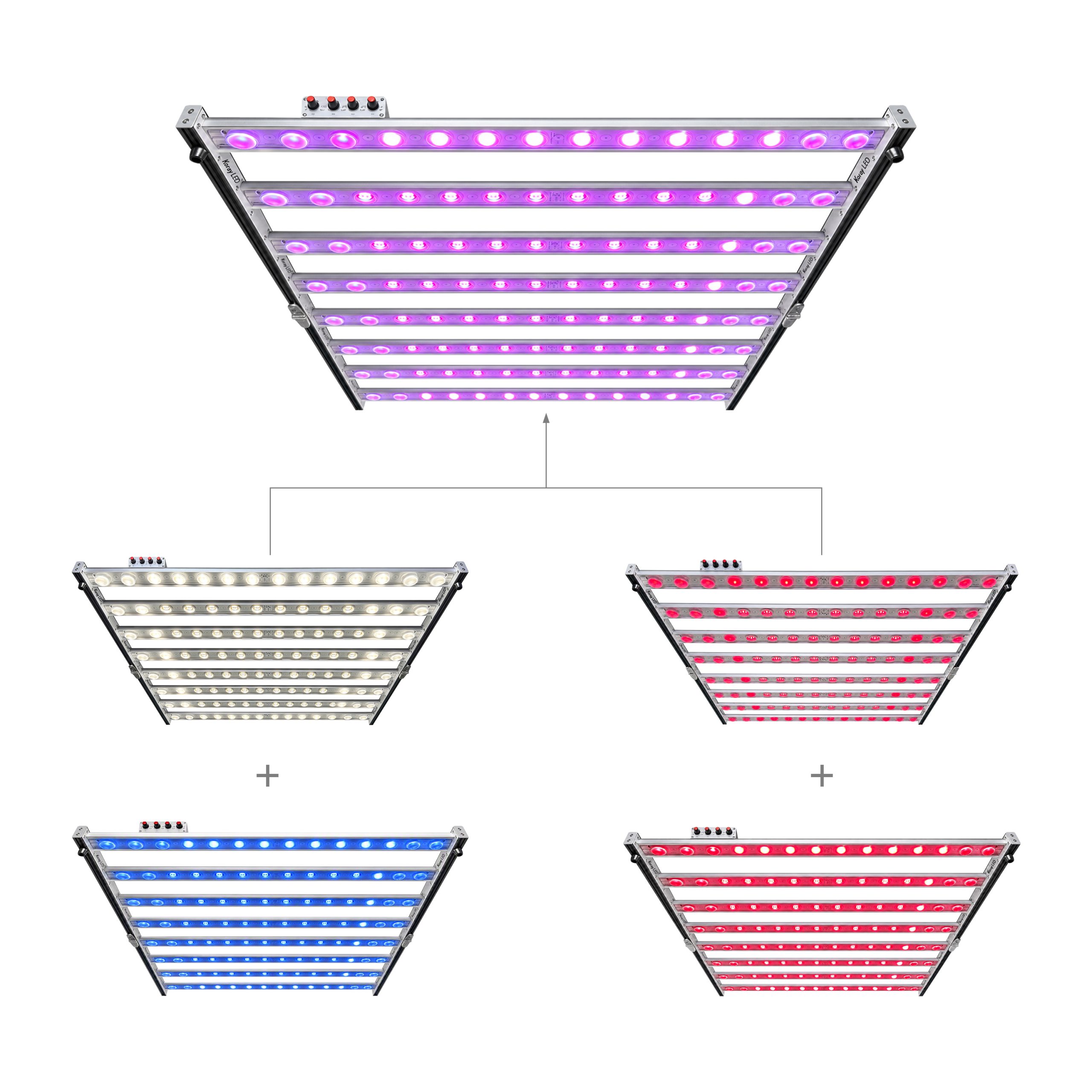
The Koray Lighting K6C spectrum, for example, is specifically engineered with enhanced red output to bring out vivid coloration in succulents, flowers, and carnivorous plants. When paired with adequate intensity, this spectrum produces dramatic color shifts in Echeveria within 2 to 4 weeks. For growers who prefer a more natural white appearance in their home or display area, the S91 warm-white full-spectrum (3000K) delivers excellent results with high CRI, making plants look vibrant to the human eye while still providing the PAR output Echeveria needs.
PPFD and DLI Targets for Echeveria
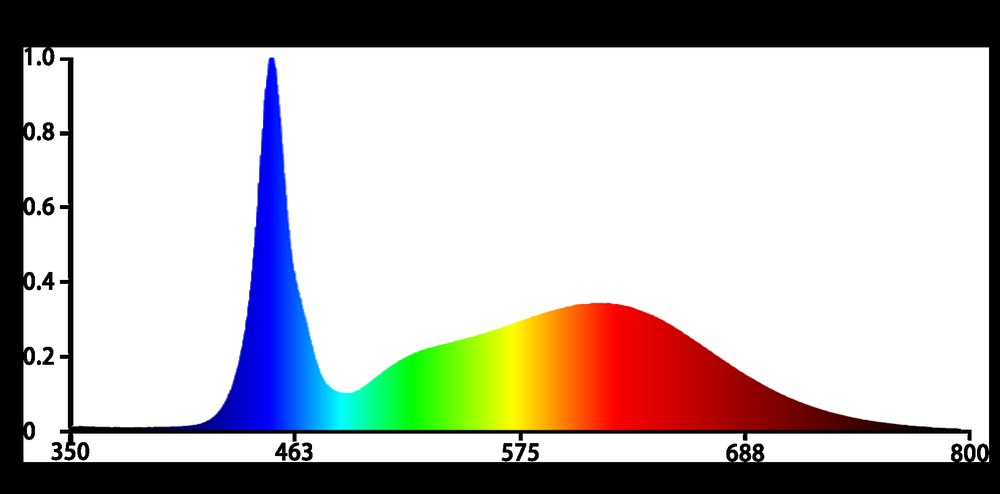
Echeveria requires a daily light integral (DLI) of 20 to 30 mol/m²/day to maintain compact form and develop stress colors. This translates to a PPFD of approximately 400 to 600 μmol/m²/s over a 12 to 14-hour photoperiod. For context, this is comparable to the light intensity found on a sunny windowsill in summer — but consistent, day after day, regardless of weather.
Many common household grow lights deliver only 100 to 200 PPFD at typical hanging distances, which is sufficient for low-light plants like pothos or peace lilies but woefully inadequate for Echeveria. Growers need purpose-built horticultural fixtures that can sustain 400+ PPFD across the entire canopy.
Recommended Koray Products for Echeveria
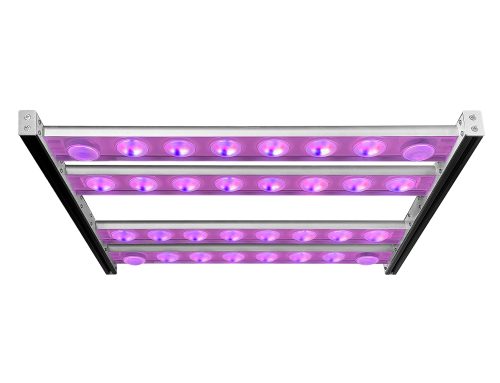
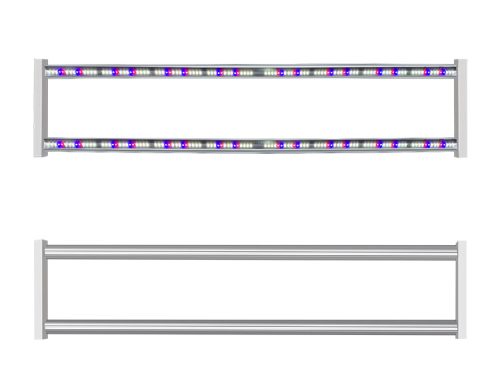
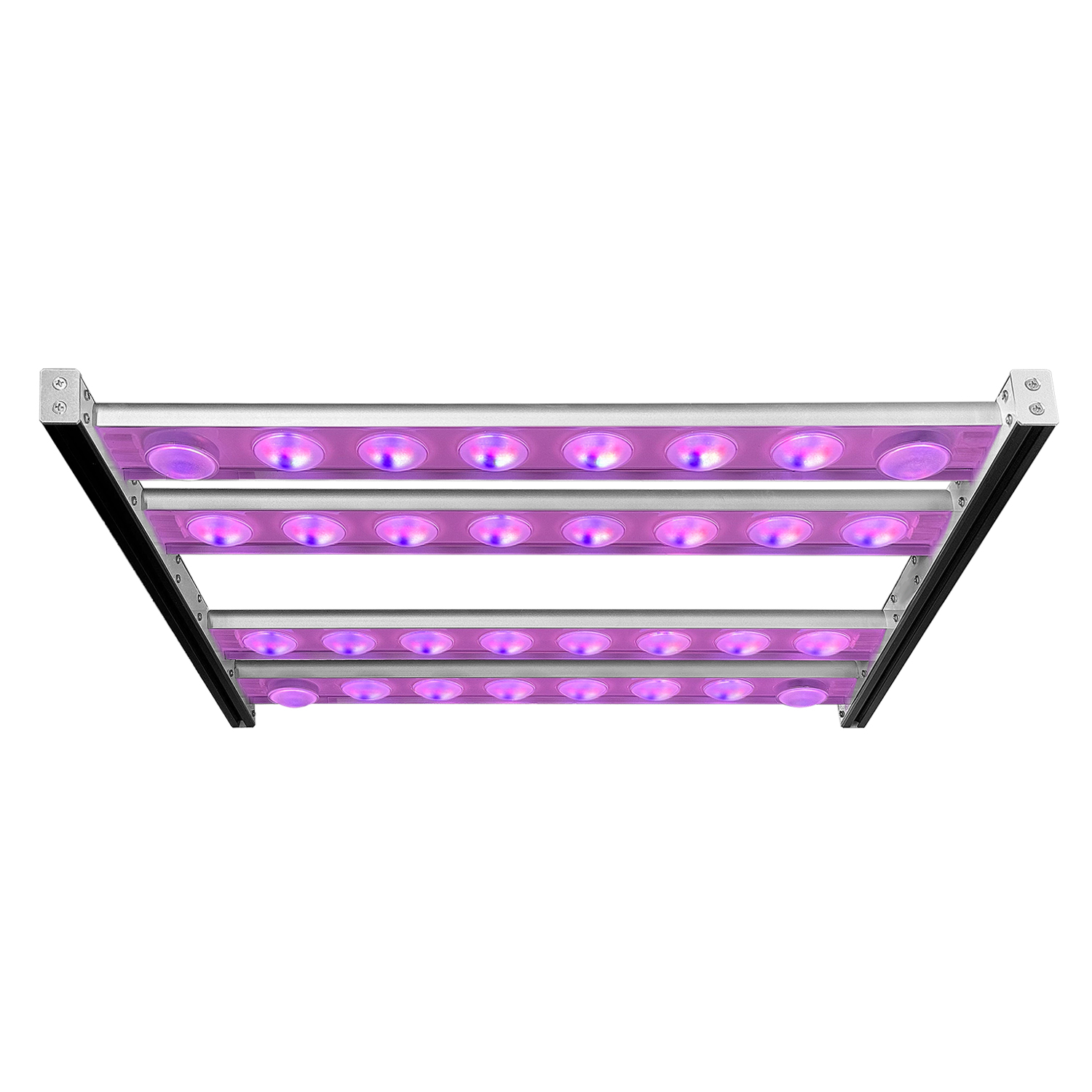
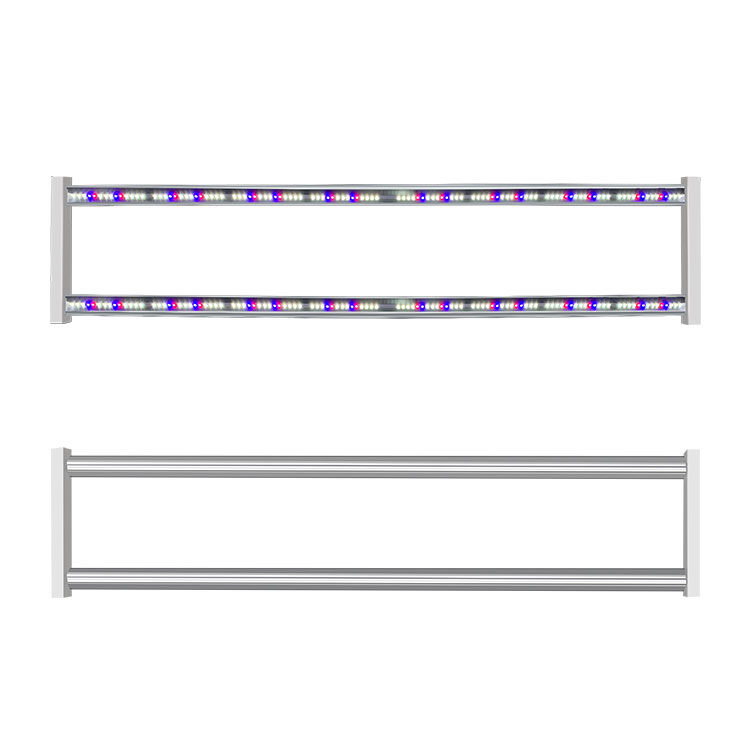
For shelf and rack growing, the Koray GE35-120T-K6 is an outstanding choice. This 80W bar delivers PPFD of 760 μmol/m²/s at 0.2m and 530 at 0.3m, with a 45° lens that concentrates light exactly where succulents need it. The K6 spectrum’s enhanced red output is ideal for triggering the anthocyanin pathways that produce Echeveria’s most sought-after colors. At 38x40mm, the bar fits standard shelving and the IP64 rating handles the occasional misting.
For growers using PAR38-style fixtures, the Koray RX-PAR38 with K6 spectrum provides 60° beam angle coverage suitable for spot-lighting individual Echeveria specimens on display shelves. The E27 base makes it compatible with standard socket fixtures, and the 20W power consumption keeps electricity costs low while delivering the intensity these plants demand.
For larger collections or commercial display setups, the Koray PAR30Z-20W with S91 spectrum offers a zoomable lens (beam angle adjustable from 15° to 60°), allowing growers to fine-tune coverage from a tight spot on a single prize plant to a wider area covering an entire shelf of mixed succulents. The S91 3000K warm-white spectrum renders Echeveria colors beautifully for retail or home display while still providing 2.5 μmol/J efficiency.
Installation and Photoperiod Tips
Hang your grow light 15 to 30 cm above the Echeveria canopy. At this distance, you will achieve the 400 to 600 PPFD target without risking light burn — LED grow lights produce very little radiant heat compared to HPS or fluorescent fixtures. Run the lights on a 12 to 14-hour timer cycle. Consistency matters: use a timer to ensure the same photoperiod every day.
If you are running a multi-tier succulent rack, the Koray GE35 series with DC centralized power supply (GE35-120T-DC-2H-VR) allows you to wire multiple bars to a single driver, reducing clutter and simplifying installation. The adjustable power feature (up to 75W, max 90W) lets you dial in the exact intensity each shelf needs.
Common Mistakes to Avoid
The most frequent mistake Echeveria growers make is underestimating how much light these plants need. A single 10W LED bulb over a small pot may seem sufficient, but it rarely delivers more than 150 PPFD at the plant surface — enough to keep the plant alive but not enough to prevent stretching or color loss.
Another common error is choosing lights based on lumens rather than PPFD. Lumens measure brightness as perceived by the human eye, but plants use PAR (photosynthetically active radiation) measured in μmol/m²/s. A light that appears very bright to your eyes may actually deliver poor PPFD if the spectrum lacks the red and blue wavelengths that drive photosynthesis.
Finally, avoid placing Echeveria under lights that are too far away. PPFD drops dramatically with distance — doubling the distance reduces intensity to roughly one-quarter. Keep the light close (15 to 30 cm) and you will be rewarded with tight, colorful rosettes that look like they came straight from a greenhouse.
Summary
The best grow light for Echeveria delivers 400 to 600 PPFD at the canopy, provides a full spectrum with enhanced blue and red, and runs on a consistent 12 to 14-hour photoperiod. Koray Lighting’s K6C and S91 spectrum options — available in GE35 bars, PAR38 bulbs, and the zoomable PAR30Z-20W — are purpose-built for exactly this application. With the right light, Echeveria will reward you with compact form and stunning color year-round, regardless of the natural sunlight available in your space.




Leave A Comment