
PAR38 Grow Lights: An Overview for Succulent Growers
PAR38 grow lights have become a go-to solution for indoor succulent enthusiasts, and for good reason. The PAR38 form factor — named for its 38-eighths-inch (121 mm) diameter — houses enough LED chips to deliver meaningful PPFD output while fitting into standard E27 or E26 sockets. For succulent collections that range from a few pots on a windowsill to an entire bookshelf display, PAR38 fixtures offer a practical balance of intensity, coverage, and ease of installation.
But not all PAR38 grow lights are created equal. The spectrum, beam angle, and actual PPFD output vary dramatically between products. Understanding these differences is the key to choosing a PAR38 light that will keep your succulents compact, colorful, and healthy rather than stretched and pale.
What Succulents Need from a Grow Light
Most succulents — Echeveria, Sedum, Graptopetalum, Crassula, Haworthia (to a lesser extent) — originate from arid, high-light environments. They need a minimum PPFD of 300 μmol/m²/s at the canopy to maintain form, and 400 to 600 PPFD to develop the stress colors that make them visually stunning. The DLI target is 15 to 25 mol/m²/day depending on species.
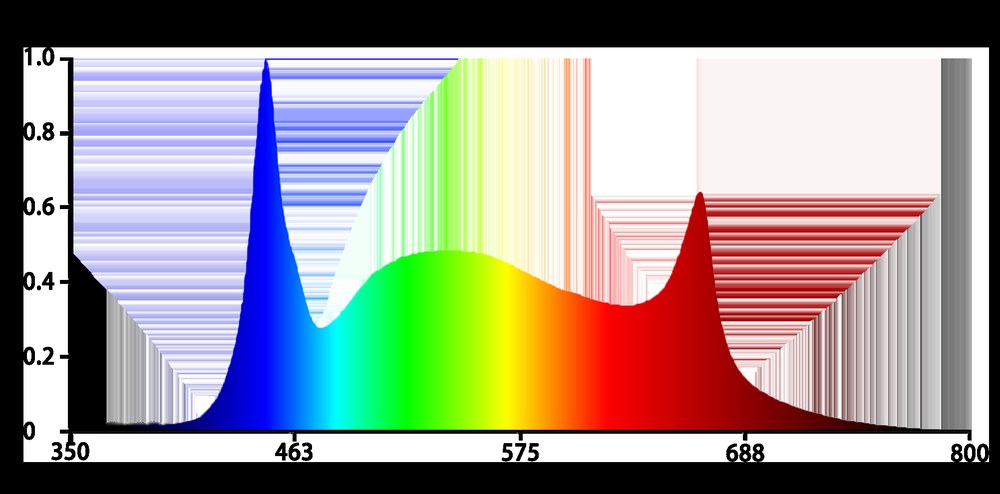
Equally important is spectrum quality. Blue wavelengths (400–500 nm) promote compact growth and prevent etiolation. Red wavelengths (600–700 nm) drive photosynthetic efficiency and stimulate pigment production. A full-spectrum light that covers both ranges — with enough intensity at the plant surface — will produce results that closely mimic outdoor growing conditions.
Koray RX-PAR38: Built for Succulents
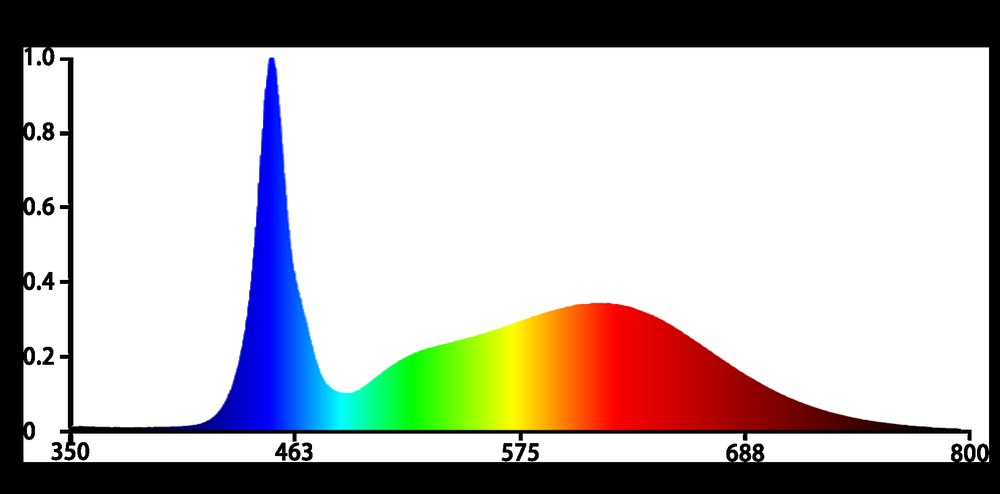
The Koray RX-PAR38 series is specifically designed for this application. Available in multiple spectrum options including S85 (cool white full-spectrum), S93 (warm white), and K6 (enhanced red for succulents and flowering plants), the RX-PAR38 lets growers match the light output to their specific collection needs.
For succulent collections, the K6 spectrum is particularly effective. Its enhanced red output targets the anthocyanin pathways that produce red, purple, and pink coloration in Echeveria, Graptopetalum, and Sedum. Growers typically report visible color improvement within 2 to 3 weeks of consistent exposure.
The RX-PAR38 delivers a 60° beam angle, which provides a good balance between intensity and coverage area. At 0.3m hanging distance, a single fixture covers approximately a 0.5m diameter circle with usable PPFD — enough for a cluster of 4 to 6 small succulent pots arranged tightly. For larger collections, multiple fixtures on a shelf or rack create overlapping coverage that eliminates dark spots.
PAR38 vs. Other Form Factors for Succulents
Compared to quantum board fixtures, PAR38 bulbs offer easier installation (just screw into a standard socket), lower upfront cost, and more flexible placement. You can add or reposition individual lights as your collection grows without rewiring an entire rack. The trade-off is that PAR38 fixtures typically cover a smaller area per unit than a large quantum board like the Koray G80 series.
Compared to T5 or T8 tube lights, PAR38 bulbs deliver higher point intensity — better for succulents that demand strong directional light. Tube lights spread their output over a longer area, which is excellent for uniform coverage on a shelf but may not deliver enough peak PPFD directly above the plant for the most light-hungry succulent species.
For growers who want even more flexibility, the Koray PAR30Z-20W takes the PAR form factor a step further with a zoomable lens that adjusts beam angle from 15° to 60°. At 15°, you get a tight, intense spot perfect for a single high-light specimen. At 60°, the light spreads to cover a wider area for mixed collections. This adjustability makes the PAR30Z-20W especially useful for growers whose collections evolve over time.
Setting Up Your PAR38 Succulent Display
For a typical bookshelf or display rack setup with PAR38 lights, follow these guidelines:
Mount the fixture 20 to 35 cm above the succulent canopy. At 20 cm, you will achieve peak PPFD (approximately 500 to 700 μmol/m²/s depending on the specific model), ideal for Echeveria and other high-light genera. At 35 cm, the coverage area widens but PPFD drops to approximately 250 to 350 — still sufficient for Haworthia and Gasteria, which tolerate lower light.
Use a timer to maintain a 12 to 14-hour photoperiod. Succulents benefit from a consistent day/night cycle, and a simple plug-in timer eliminates the guesswork. If you are running multiple PAR38 fixtures on the same shelf, consider using the Koray GE35 series with DC centralized power for a cleaner, more professional installation with fewer individual drivers.
Energy Efficiency and Operating Cost
Modern LED PAR38 grow lights are remarkably efficient. The Koray RX-PAR38 at 20W replaces a 100W incandescent or 40W fluorescent bulb while delivering superior PPFD and spectrum quality. Over a year of 13-hour daily operation, a single 20W PAR38 consumes approximately 95 kWh — at an average electricity rate of $0.12/kWh, that is about $11.40 per year per fixture.
Compare this to running a 400W HPS fixture for the same period: 1,900 kWh and $228 per year. The LED savings are substantial, and you also avoid the heat output that makes HPS fixtures impractical for small indoor succulent displays.
Practical Tips for Success
Rotate your succulent pots quarterly to ensure even growth, since PAR38 fixtures provide directional light from a single point. Plants will naturally lean toward the light source, and occasional rotation keeps them symmetrical.
If you notice your succulents stretching between waterings, the light is likely too far away or not intense enough. Move the fixture closer or add a second light. If leaf tips show signs of bleaching or brown spots, the PPFD may be too high — increase the hanging distance by 5 to 10 cm.
For mixed collections containing both high-light succulents (Echeveria, Sedum) and lower-light species (Haworthia, Sansevieria), position the PAR38 fixture to cover the high-light plants directly, and let the falloff at the edges of the beam serve the shade-tolerant species.
Final Thoughts
Yes, a PAR38 grow light is an excellent choice for a succulent collection. The Koray RX-PAR38 with K6 spectrum delivers the intensity, spectral quality, and coverage that succulents need to stay compact and colorful. For growers who want maximum flexibility, the zoomable PAR30Z-20W adds adjustable beam angle to the same proven platform. With proper placement and photoperiod, your succulent collection will thrive under PAR38 lighting year-round.


Leave A Comment