
What Spectrum Is Best for Strawberry Flowering and Fruiting?
Choosing the right light spectrum is one of the most important decisions when growing strawberries indoors. While all plants need light for photosynthesis, the specific wavelengths (colors) within that light profoundly influence whether a strawberry plant focuses on growing leaves, producing flowers, or ripening fruit. Understanding how different parts of the light spectrum affect strawberry development allows you to select or customize a lighting solution that maximizes both yield and fruit quality.
The Role of Red Light in Strawberry Flowering
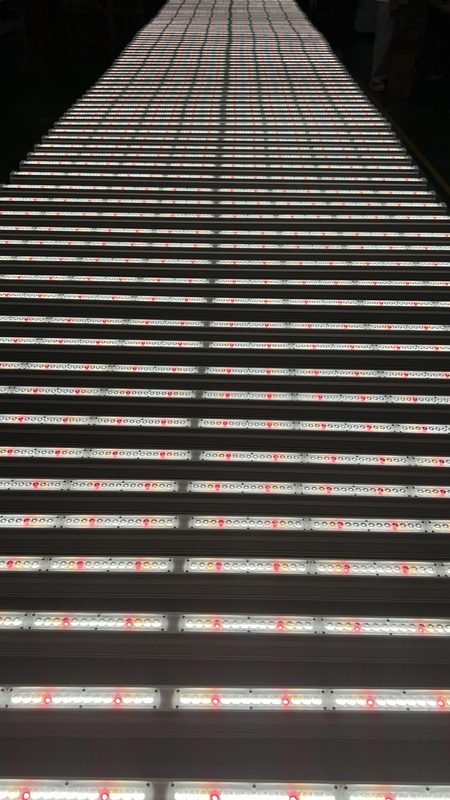
Red light, particularly in the 600-660nm range, is the single most important wavelength band for triggering and supporting flowering in strawberries. This is because red photons are absorbed most efficiently by phytochrome pigments (specifically Phytochrome B), which act as the plant’s internal clock and flowering switch. When phytochromes detect a high ratio of red to far-red light, they signal the plant to initiate reproductive growth.
Research has consistently shown that increasing the proportion of red light in the spectrum from 20% to 35% can increase flower count in strawberries by 25-40%. The Koray F175 spectrum, used in the GE35-120T-F175 and GE35-90T-F175 models, is engineered with this principle in mind. It delivers a balanced full-spectrum output with enhanced red content that promotes prolific flowering while maintaining enough blue and green light for healthy vegetative development.
Blue Light and Fruit Quality
While red light drives flowering, blue light (400-500nm) plays a crucial role in fruit quality. Blue photons are absorbed by cryptochrome pigments, which regulate several processes directly related to fruit development including anthocyanin synthesis, fruit firmness, and sugar accumulation.
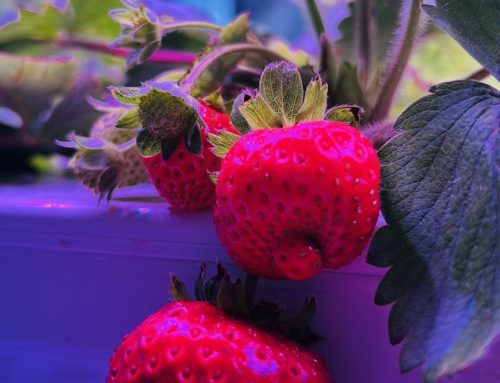
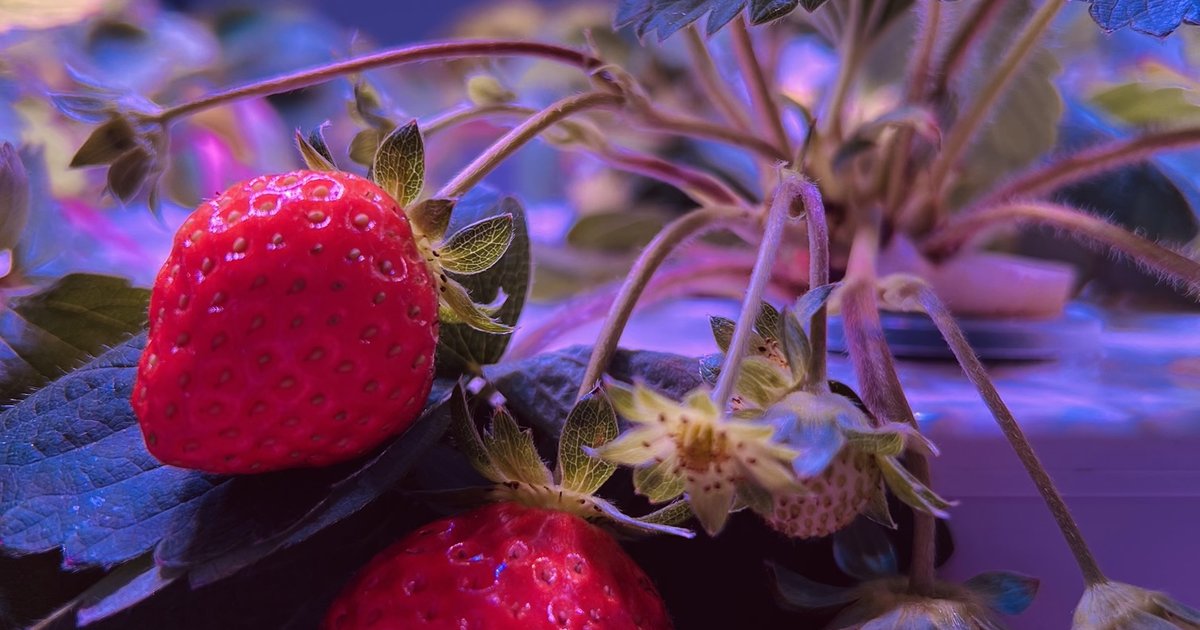
Anthocyanins are the pigments that give strawberries their characteristic deep red color. Studies have demonstrated that strawberries grown with adequate blue light exposure develop more intense coloration, higher total anthocyanin content, and better visual appeal. Blue light also contributes to firmer fruit with longer shelf life, which is particularly important for commercial operations where fruit must survive harvesting, packaging, and transportation.
The ideal blue content for strawberry fruiting is 15-20% of the total photosynthetic photon flux (PPF). This is precisely the range that the Koray F175 spectrum provides. The GE35-120T-F175, with its 1200mm length and 60W power consumption, delivers 150 μmol/s of PPF with the optimal blue-to-red ratio for strawberry production.
Why Full-Spectrum Outperforms Red-Blue Only
In the early days of LED horticulture, many manufacturers produced red-blue only (blurple) lights based on the McCree curve, which shows the relative photosynthetic efficiency of different wavelengths. While this approach seemed logical, subsequent research revealed several disadvantages for fruiting crops like strawberries.
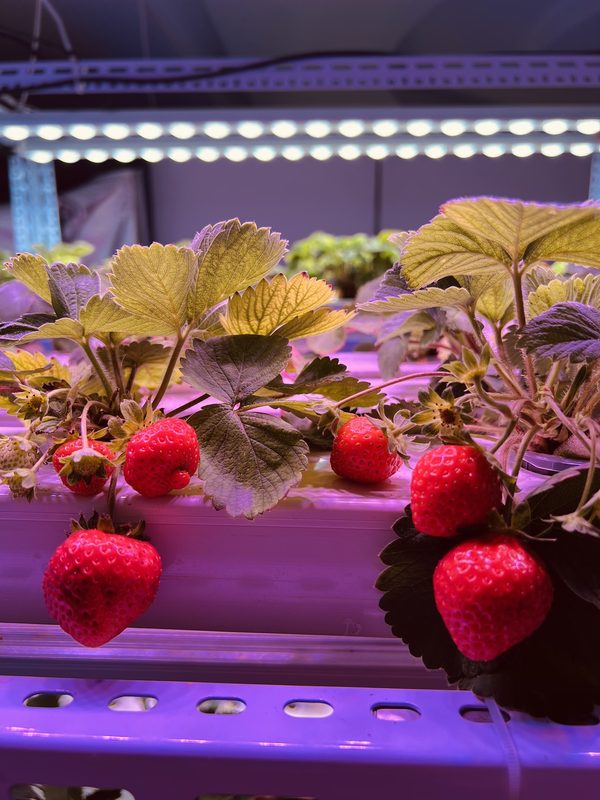
First, green light (500-600nm), which blurple lights largely exclude, actually penetrates deeper into the plant canopy than red or blue light. This means the lower leaves of your strawberry plants receive more usable photosynthetic light under full-spectrum illumination, leading to more uniform growth and higher total yield. Second, full-spectrum light allows you to visually inspect your plants for pest damage, nutrient deficiencies, and disease symptoms — something that is very difficult under purple blurple light.
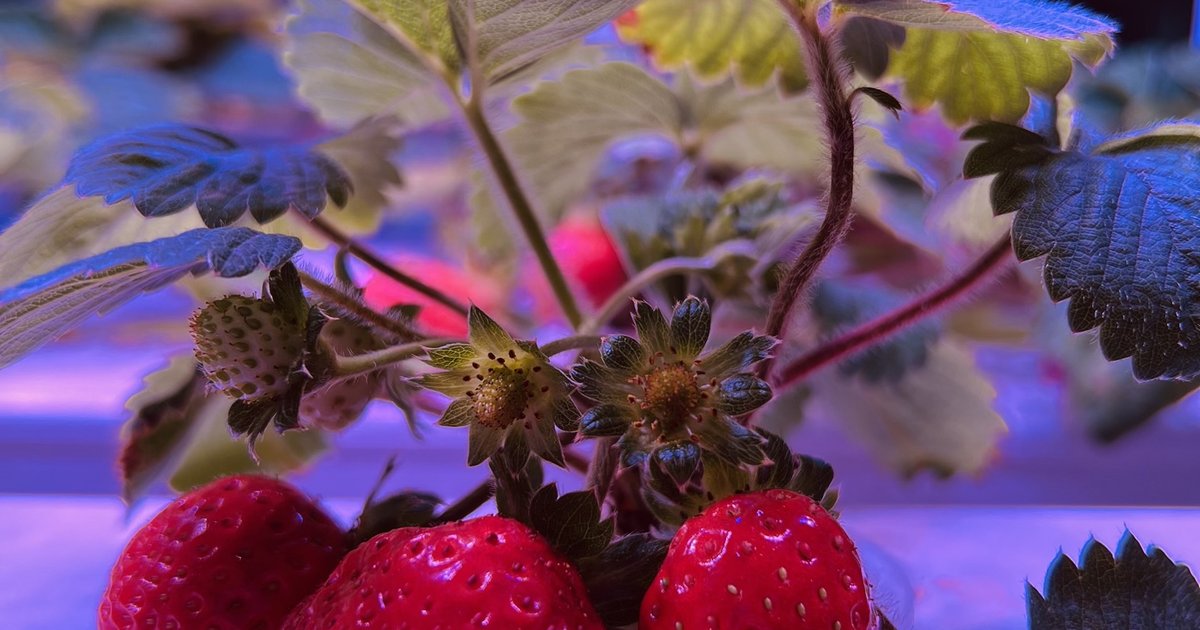
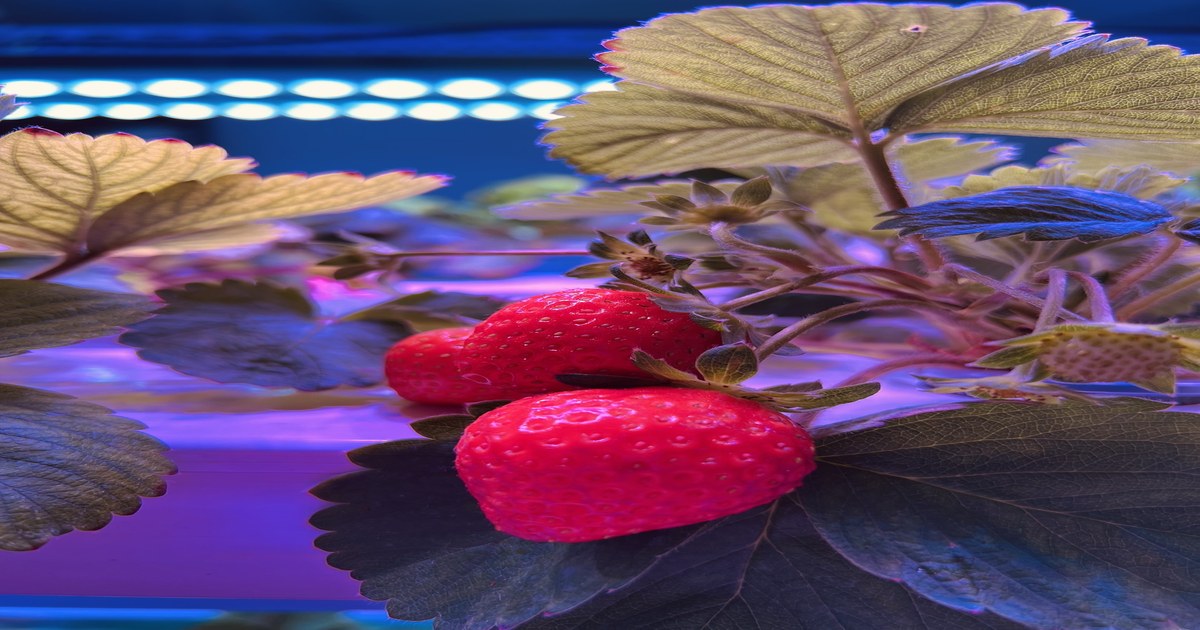
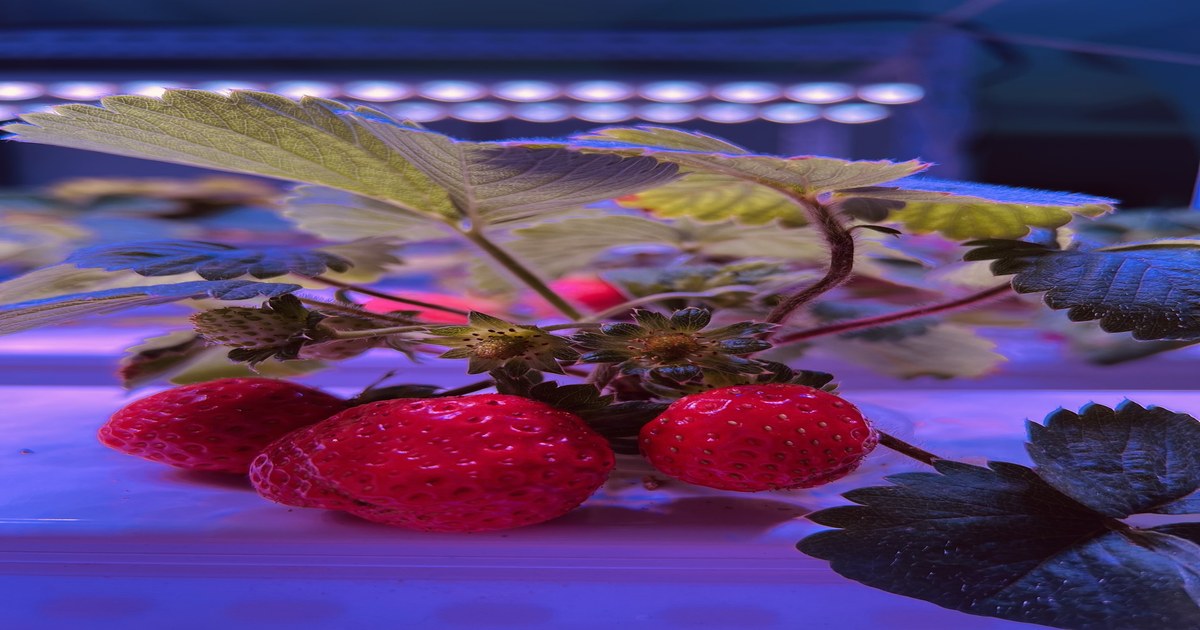
The Koray GE35 series with F175 spectrum provides a full-spectrum output that includes all wavelengths from 400-700nm in balanced proportions. This means your strawberries benefit from the deep canopy penetration of green light, the flowering stimulation of red light, and the fruit quality enhancement of blue light — all simultaneously.
Far-Red Light: The Hidden Advantage
Beyond the traditional 400-700nm PAR range, far-red light (700-750nm) also plays a role in strawberry production. Far-red photons, while less individually efficient at driving photosynthesis, create the Emerson enhancement effect when combined with red light. This means that the total photosynthetic rate under red + far-red light is greater than the sum of each wavelength’s individual contribution.
Far-red light also influences stem elongation and leaf expansion through the phytochrome system. In strawberries, moderate far-red exposure can promote larger leaf area, which increases the plant’s total photosynthetic capacity. Some Koray spectrum options include far-red wavelengths for enhanced performance in commercial applications.
Spectrum Adjustments for Different Growth Stages
Strawberry plants have different spectrum preferences at different growth stages. During the seedling and vegetative phase, a slightly higher blue content (20-25%) promotes compact growth and strong root development. As plants transition to flowering, increasing the red proportion (to 30-35%) accelerates flower initiation and fruit set.
For growers who want maximum control, the Koray GE35-120T-DC-2H-VR model offers adjustable power from standard output up to 75W (90W max) on a DC40V platform, allowing you to fine-tune light intensity as plants progress through growth stages. Combined with the F175 spectrum’s balanced output, this gives you the flexibility to optimize both vegetative growth and fruiting performance.
Practical Spectrum Recommendations
For most strawberry growers, the simplest and most effective approach is to use the Koray GE35-120T-F175 with its optimized full-spectrum output. This eliminates the need for spectrum switching and provides excellent results throughout the entire growth cycle. At 0.2 meters distance, each bar delivers 530 μmol/m²/s of PPFD — more than sufficient for both flowering and fruiting. For larger installations, the GE35-90T-F175 at 900mm and 40W offers the same spectrum in a more compact form factor with Ra greater than 90 for excellent color rendering.
Conclusion
The best spectrum for strawberry flowering and fruiting is a full-spectrum LED with enhanced red content (25-35%), adequate blue (15-20%), and sufficient green light for canopy penetration. The Koray F175 spectrum, available across the GE35 series, has been specifically engineered to deliver this optimal balance. By providing the right wavelengths in the right proportions, you can maximize flower count, fruit set, color quality, and sugar content — all while maintaining energy efficiency with efficacy up to 2.5 μmol/J.
Koray Lighting brings over 15 years of spectral engineering expertise to every product we manufacture. With more than 200 patents in LED horticultural lighting, we continue to push the boundaries of what optimized spectra can achieve for growers worldwide.

Leave A Comment