
Understanding Blue Light and Succulent Growth
Succulents have become one of the most popular categories of indoor ornamental plants, valued for their striking forms, low maintenance requirements, and remarkable diversity. As more growers turn to artificial lighting to cultivate these plants indoors, a critical question arises: what happens when succulents receive only blue light? The answer involves understanding how different wavelengths of light affect photosynthesis, morphology, and overall plant health. This guide draws on horticultural science and real-world grower experience to provide a comprehensive answer, and introduces purpose-built lighting solutions from Koray Lighting that deliver the balanced spectrum succulents actually need.
Why Blue Light Matters for Succulents
Blue light, typically defined as wavelengths between 400 and 500 nanometers, plays a vital role in plant development. It drives chlorophyll absorption, regulates stomatal opening, and influences phototropic responses. In succulents specifically, blue light helps maintain compact growth, prevents etiolation (the stretched, leggy growth that occurs when plants search for light), and supports the development of vivid coloration in varieties like Echeveria, Graptopetalum, and Sedum.
Research has shown that blue light activates cryptochrome and phototropin photoreceptors, which control many aspects of plant morphology including leaf thickness, stem elongation rates, and anthocyanin production. For succulent growers, this means blue light is essential for maintaining the compact, colorful appearance that makes these plants so desirable.
The Problem with Blue-Only Lighting
While blue light is important, providing only blue light creates several significant problems for succulent health and appearance:
Stunted growth and abnormal morphology: Succulents grown under blue-only light often exhibit unusually compact growth that goes beyond the desirable “compact” look. The plants may become overly dense, with new leaves struggling to emerge properly. This is because blue light strongly inhibits stem elongation through its effects on phytochrome and cryptochrome systems.
Color stress and bleaching: Excessive blue light without balancing wavelengths can cause photo-oxidative stress in succulent tissues. Many growers notice their plants developing bleached, washed-out appearances or, conversely, excessively dark pigmentation that masks the natural beauty of the plant.
Reduced photosynthetic efficiency: While blue photons carry more energy individually, plants use a range of wavelengths for photosynthesis. The Emerson enhancement effect demonstrates that photosynthesis is most efficient when both Photosystem I (which prefers longer, redder wavelengths) and Photosystem II (which absorbs blue light well) are activated simultaneously. Blue-only lighting leaves Photosystem I underutilized, reducing overall photosynthetic efficiency.
Impaired flowering: Many succulent species, including popular genera like Echeveria and Aloe, require specific photoperiodic cues to flower. Blue-only light disrupts the phytochrome-mediated photoperiod response, making it nearly impossible for these plants to initiate blooming.
What Succulents Actually Need: Full-Spectrum Lighting
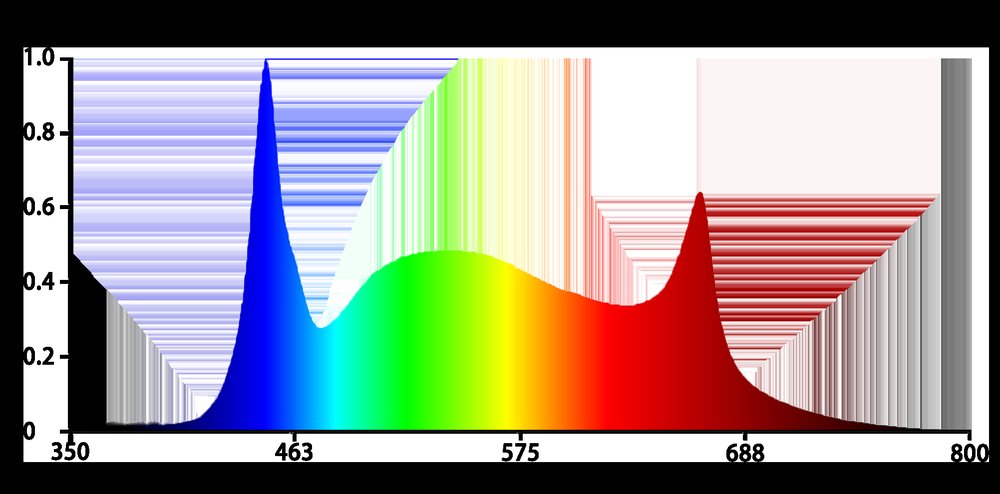
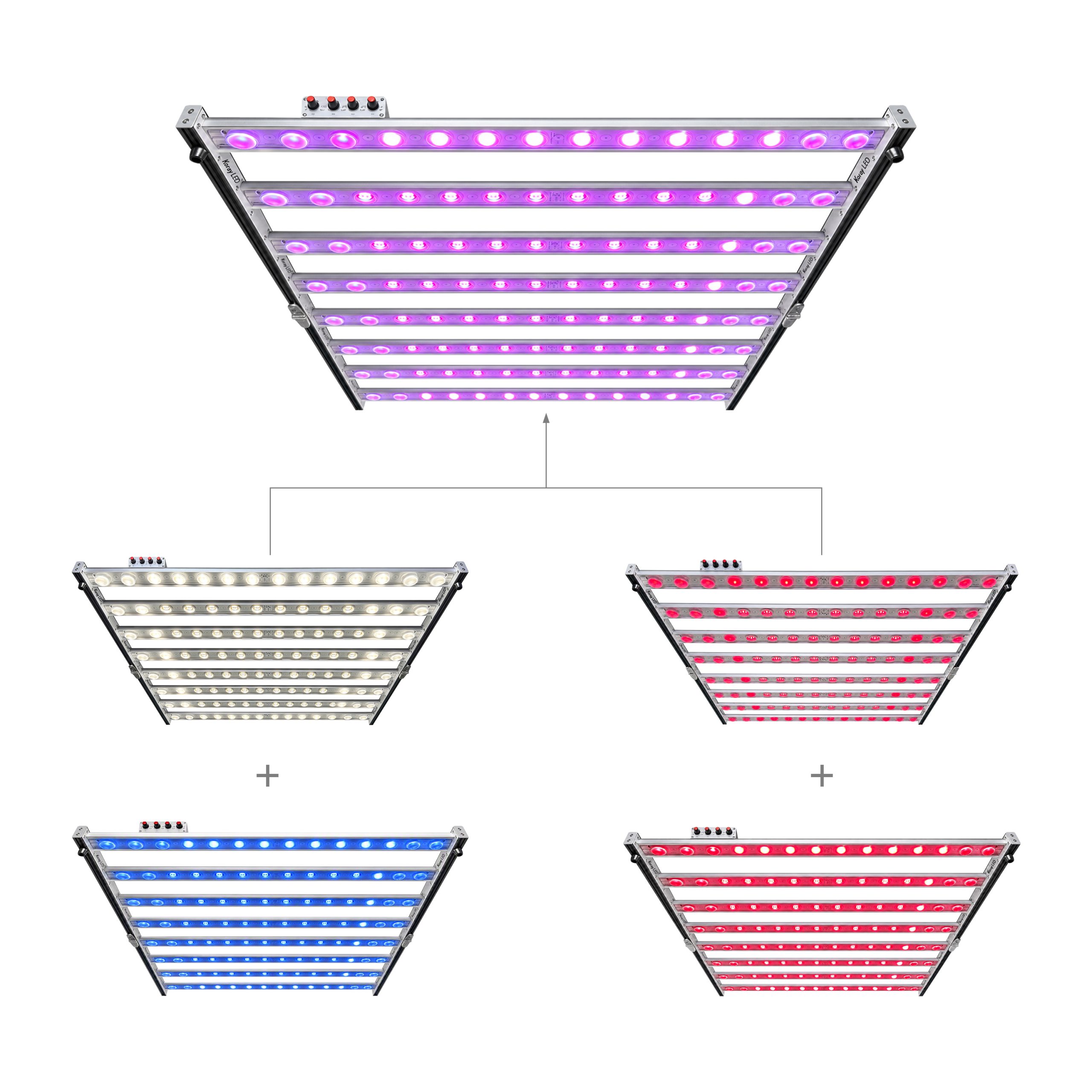
The healthiest succulents are grown under lighting that mimics the spectral balance of natural sunlight. This means a combination of blue wavelengths for compact growth and color development, red wavelengths for photosynthetic efficiency and flowering support, and green wavelengths for penetration through the leaf canopy.
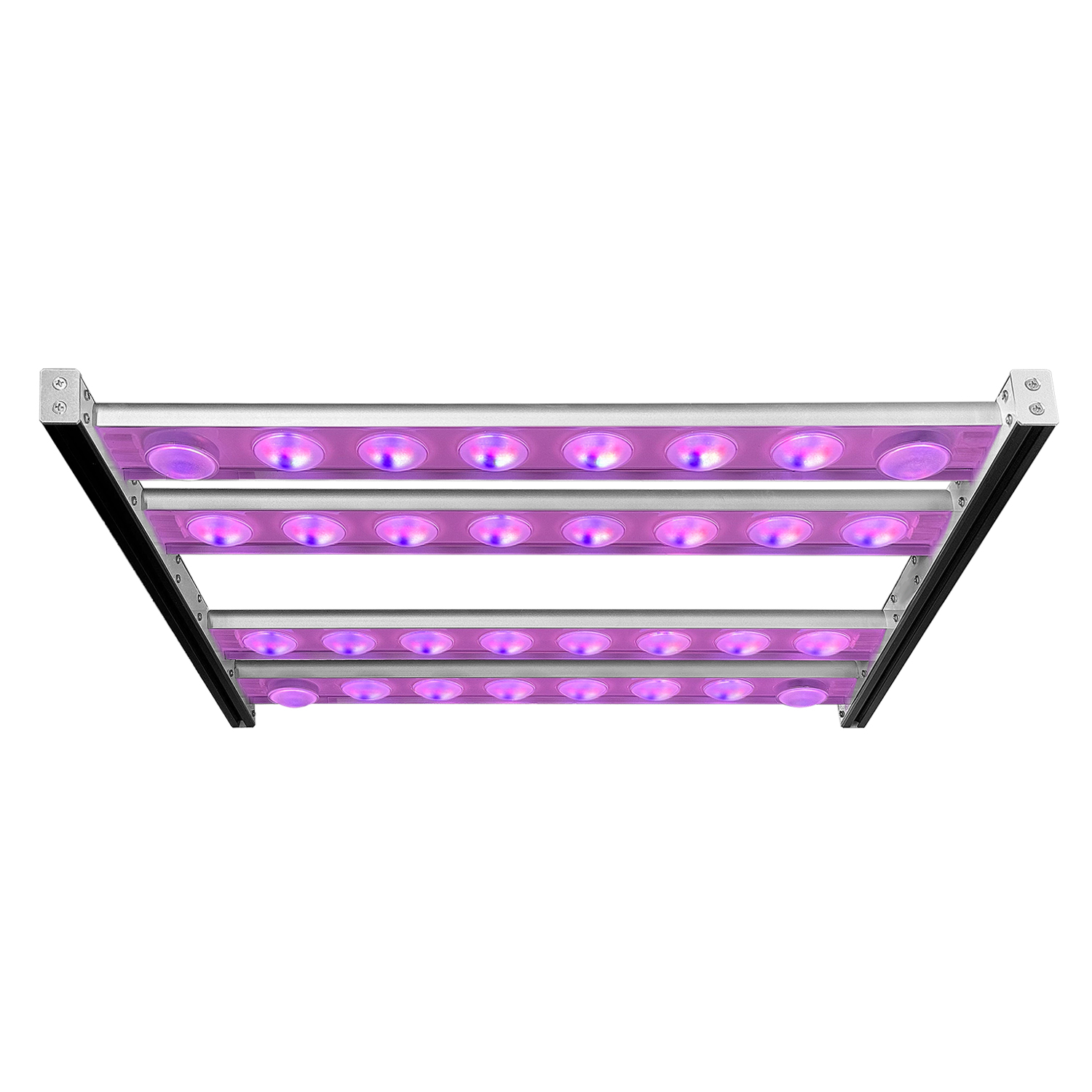
Koray Lighting’s K6 spectrum, used in products like the GE35-120T-K6, was specifically engineered for flowering plants and succulents. This spectrum provides enhanced red wavelengths alongside balanced blue, creating the ideal environment for succulent coloration and growth. The GE35-120T-K6 delivers a PPFD of 760 μmol/m²/s at 0.2 meters and 530 μmol/m²/s at 0.3 meters, with 80W power consumption and a specialized 45° lens that focuses light precisely where it’s needed.
Real-World Comparison: Blue-Only vs. Full-Spectrum
Growers who have switched from blue-only LED setups to full-spectrum solutions like Koray’s K6 spectrum consistently report several improvements. Plants develop more natural, balanced growth patterns. Color expression improves dramatically, with pinks, purples, and oranges becoming more vivid without the stress-induced bleaching that blue-only light can cause. Growth rates normalize, and plants are more likely to flower when mature.
The S91 spectrum (warm white full-spectrum) found in Koray’s PAR30Z-20W is another excellent option for succulent growers. With a 20W power draw, E27 base compatibility, and zoomable lens, the PAR30Z-20W with S91 spectrum delivers natural-looking light that makes succulents look their best while providing balanced photosynthetic photons. It’s particularly well-suited for home growers who want their succulent displays to look beautiful under natural-temperature lighting.
DLI Requirements for Succulents Under Artificial Light
Daily Light Integral (DLI) measures the total amount of photosynthetically active radiation a plant receives in one day. Most succulents thrive at a DLI of 10-20 mol/m²/day. Under blue-only lighting, even if the PPFD reading seems adequate, the effective DLI for photosynthesis is lower because the plants cannot efficiently use all the blue photons.
With a full-spectrum light like the GE35-120T-K6 from Koray Lighting, the balanced spectrum ensures that more of the delivered photons contribute to photosynthesis, meaning you achieve the target DLI more efficiently. At a hanging distance of 0.3 meters, the GE35-120T-K6 delivers 530 μmol/m²/s, which translates to a DLI of approximately 15.3 mol/m²/day with a 16-hour photoperiod — right in the sweet spot for most succulent varieties.
Practical Recommendations for Succulent Growers
If you’re currently using blue-only lighting for your succulents, consider transitioning to a full-spectrum solution. The Koray GE35-120T-K6 is purpose-built for succulents, flowers, and carnivorous plants, with real performance data showing PPFD of 760 μmol/m²/s at 0.2m distance. For smaller setups or home displays, the PAR30Z-20W with S91 spectrum offers an affordable, easy-to-install option that fits standard E27 sockets.
For commercial succulent production, the GE35 series modules can be configured across multi-tier shelving systems, with each 900mm bar consuming just 80W while delivering professional-grade PPFD uniformity. The IP64 waterproof rating ensures reliability in humid greenhouse environments, and the 50,000-hour lifespan means years of maintenance-free operation.
Koray Lighting, founded in 2009 in Zhongshan, Guangdong, has developed over 200 patents in horticultural lighting technology. Their secondary optical system eliminates center hotspots and ensures even PPFD distribution — critical for succulent cultivation where uniform light prevents uneven growth and coloration.




Leave A Comment