
Why Photoperiod Matters for Succulent Growth
Photoperiod — the daily duration of light exposure — is one of the most critical yet misunderstood factors in indoor succulent cultivation. Unlike temperature or water, which growers tend to monitor closely, photoperiod is often set arbitrarily or overlooked entirely. Yet the number of hours your succulents spend under LED grow lights each day directly affects their growth rate, coloration, flowering potential, and long-term health. This guide uses photosynthetic science and real product data from Koray Lighting to determine the ideal photoperiod for succulents under LED lighting.
Understanding DLI: The Metric That Determines Ideal Photoperiod
To determine the right photoperiod, you first need to understand Daily Light Integral (DLI). DLI measures the total number of photosynthetically active photons that reach one square meter of growing area in a single day, expressed in moles per square meter per day (mol/m²/day). Think of it as the “total dose” of light your plants receive.
The relationship between PPFD (instantaneous light intensity in μmol/m²/s) and DLI is straightforward: DLI = PPFD × hours × 3600 ÷ 1,000,000. This means if you know your light’s PPFD at the canopy height, you can calculate exactly how many hours of light are needed to reach your target DLI.
For most succulent species, the ideal DLI range is 10-20 mol/m²/day. Low-light succulents like Haworthia and Gasteria do well at 6-10 DLI, while high-light varieties like Echeveria, Graptopetalum, and most cacti thrive at 15-20 DLI.
Calculating Ideal Photoperiod for Popular Koray Lights
Let’s calculate the ideal photoperiod using real PPFD data from Koray Lighting products:
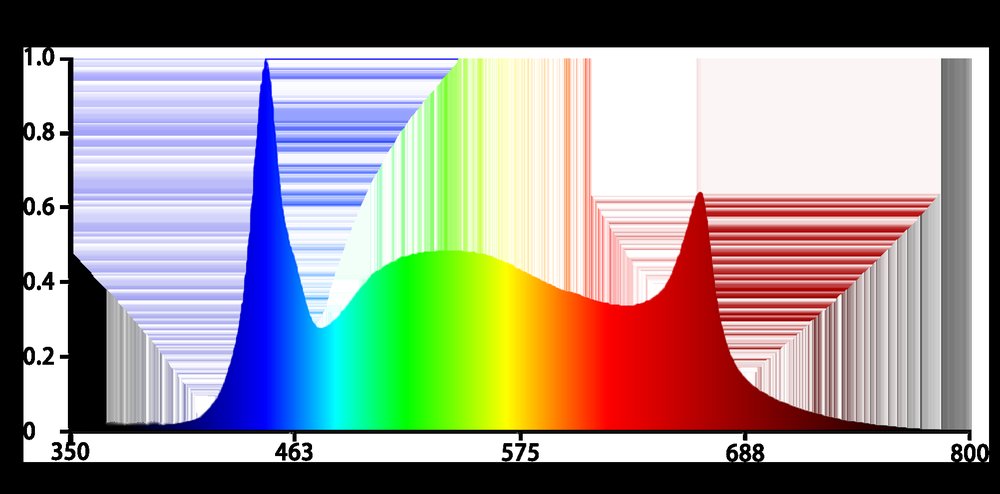
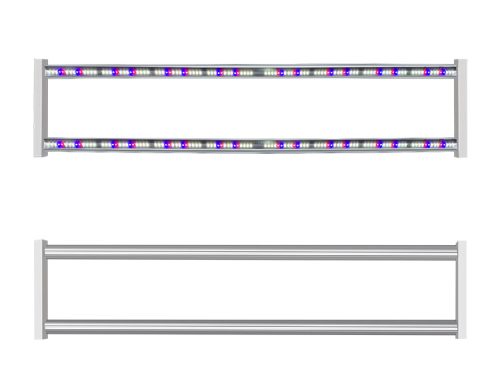
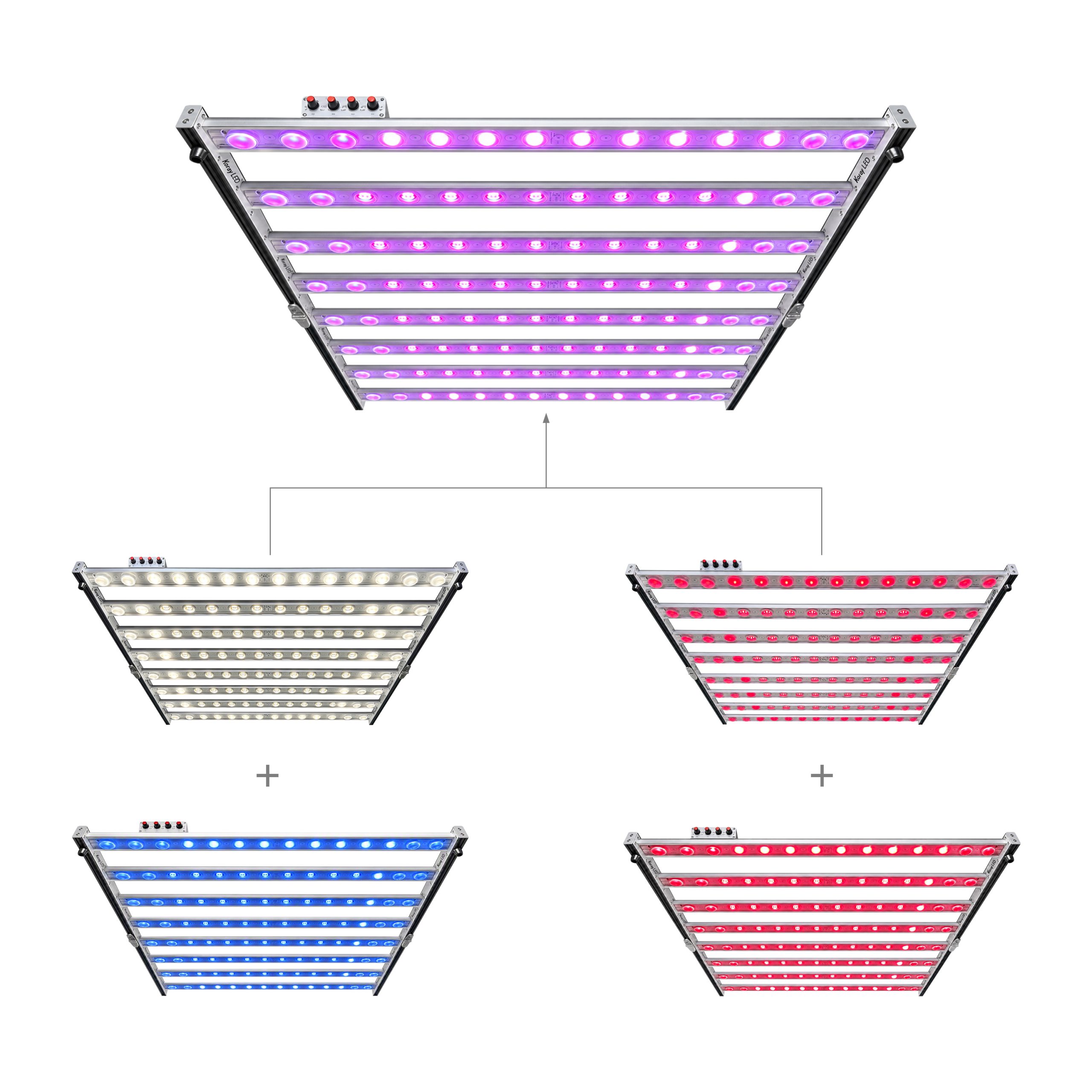
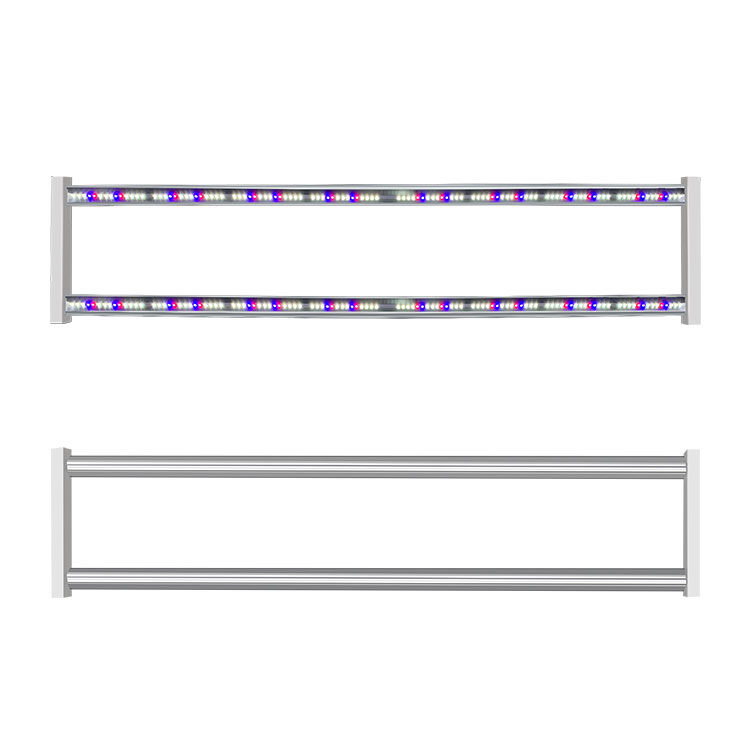
GE35-120T-K6 (80W, K6 spectrum for succulents): At 0.3 meters, this bar delivers 530 μmol/m²/s. To reach 15 DLI (ideal for most succulents): Hours = 15 × 1,000,000 ÷ (530 × 3600) = 7.9 hours. To reach 20 DLI (for high-light varieties): Hours = 20 × 1,000,000 ÷ (530 × 3600) = 10.5 hours. However, running lights for only 8-10 hours can create an unnaturally short day. A more practical approach is to run a 14-hour photoperiod at slightly lower intensity, which provides 15.3 DLI — perfect for most succulents.
PAR30Z-20W (S91 spectrum, 20W): At 0.3 meters, this spotlight delivers approximately 200 μmol/m²/s. To reach 15 DLI: Hours = 15 × 1,000,000 ÷ (200 × 3600) = 20.8 hours. This is impractically long, which is why the PAR30Z-20W works best at closer distances. At 0.15 meters (approximately 6 inches), PPFD increases to roughly 400 μmol/m²/s, requiring only 10.4 hours for 15 DLI. A 14-hour photoperiod at this distance provides approximately 20 DLI — ideal for high-light succulents.
T10 Floor Lamp (F175 spectrum, 36W): At 0.3 meters, the T10 delivers 146 μmol/m²/s. For 10 DLI (suitable for low-light succulents like Haworthia): Hours = 10 × 1,000,000 ÷ (146 × 3600) = 19 hours. At 0.2 meters (230 μmol/m²/s): Hours = 10 × 1,000,000 ÷ (230 × 3600) = 12.1 hours. A 14-hour photoperiod at 0.2m provides 11.6 DLI — suitable for low-to-medium light succulents.
The Recommended Photoperiod Range: 12-16 Hours
Based on the calculations above and extensive grower experience, the ideal photoperiod for most succulents under LED grow lights falls between 12 and 16 hours per day. This range provides enough total light energy for healthy growth while maintaining a natural-feeling day/night cycle.
Here’s a practical photoperiod guide by succulent category:
High-light succulents (Echeveria, Graptopetalum, Sedum, most cacti): 14-16 hours with PPFD of 400-600 μmol/m²/s, targeting 15-20 DLI. The GE35-120T-K6 at 0.2-0.3m is ideal for these plants.
Medium-light succulents (Aloe, Gasteria, some Haworthia): 14-16 hours with PPFD of 200-400 μmol/m²/s, targeting 10-15 DLI. The PAR30Z-20W with S91 spectrum at 0.15-0.3m works well.
Low-light succulents (Haworthia cooperi, Sansevieria, Rhipsalis): 12-14 hours with PPFD of 100-250 μmol/m²/s, targeting 6-10 DLI. The T10 floor lamp or PT5 tube at appropriate distances provides adequate light.
Why Not Just Run Lights 24/7?
Some growers assume that more light equals better growth and run their LEDs around the clock. This is counterproductive for succulents for several reasons. First, succulents use CAM (Crassulacean Acid Metabolism) photosynthesis, which involves opening stomata at night to absorb CO₂. Without a dark period, this metabolic cycle is disrupted, and the plant cannot efficiently process the carbon it has fixed.
Second, plants require a dark period for respiration and cellular repair processes. Continuous light causes photo-oxidative stress, leading to premature leaf aging, chlorosis, and in severe cases, tissue death. Third, many succulent species use photoperiod as a cue for flowering. Without a consistent dark period, these plants will never initiate blooms.
The practical recommendation is to always provide at least 8 hours of darkness. Using a simple timer to maintain a consistent 14-16 hour light cycle and 8-10 hour dark period produces the best results.
Seasonal Photoperiod Adjustments
In nature, succulents experience seasonal changes in day length that influence their growth cycles. Many species grow actively during longer spring/summer days and enter dormancy during shorter winter days. You can mimic this pattern with your LED lighting to promote healthier, more natural growth.
During spring and summer (active growth period), run lights for 14-16 hours. During fall and winter, reduce to 10-12 hours. This subtle adjustment can encourage more natural growth patterns and, for flowering species, trigger bloom cycles. The Koray GE35 series with its compatibility with the HortiGuru APP makes it easy to program seasonal photoperiod changes automatically.
For the GE35-120T-K6, reducing from 16 to 12 hours during winter still provides 11.5 DLI at 0.3m — enough to maintain most succulents in good condition during their rest period while reducing electricity consumption by 25%.
Signs Your Photoperiod Is Wrong
Too short (insufficient DLI): Etiolation (stretching), loss of vibrant coloration, leaves becoming thin and flat, downward-curving leaves (trying to capture more light), and overall slow growth. If you notice these signs, increase photoperiod by 2 hours or move the light closer.
Too long (excessive DLI or no dark period): Bleached or white patches on leaves, crispy leaf tips, excessive compactness with no new growth, and in severe cases, leaf drop. If you see these signs, reduce photoperiod by 2 hours or raise the light higher.
The beauty of LED grow lights from Koray Lighting is that their documented PPFD values at various distances allow you to calculate the exact photoperiod needed for your target DLI, eliminating guesswork. The GE35-120T-K6, with its PPFD of 530 μmol/m²/s at 0.3m and 760 μmol/m²/s at 0.2m, gives you wide flexibility to dial in the perfect photoperiod for any succulent variety.
Putting It All Together
The ideal photoperiod for succulents under LED grow lights is 12-16 hours per day, adjusted based on your specific light’s PPFD, the distance to your plants, and the light requirements of your succulent species. Use the DLI calculation method outlined above to determine your exact needs. With purpose-built lights like the Koray GE35-120T-K6 (80W, 165 μmol/s PPF, K6 spectrum for succulents) or the versatile PAR30Z-20W (S91 warm full-spectrum), you can provide precisely the right amount of light for stunning, healthy succulents year-round. Koray Lighting, with over 200 patents and products exported to 60+ countries, provides the professional-grade tools that make succulent cultivation under artificial light both successful and straightforward.




Leave A Comment