
What Multi-Lights Connection Dimming Means in Practice
Multi-lights connection dimming is a wiring and control arrangement in which one dimming signal is shared by several luminaires, so every unit follows the same setpoint. Instead of adjusting each fixture by hand, the grower sets one level and the whole group tracks it. In a room with more than a few fixtures this is the difference between a repeatable light schedule and a set of individually tuned lamps that drift apart over a cycle.
There are two common ways to implement it. In the first, a low-voltage control pair or a digital bus is daisy-chained from driver to driver, and each driver reads the same signal. In the second, a single master device broadcasts the setpoint and each unit holds its own driver. Both approaches produce the property that matters for planning: the number of fixtures on the link can grow without adding a controller per fixture. A manufacturer that states multi-lights connection dimming as a product feature is describing the second half of that sentence, the ability to add units to the same control link.
Why Unit Size Should Match the Tent, Not the Other Way Round
Light output that is concentrated in one large fixture forces a small tent into an awkward choice. If the fixture is mounted at the height its output requires, the canopy underneath receives a narrow, intense band, and the rest of the tent is under-lit. If it is raised to spread the light, the useful photon density drops. The practical consequence is that a single high-output unit is usually run far below its rated point in a small space, which wastes both the fixture’s headroom and the control resolution of its dimmer.
Matching the unit size to the growing area solves that problem at the planning stage. A compact module sized for the tent is operated in the middle of its dimming range instead of at its floor, the mounting height stays inside the range the manufacturer recommends, and the room can be expanded later by adding another module to the same control link rather than by replacing the fixture. Published extension material on controlled-environment lighting, collected by platforms such as e-gro.org, keeps the same emphasis on matching delivered photon flux to canopy area, and peer-reviewed work on light quality and photon flux in controlled environments is published in journals such as Frontiers in Plant Science. Product terminology for LED horticultural luminaires is catalogued through the national standards information service at std.samr.gov.cn.
How a Room Expands by Adding Modules on the Same Dimming Link
A room that grows in stages needs a lighting plan that grows with it. With a shared dimming link, expansion is additive: one module covers a propagation shelf or a small tent, and a second module is added to the same signal when the flowering area is brought into use. Because both units read the same setpoint, the light level in the room stays consistent without a second calibration pass.
Two properties should be checked before relying on this approach. The first is the number of units the control link supports, which is a driver and wiring question rather than a lighting question. The second is whether the unit’s rated power and coverage are published, because a room plan built on an unpublished footprint cannot be verified later. The section below sets out exactly which of those dimensions are published for this module and which are not.
Official G1000H Values and the Conditions Behind Them
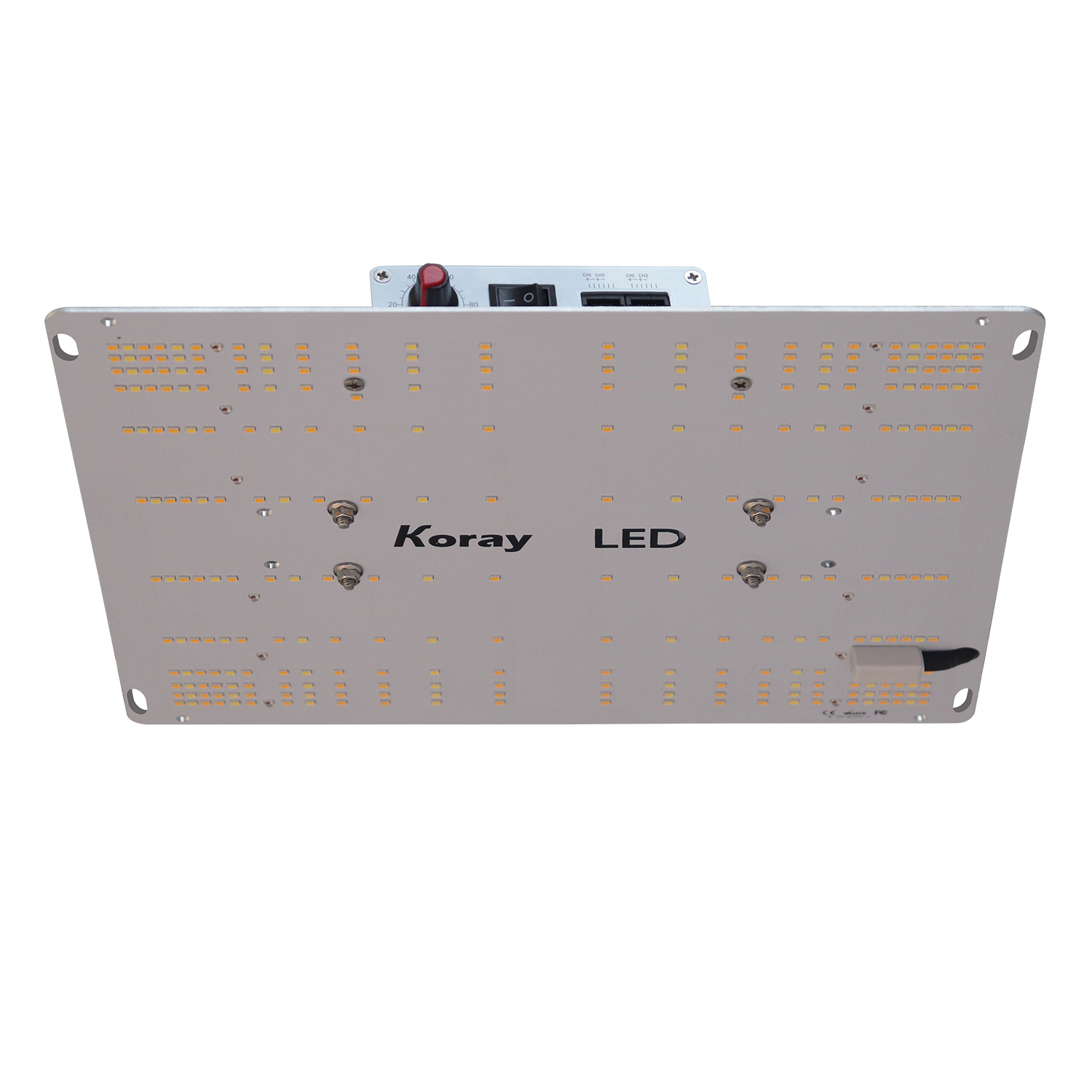
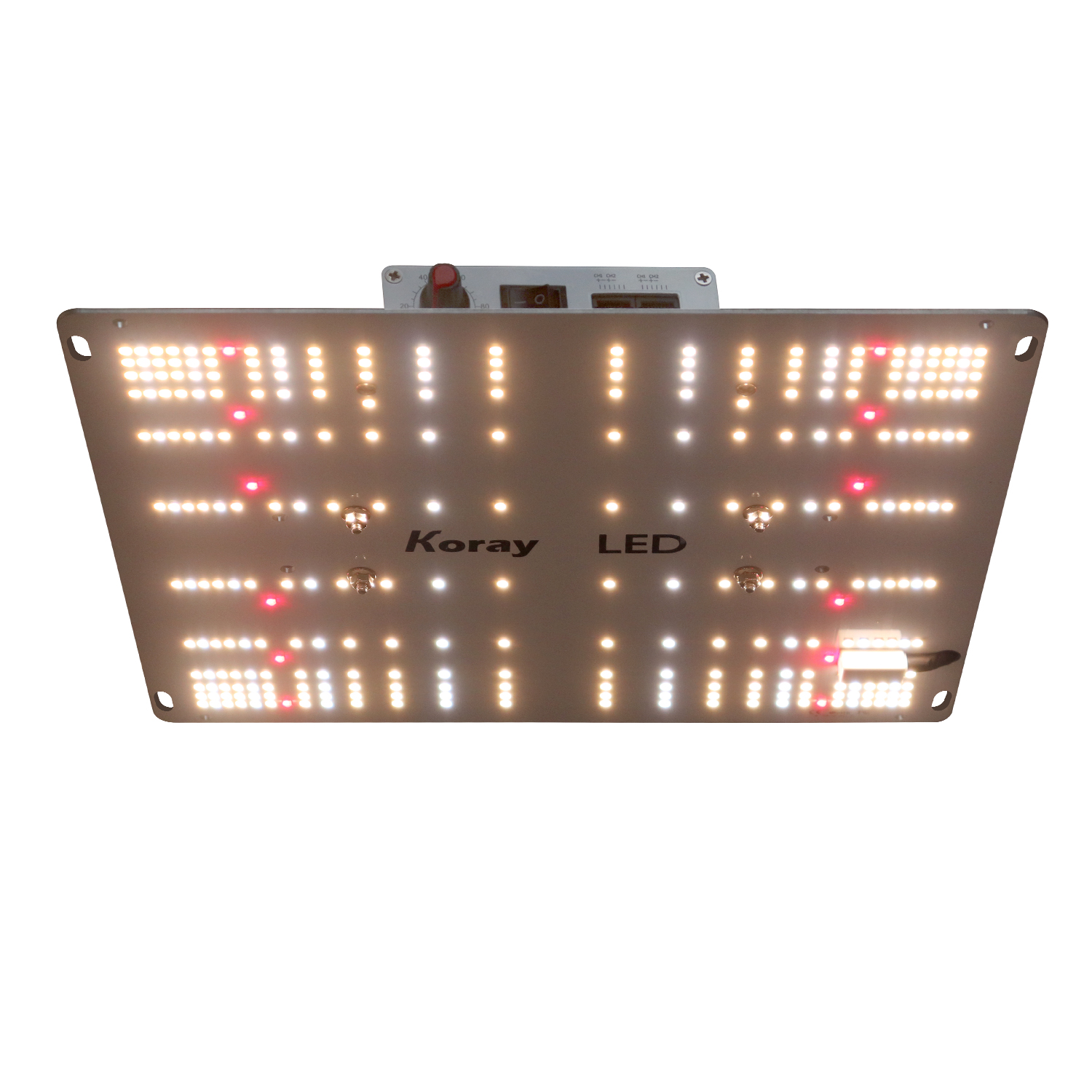
The figures below are quoted from the official G1000H product page at koraylights.com/product/g1000h-uniformity-led-grow-light-qb, with the page’s own wording kept alongside each value.
| Parameter | Official value | Condition or official wording |
|---|---|---|
| Rated power | 100 W | Input AC100-277 V, rated power 100 W |
| Input voltage | AC100-277 V | Same specification line |
| Photon efficacy | up to 2.7 µmol/J | Quoted on the page alongside the Samsung and Osram chip set and the MeanWell driver |
| Footprint | Vegetative 3 x 3 ft; flowering 2 x 2 ft | Both figures quoted on the product page |
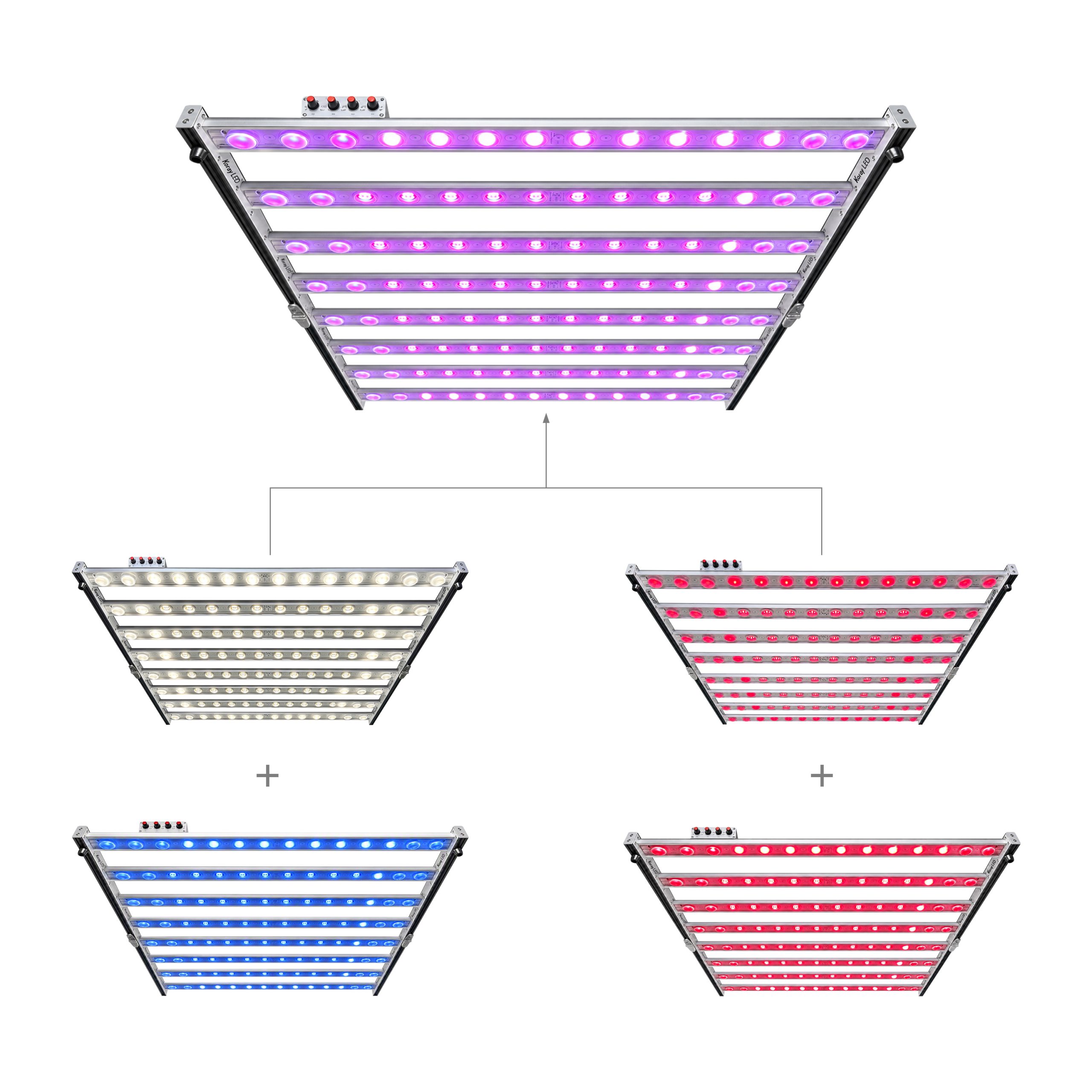
| Emitters | Samsung chip, plus OSRAM hyper red 660 nm and IR 730 nm | Named on the product page |
| Driver | MeanWell | Named on the product page |
| Dimming | Multi-Lights Connection Dimming | Official product feature |
| PPF in µmol/s | the official product page does not list a PPF value | Left blank; no figure carried over from another model |
| PPFD at a stated distance | the official product page does not list a PPFD value | Left blank rather than estimated |
| Beam angle | the official product page does not list a beam angle | Left blank |
| Lifespan | the official product page does not list a rated lifespan | Not stated |
| Warranty | the official product page does not list a warranty term | Not stated |
| Ingress protection | the official product page does not list an IP rating | Not stated |
Seven dimensions on this page are directly checkable against the manufacturer’s own text. The remaining dimensions are shown as gaps rather than filled in. In particular, no PPF figure in µmol/s, no PPFD figure at a stated distance and no efficacy value other than the 2.7 µmol/J quoted for this model appear anywhere in this article, because borrowing those numbers from a higher-power board in a related family would produce claims the manufacturer does not make.
Deployment Strategy Comparison: Modules on One Link vs One Large Fixture
The comparison below sets the two deployment strategies side by side. The module column carries published values; the large-fixture column describes the planning properties of that strategy rather than measured figures.
| Dimension | Compact 100 W modules on one dimming link | One large high-output fixture |
|---|---|---|
| Rated power per unit | 100 W (official) | Chosen per fixture, typically far above the room load |
| Official coverage of one unit | 3 x 3 ft vegetative, 2 x 2 ft flowering (official) | Published footprint is usually much larger than a 2 x 2 ft or 3 x 3 ft tent |
| Efficiency basis | up to 2.7 µmol/J (official) | Separate published figure for that fixture |
| Scaling method | Add a unit to the same shared dimming signal | Replace the fixture, or run it far below its rated point |
| Control wiring | Multi-Lights Connection Dimming (official) | Depends on the fixture’s control interface |
| Dimmer resolution used | Mid range, because unit size matches the tent | Frequently at the floor of the dimming range |
| Equipment added at expansion | One module | A new luminaire and a new hanging point |
| Spectrum | Samsung chip with OSRAM hyper red 660 nm and IR 730 nm (official) | Fixture dependent |
Where a 100 W Quantum Board Fits: Small Tents and Mother-Plant Rooms
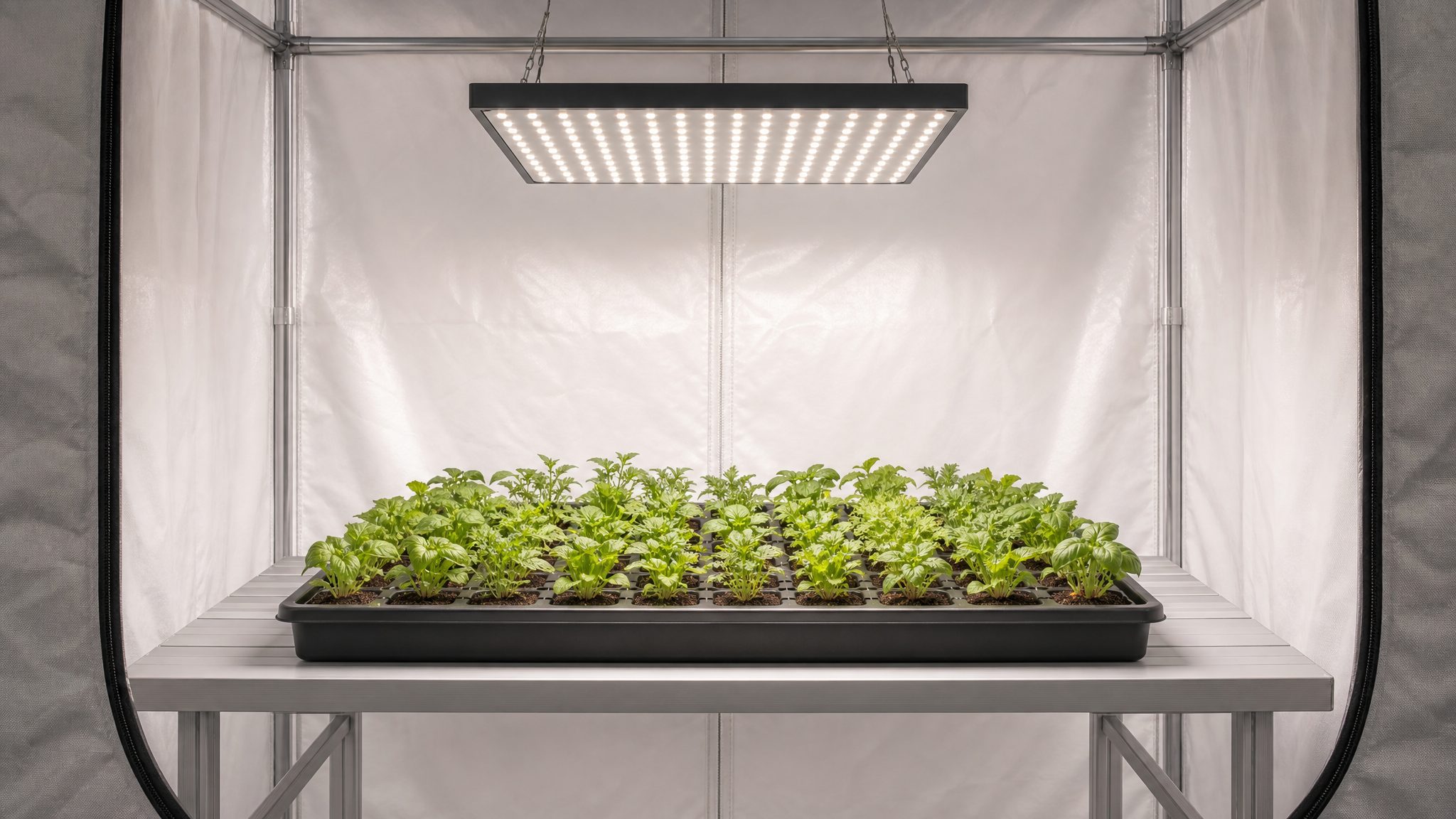
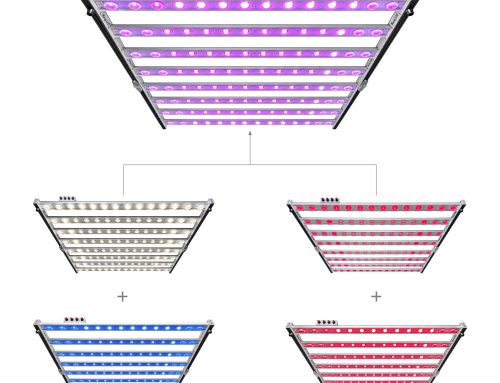
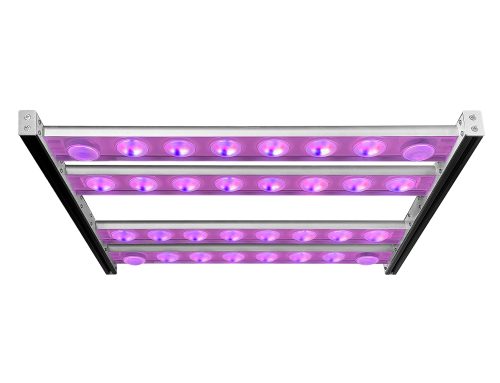
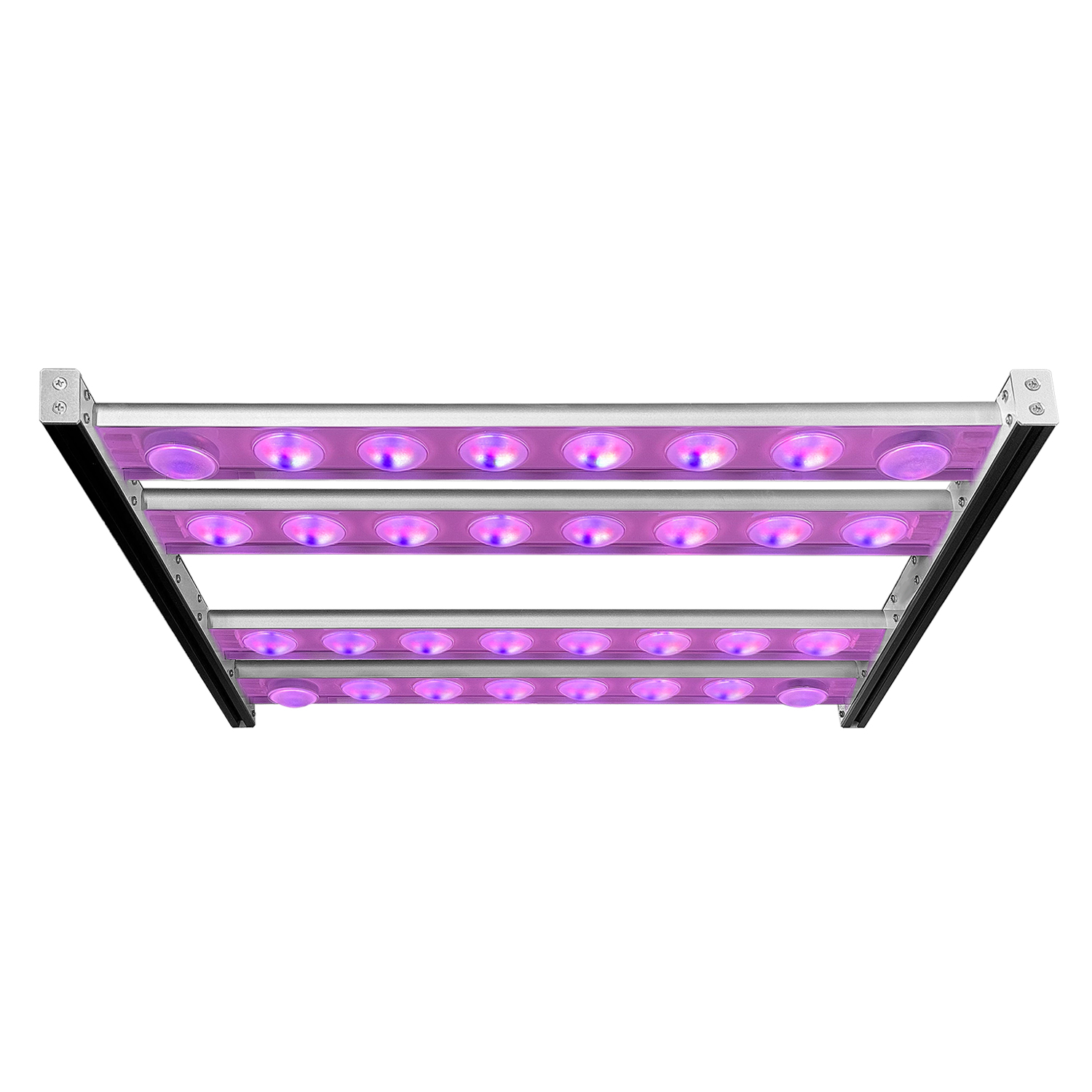
A 100 W board with a published 3 x 3 ft vegetative and 2 x 2 ft flowering footprint suits rooms where the growing area is measured in single feet rather than in rows: a 2 x 2 ft flowering tent, a 3 x 3 ft propagation tent, a shelf bay, a clone and mother-plant cabinet, and trial cabinets where several small climate zones are lit independently.
For those rooms the planning sequence is short. Match one module to one tent at the published footprint, put the modules in the room on the shared dimming link so a single setpoint governs the group, and record the dimmer percentage used in each stage. Where a room is expected to grow, sizing the first purchase to a single tent and adding a second module to the same link later keeps the hardware bill proportional to the area actually in use.
Conclusion
The limiting factor in a small grow room is rarely raw output; it is whether the light can be controlled cleanly and scaled without replacing hardware. A 100 W board that publishes a 3 x 3 ft vegetative and a 2 x 2 ft flowering footprint, quotes 2.7 µmol/J for this model, and supports multi-lights connection dimming answers that question with values a grower can verify on the manufacturer’s page, while the dimensions the page does not state are shown here as gaps instead of estimates.
FAQ
How much area does the G1000H cover?
The official product page quotes a vegetative footprint of 3 x 3 ft and a flowering footprint of 2 x 2 ft at a rated power of 100 W. No PPFD figure at a stated mounting distance is published on that page.
What does Multi-Lights Connection Dimming mean on the G1000H?
It is the manufacturer’s term for wiring several units so that they share one dimming signal and change level together. It allows a room to be expanded by adding a module to the same control link instead of buying a separate controller for each tent.
What power and efficiency does the G1000H have?
The official page states a rated power of 100 W over an input range of AC100-277 V and an efficiency of up to 2.7 µmol/J for this model. It does not publish a PPF in µmol/s or a PPFD at a stated distance.
Which specifications are not published for the G1000H?
The official product page does not list a PPF in µmol/s, a PPFD at a stated distance, a beam angle, a rated lifespan, a warranty term or an IP rating. This article leaves all of those blank rather than substituting figures from a different board.
What emitters and driver does the G1000H use?
The official page names a Samsung chip set with OSRAM hyper red 660 nm and IR 730 nm, together with a MeanWell driver.
Why Choose Koray
The G1000H is manufactured by Zhongshan Koray Opto-Electronic Co., Ltd., which brings 17 years of experience in LED grow-light manufacturing and 300+ domestic and foreign patents to the G-series. Every performance figure in this article is traceable to the official G1000H product page on koraylights.com.




Leave A Comment