
A cactus on a windowsill is often described as a plant that wants sun and neglect, and that description is close enough to be dangerous. Light is only half of the control loop. These plants run a different photosynthetic pathway from most houseplants, their stomata open at night, and their growth year is divided into an active season and a rest season that a lamp can quietly ruin. Anyone adding an LED fixture to a cactus collection needs three numbers they can state with conditions attached: a PPFD value at a hanging height, an hours-per-day figure, and a night temperature. This guide supplies those, and explains why the winter schedule is the one that decides whether the plant flowers next spring.
Why Cacti Are Not Just “Desert Plants”
The phrase is misleading in two directions. Most cacti do come from the Americas, but a large share of the popular cultivated species grow in semi-arid grassland, rocky slopes or seasonally dry tropical forest, where they receive far less direct sun than the desert label implies. Equally, “desert” implies heat tolerance at all times, when in fact many species survive summer by going semi-dormant and survive winter by tolerating near-freezing nights.
The functional difference is water economics. A cactus stores water in stem tissue and protects it with a thick cuticle and sunken stomata. Every hour the stomata are open, water leaves. The plant’s solution is to open them at night, when the air is cooler and more humid, and to keep them shut through the hottest part of the day. This is not an adaptation to low light; it is an adaptation to water loss, and it changes what a lamp is for.

CAM Physiology: Night-Time Carbon Fixation and What It Implies
CAM is crassulacean acid metabolism, a two-phase photosynthetic strategy in which carbon dioxide is captured at night and used during the day. At night, with stomata open, CO₂ is fixed by the enzyme PEP carboxylase into malate, which is stored in the cell vacuole as malic acid. In daylight, with stomata closed, that stored acid is decarboxylated and the released CO₂ feeds the Calvin cycle behind closed stomata, using light energy captured by the chloroplasts.
The consequences for lighting are specific. First, the plant’s carbon gain depends on how much CO₂ it captured the previous night, so a long, warm, still night matters as much as a bright day. Second, light energy is needed mostly to regenerate the acceptor that consumes stored acid, which means a moderate, sustained photon flux is more useful than a brief, intense burst. Third, because stomata are shut during the day, high daytime PPFD does not increase CO₂ uptake directly — it raises tissue temperature and evaporative demand against a closed surface, which is exactly the condition that produces sun damage.
This is why the useful question is not “how much light can a cactus take” but “how many hours of what intensity, at what night temperature”. The interaction between photoperiod, temperature and daily light dose in controlled environments is documented by Michigan State University Extension in its floriculture lighting materials, which also cover how spectrum and day length interact with temperature to control extension and flowering. The underlying photobiology, including the distinction between instantaneous intensity and integrated daily dose, is set out by the Crop Physiology Laboratory at Utah State University, while applied horticultural lighting practice is covered by the Lighting Research Center at Rensselaer Polytechnic Institute.
PPFD and DLI for Active Growth vs Dormancy
PPFD is photosynthetic photon flux density, the photon flux in the 400–700 nm band per square metre per second, in µmol/m²/s. DLI is the daily light integral, the total delivered over a day, in mol/m²/d, computed as PPFD multiplied by hours and by 0.0036. The two are related by the photoperiod, so a schedule can be described by either — but the DLI figure is what separates an active-growth month from a dormancy month.
| Stage | PPFD (µmol/m²/s) | Photoperiod (h) | DLI (mol/m²/d) | Night temp (°C) | Watering |
|---|---|---|---|---|---|
| Fresh seedling, first 2 weeks | 50–100 at 20–30 cm | 12–14 | 2.2–4.3 | 18–20 | Light, keep barely moist |
| Active growth, spring | 150–250 at 20–30 cm | 12–14 | 6.5–10.8 | 15–18 | Soak, then dry fully |
| Peak summer growth | 250–400 at 25–35 cm | 12–14 | 10.8–17.3 | 18–22 | Soak when dry, good airflow |
| Pre-dormancy, autumn | 100–150 at 20–30 cm | 10–12 | 3.6–6.5 | 12–15 | Taper off |
| Winter dormancy | 50–100 at 25–35 cm | 8–10 | 1.4–3.6 | 8–12 | None or very rare |
| Wake-up, early spring | 100–150 at 20–30 cm | 10–12 | 3.6–6.5 | 12–15 | Resume gradually |
The hanging distances in that table are starting points for panel and bar formats, not universal settings; the correct distance for a given model is the one in that model’s instructions, because beam angle and diode spacing change the footprint. Note also that the summer row pairs high PPFD with airflow: at 250–400 µmol/m²/s and still, humid air, a cactus is far more likely to rot at the base than to grow.
A useful sanity check is that dormancy is not zero light. The winter row still delivers 1.4–3.6 mol/m²/d, which is enough to maintain tissue and keep the plant’s acid metabolism ticking over without asking it to extend.
The Winter Dormancy Protocol: Light, Night Temperature and Water
Dormancy is a state, not a date. In habitat it is triggered by the coincidence of shortening days and falling night temperatures; indoors, the same two signals work, and a lamp can override one of them.
The protocol has three parts, applied together. Photoperiod drops to 8–10 hours. Night temperature falls to 8–12 °C, which for most collections means moving plants to a cool room, a glazed porch or a frame next to the glass rather than keeping them in a heated living space. Watering stops or becomes a rare, light wetting of the surface. Light drops to 50–100 µmol/m²/s, which maintains the plant without encouraging new growth.
The reason all three must move together is that any one of them alone produces a confused plant. Warm nights with short days give you etiolated winter growth — pale, narrow, permanently stretched stem that never thickens. Cold nights with long days under a lamp give you a plant that is being asked to grow while its roots are cold and its water uptake is minimal, which is how root loss and basal rot begin. And a dry, cold plant under intense light is simply being desiccated.
Dormancy is also when flowering is initiated in many species. A cactus that is kept warm and well lit through winter will often grow vegetatively instead of setting buds, which is why growers who complain that a mature plant has never flowered usually find a winter schedule that never rested.
Photoperiod Scheduling with a Timer
Photoperiod is the number of hours the fixture runs per day, and the transition between seasons is a matter of stepping it down rather than switching it off.
In active growth, 12–14 hours is the working range, paired with night temperatures of 15–18 °C and a DLI of roughly 6.5–10.8 mol/m²/d. As autumn approaches, reduce by about an hour per week to 10–12 hours, and let night temperatures fall with the season. At the winter point, hold 8–10 hours at low PPFD. In early spring, reverse the sequence: raise the photoperiod back toward 12 hours over two to three weeks while night temperatures climb, and only then resume watering and feeding.
The timer should control the light only. Fans and ventilation should run independently, because the point of the dark interval is a cooler, drier night, and a sealed, still enclosure defeats it. A cheap mechanical timer with 15-minute resolution is adequate; the plants are responding to hours, not to minutes.
One further scheduling point: consistency matters more than total hours. A plant moved from a 14-hour winter windowsill to an 8-hour schedule and back again within a month receives contradictory signals, and the visible result is usually a mid-winter flush of weak growth.
Sunburn vs Stress Coloration: How to Tell Them Apart
Cacti change colour under strong light, and the change is usually not damage. Anthocyanin and other protective pigments accumulate in the epidermis under high PPFD and UV, producing red, purple or bronze tones. This is a reversible stress response: it appears gradually over days, follows the light gradient across the plant, and fades when the light is reduced or the season changes.
Sunburn is tissue death. It appears as pale, white or papery patches, often on the side facing the light, and it typically develops within a day or two of the exposure rather than over weeks. The diagnostic difference is depth. Coloration sits in the surface and the tissue beneath is firm; sunburn crosses tissue layers, and the damaged area becomes sunken, leathery or soft as the cells collapse. Colour that follows the light gradient and reverses is pigmentation. A patch with a defined edge, a sunken centre, or any softness underneath is burn, and it will scar.
The practical consequence is that colour change alone is not a reason to reduce light. A plant that reddens evenly at 300 µmol/m²/s and keeps growing is adapting. A plant with white patches on one flank was moved too fast, usually from a shaded position straight under a fixture at close range, and the correction is distance and a gradual ramp rather than a permanent reduction.
Do You Need UV or a Blue-Rich Spectrum?
The honest answer is that the evidence for UV as a requirement in cultivated cacti is thin, and the claims are usually stronger than the data. UV-B does induce pigment accumulation and can affect compactness in some species, but the same effects are produced by adequate PPFD in the photosynthetically active band, and UV introduces a genuine risk of tissue damage at close range.
Blue-rich spectra are similarly oversold. Blue light influences morphology, but for a CAM plant the dominant variables remain daily photon dose, photoperiod and night temperature. A broad, white, full-spectrum output in the 400–700 nm band is a reasonable default because it lets you judge plant colour by eye.
Glass is the practical complication. Standard window glass blocks most UV-B and a meaningful share of UV-A, so a plant described as receiving “full sun” indoors is receiving a filtered spectrum and a reduced dose. That is one more reason to measure rather than infer: window hours are not a proxy for PPFD.
Measuring Light at the Windowsill
A windowsill is the hardest lighting environment in a house to estimate, because the reading changes by a factor of several between the glass and 30 cm inside it, and again between noon and mid-afternoon. Take readings with a quantum sensor at canopy height, at the plant’s actual position, at three times of day, and use the peak rather than the average for a summer estimate.
Multiply the measured PPFD by the hours of useful light and by 0.0036 to obtain a DLI figure, then compare it with the ranges in the table above. A south-facing window in summer may deliver 8–12 mol/m²/d at the glass and much less a hand’s width inside; in winter the same position may fall below 2 mol/m²/d, which is exactly the dormancy range and is a reason not to add light in December.
Phone meters calibrated against a reference sensor are useful for relative comparisons, such as whether one shelf is brighter than another. They are not reliable for absolute PPFD figures under LED spectra, because their correction curves are approximations.
Common Mistakes
The most common error is continuing a summer schedule through winter: full photoperiod, warm room, regular watering, bright lamp. The plant responds with pale, thin growth that never matures, and the grower responds by adding more light, which makes it worse.
The second is treating dormancy as zero light and zero air movement, then finding rot at the base in February. Dormancy needs low light, cool nights and dry air, not a sealed box.
The third is moving a plant from shade to full fixture output in one step. Pigment adapts over one to three weeks; tissue does not adapt to a sudden quadrupling of photon flux. The fourth is ignoring night temperature entirely, which makes every other adjustment approximate.
Application Notes: Choosing and Positioning a Fixture for a Cactus Shelf
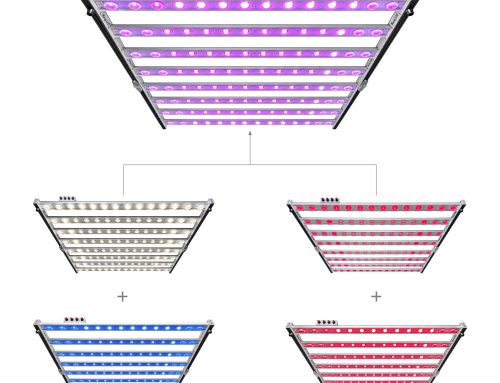
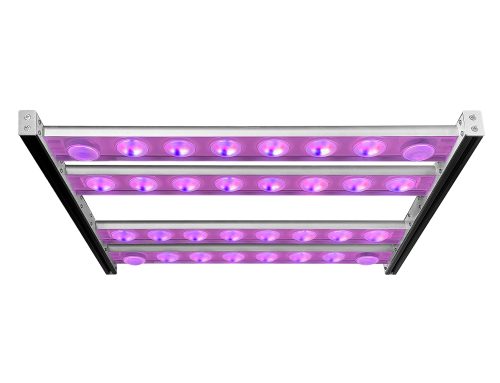
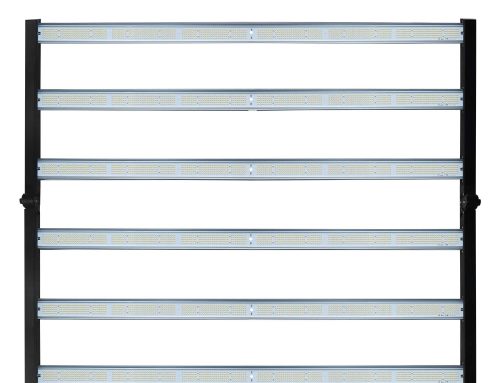
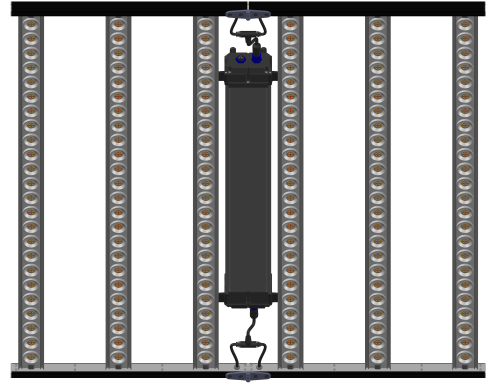
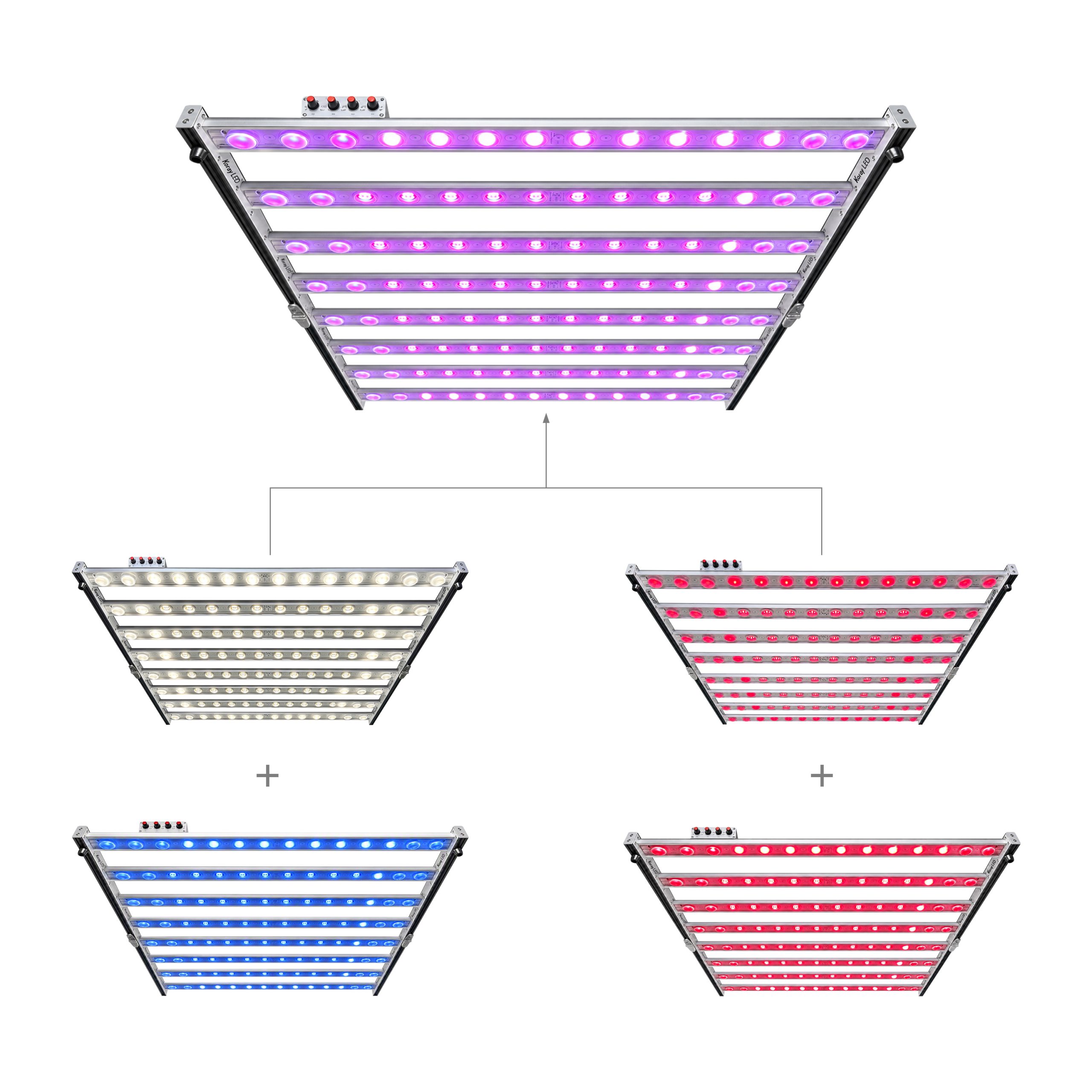
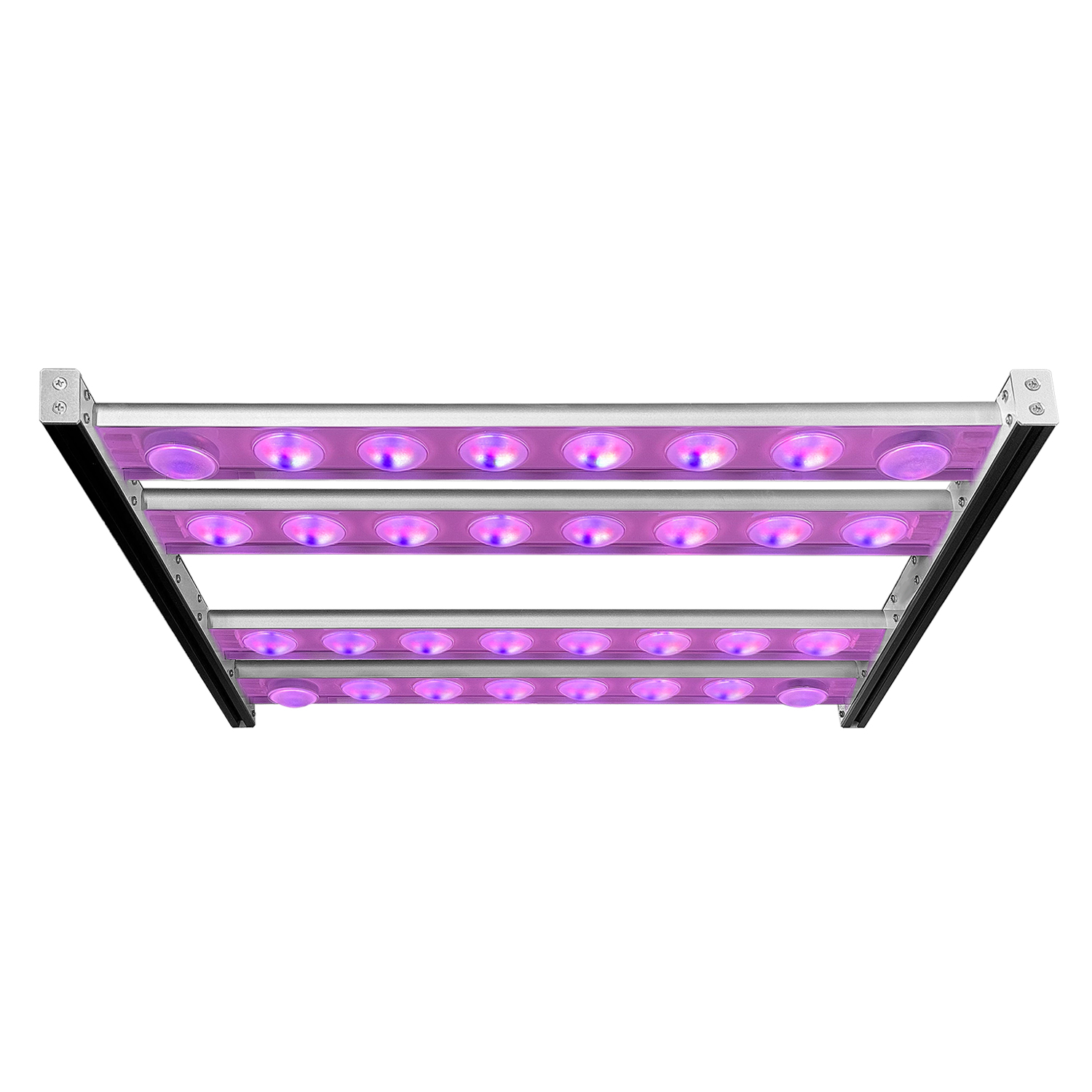
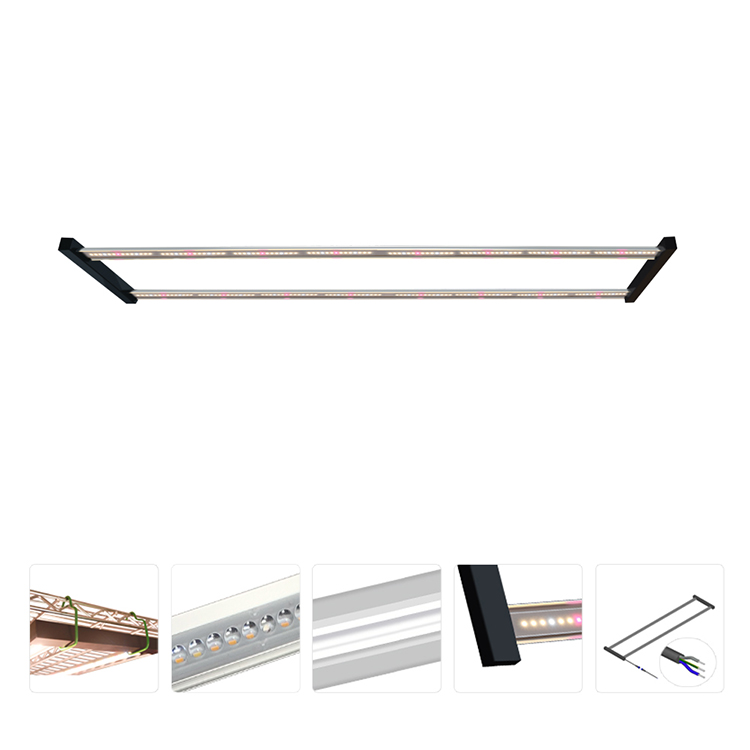
For a collection on a shelf or in a small greenhouse cabinet, the fixture decision follows from the geometry. A panel format at 25–35 cm suits a multi-plant shelf because it spreads a moderate PPFD over a wide area, which is what a dormancy schedule needs; a bar format at 15–25 cm suits a single row of pots in active growth, where the higher intensity lands directly on the crowns.
For a cactus shelf the questions worth asking any supplier are the PPFD distribution at the intended mounting height, the recommended distance for that model, and whether the driver and housing tolerate a cool, humid cabinet; Koraylights has supplied LED horticultural lighting to growers for 17 years, and those are the figures to request in writing before committing a collection to a fixture. Ask for a footprint map rather than a centre-point figure, since the plants at the shelf edges are the ones that stretch.
Positioning rules are simple. Keep the fixture parallel to the shelf, leave a ventilation gap above the plants so that warm air does not pool at the crowns, and raise the fixture rather than shortening the photoperiod when a plant shows burn. For a mixed collection, group plants by their water and dormancy needs rather than by appearance, because one timer serves the whole shelf.
FAQ
How many hours of light does a cactus need per day?
In active growth, 12–14 hours at 150–400 µmol/m²/s depending on stage and hanging height, giving roughly 6.5–17.3 mol/m²/d. In winter dormancy, 8–10 hours at 50–100 µmol/m²/s, which is about 1.4–3.6 mol/m²/d and is intended to maintain the plant rather than grow it.
Should I keep the grow light on in winter?
Yes, but at dormancy settings: 8–10 hours at 50–100 µmol/m²/s with night temperatures of 8–12 °C and watering stopped or minimal. Light in winter is for maintenance and for supporting bud initiation, not for pushing new growth, and a full summer schedule in December usually produces pale, stretched stem.
Can a grow light burn a cactus?
It can, if the plant is moved from shade to close range in one step or the fixture is run at summer intensity in a warm, still room. Damage appears as white or papery patches with a defined edge, often sunken, developing within a day or two of exposure. Pigmentation that develops gradually and fades when light is reduced is not burn.
Is red or purple colouration a sign of sunburn?
Usually not. Red, purple and bronze tones come from protective pigments that accumulate under strong light and UV, appear gradually, follow the light gradient and reverse when the dose is reduced. Burn is distinguished by tissue collapse: a sunken, leathery or soft patch that does not recover and leaves a scar.



Leave A Comment