
Which Spectrum Is Best for Succulents: S85, S93, or K6?
Succulents are among the most rewarding plants to grow under artificial lighting. Their compact rosettes, vivid coloring, and architectural forms respond dramatically to the right light spectrum. But with many spectrum options available, choosing the correct one can feel overwhelming. Should you go with warm white, blue-enhanced, or multi-red? The answer depends on what you want your succulents to achieve. This guide compares three popular spectra, S85, S93, and K6, and explains which delivers the best results for succulent cultivation.
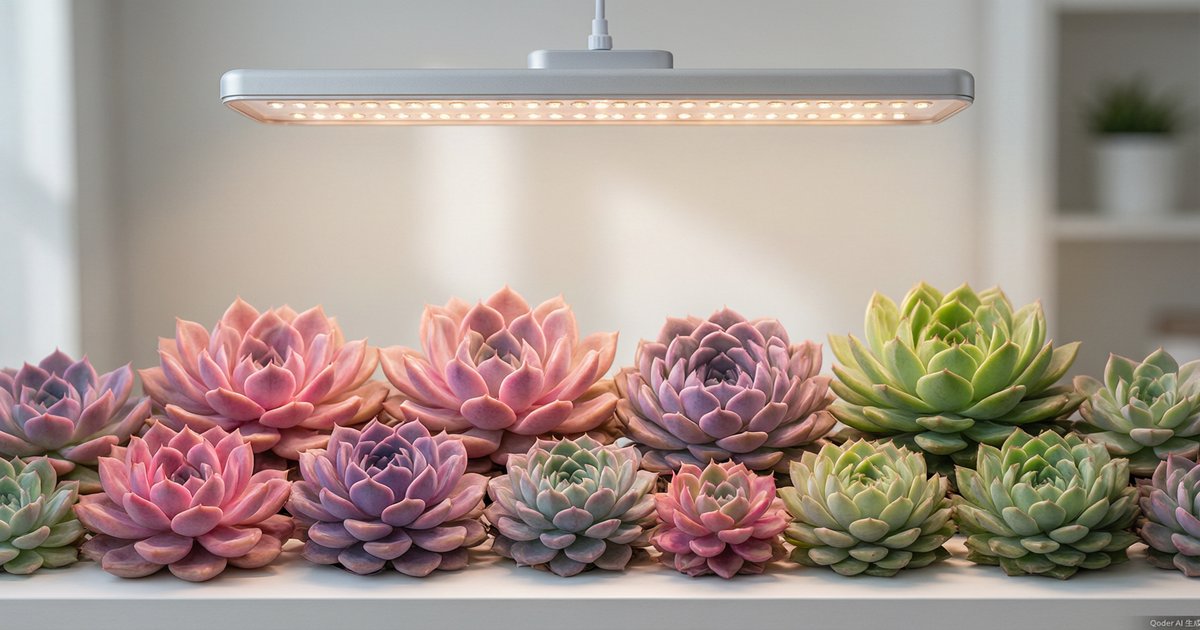
Understanding Succulent Light Requirements
Before comparing spectra, it helps to understand what succulents actually need from their light source. Unlike leafy greens or herbs, succulents originate from arid, high-light environments. They demand intense photosynthetically active radiation (PAR) and respond to specific wavelength ratios that signal environmental conditions.
PPFD (Photosynthetic Photon Flux Density): Succulents generally thrive at 200-400 micromol/m²/s at canopy level. Lower levels cause etiolation, where stems stretch and lose their characteristic form. Higher levels promote tight, compact growth with intense pigmentation.
Spectral quality: The ratio of red to blue light influences whether succulents grow vegetatively or shift toward coloring, flowering, and stress pigmentation. Red wavelengths around 660nm activate phytochrome responses that trigger anthocyanin production, the pigments responsible for red, purple, and orange hues.
Daily light integral (DLI): Succulents benefit from 12-16 hours of light per day when grown indoors. A well-designed grow light delivers steady output across the entire canopy without hotspots that could scorch delicate leaf tissue.
S85 Spectrum: Warm White Full-Spectrum
The S85 spectrum delivers warm white light with a high color rendering index (CRI), producing a natural, visually pleasing glow. It covers a broad range of wavelengths from blue through red, closely mimicking morning or late-afternoon sunlight.
For succulents, S85 provides balanced growth. Plants receive enough blue to maintain reasonable compactness and enough red to support general photosynthesis. The high CRI makes it an excellent choice for display settings where visual appearance matters, such as retail environments or home interiors. Under S85, succulents maintain healthy green tones with moderate growth rates.
However, S85 does not emphasize any particular wavelength band, so it will not drive the intense stress pigmentation that many succulent enthusiasts seek. If your goal is to maintain healthy, green succulents with steady vegetative growth, S85 performs well. If you want vivid reds, purples, and blues, you will need a more targeted spectrum.
S93 Spectrum: Blue-Enhanced for Compact Growth
The S93 spectrum shifts the output toward the blue end of the spectrum, delivering an enhanced blue peak that influences plant morphology. Blue light (400-500nm) triggers cryptochrome photoreceptors in plant cells, which regulate stem elongation, leaf thickness, and phototropic responses.
For succulents, S93 produces noticeably tighter internodal spacing. Plants grown under this spectrum develop thicker, more robust leaves and resist the stretching that commonly occurs under insufficient light. It is particularly effective for species prone to etiolation, such as Echeveria, Graptoveria, and Sedum varieties.
S93 is also a strong choice for propagation and early vegetative stages. Young succulent cuttings benefit from the blue-dominant spectrum because it encourages root development and compact seedling growth.
The trade-off is color. Blue-dominant spectra do not trigger the anthocyanin pathways that produce red and purple pigmentation. Succulents under S93 will remain predominantly green, even under high light intensity.

K6 Spectrum: Multi-Red for Coloring and Flowering
The K6 spectrum represents a fundamentally different approach. Rather than mimicking natural sunlight, K6 uses a multi-red enhanced formula designed to target specific phytochrome responses in plants. The spectrum concentrates energy in the red and deep-red wavelength bands (630-680nm and beyond), the primary drivers of photosynthetic efficiency and photomorphogenic signaling.
For succulents, K6 is the spectrum of choice when the goal is coloring. The elevated red output activates phytochrome A and phytochrome B, triggering the plant to produce protective anthocyanin pigments. This is the same biological mechanism that causes succulents to color up when exposed to intense natural sunlight or cool temperatures. Under K6, you can achieve vivid reds, deep purples, pink blush tones, and striking contrast patterns even indoors.
K6 also promotes compact rosette formation and supports flowering in species that respond to red light cues, such as certain Echeveria, Kalanchoe, and Schlumbergera varieties. If you are growing succulents primarily for display and want maximum visual impact, K6 is the clear winner.
How the Right Fixture Delivers Precise Spectrum
Spectrum selection only matters if the light delivers it effectively. The Koray RX-PAR38, specifically the RX-PAR38-60D variant, addresses this with a 60-degree beam angle and secondary optics technology that eliminates the center hotspot common in conventional LED grow bulbs. Instead of a bright spot in the middle with dim fall-off at the edges, the fixture distributes light evenly across the entire coverage area. This is critical for succulent arrays where every plant needs consistent intensity to develop uniform coloring.
The E27 base makes it a true plug-and-play solution, screwing directly into standard sockets including desk lamps, shelf fixtures, and suspended pendant setups. Koray Lighting has invested in optical engineering since its founding in 2009, with over 200 patents and products exported to more than 60 countries. The RX-PAR38 carries CE, RoHS, and FCC certifications and is rated for over 35,000 hours of operation. Its low heat output also allows close canopy placement without risk of thermal damage, enabling growers to maintain high PPFD levels at the plant surface.
Practical Tips for Succulent Growers
Start with the right PPFD. Position your grow light at a height that delivers 200-400 micromol/m²/s at the canopy. For most setups, this means 15-30 cm above the plants, depending on the specific model and power settings.
Run a consistent photoperiod. Set your timer for 12-16 hours per day. Succulents need a dark period for proper metabolic function. Running lights 24 hours will not improve results and may stress the plants.
Combine spectrum with environmental cues. Color development in succulents is not driven by light alone. Temperature, water stress, and nutrient levels all play a role. For best coloring results under K6, maintain slightly cooler temperatures (15-22 degrees Celsius) and allow the soil to dry between waterings.
Rotate your displays. Even with fixtures that offer even beam distribution, plants at the edges of the coverage area may receive slightly less intensity over time. Rotate your pots weekly to ensure uniform growth across all specimens.
Which Spectrum Should You Choose?
The answer depends on your growing goals:
Choose S85 if you want balanced, healthy growth with natural-looking light. It is ideal for mixed plant displays, retail settings, and growers who prioritize visual comfort alongside plant health. S85 keeps succulents green and vigorous.
Choose S93 if your priority is compact, sturdy vegetative growth. It excels for propagation, mother plant maintenance, and species prone to stretching. S93 produces thick-leaved, tightly formed succulents but will not generate intense coloration.
Choose K6 if you want vivid coloring, flowering, and the tightest possible rosette forms. For succulent enthusiasts who grow specifically for display or competition, K6 is the definitive choice. The multi-red enhanced spectrum directly targets the biological pathways responsible for the colors that make succulents so visually striking.
For most dedicated succulent growers, K6 delivers results that set indoor-grown plants apart from those under generic lighting. When paired with a well-engineered fixture that provides even coverage and professional build quality, it offers a complete solution for growing show-quality succulents indoors.


Leave A Comment