
Tissue culture — also known as micropropagation — is one of the most demanding applications in horticultural lighting. Plants in culture vessels are extremely sensitive to light quality, intensity, and photoperiod. Choosing the wrong spectrum can lead to slow growth, abnormal development, or contamination from excess heat. The Koray RX-PT8 series offers three distinct spectrum options, and understanding which one suits tissue culture is essential for lab managers and commercial propagators alike.
The Three PT8 Spectrum Options at a Glance
The Koray PT8T series comes in three spectrum variants: F4K, designed specifically for tissue culture and seedling work; F175, a general-purpose full spectrum for most plant species; and V3, a high-efficiency spectrum optimized for rapid vegetative growth. Each uses the same 1,200 mm tube form factor with IP66 waterproofing and 35,000-hour lifespan, but their spectral output differs in ways that matter significantly for micropropagation.
Why F4K Is the Recommended Spectrum for Tissue Culture
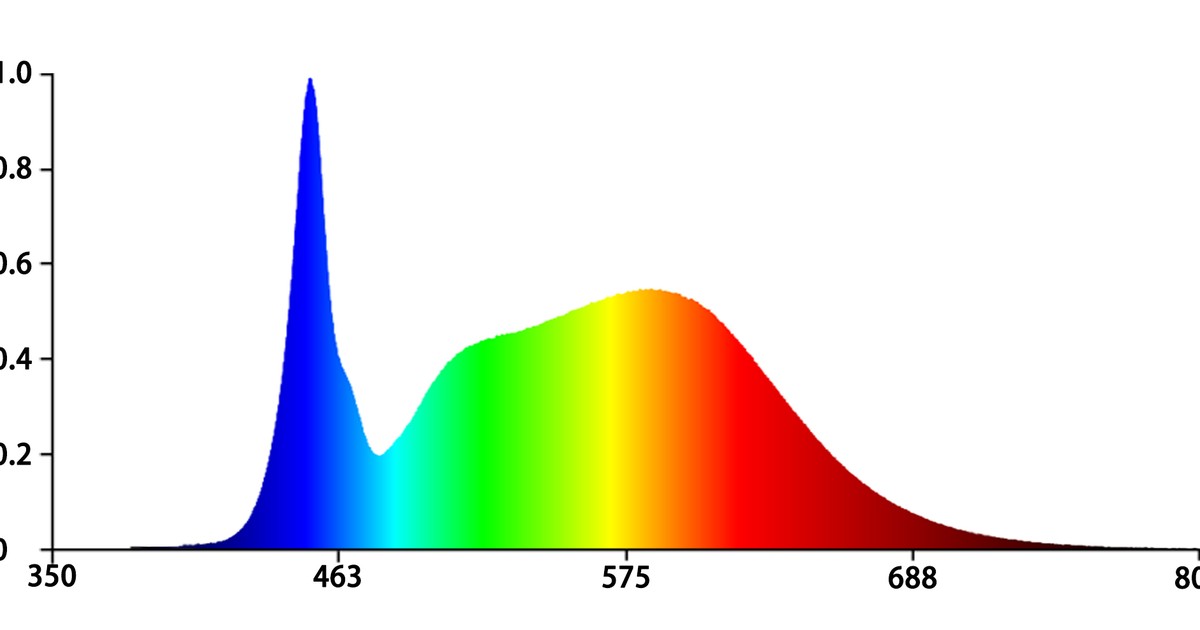
The F4K spectrum is purpose-built for the tissue culture environment. It delivers a PPFD of 270 umol/m2/s at 0.15 m and 196 umol/m2/s at 0.2 m — the typical working distances inside a laminar flow hood or culture rack. The PPF output of 90 umol/s is moderate by design: tissue culture plantlets do not need the intense light that mature plants require, and excessive PPFD can actually stress explants and inhibit callus formation.
What makes the F4K particularly effective for tissue culture is its balanced spectral distribution. The F4K spectrum provides strong blue light content, which is critical during the establishment phase of micropropagation. Blue light in the 400-500 nm range promotes compact, sturdy shoot development, reduces etiolation (stretching), and encourages root initiation — all essential outcomes when transitioning explants from agar media to ex vitro conditions.
The Role of Light Intensity in Culture Vessel Environments
One often-overlooked factor in tissue culture lighting is that culture vessels — whether glass jars, plastic magenta boxes, or polypropylene containers — absorb and scatter a significant portion of incoming light. Studies have shown that standard culture vessels can reduce PPFD by 20 to 40 percent before the light even reaches the plant tissue. This means your overhead lighting needs to deliver enough intensity to compensate for vessel transmission losses.
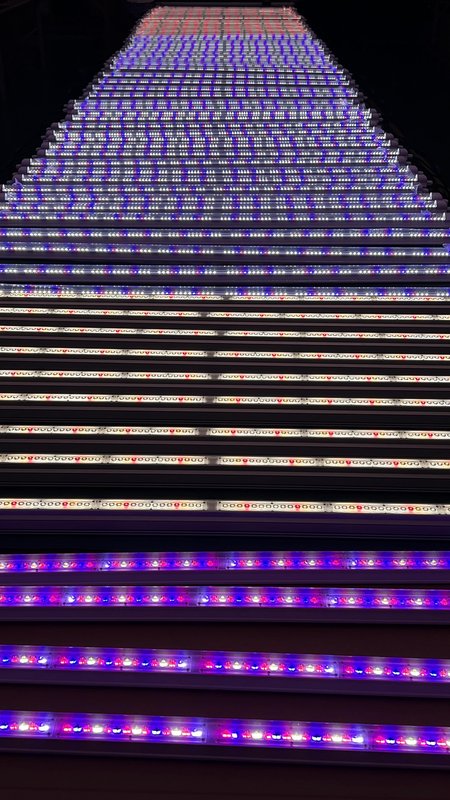
The PT8 F4K’s output of 196 umol/m2/s at 0.2 m provides a comfortable margin. After vessel transmission losses, the plantlets still receive approximately 120-160 umol/m2/s, which falls within the ideal range for most tissue culture species (80-200 umol/m2/s). Using a higher-output spectrum like V3 (316 umol/m2/s at 0.2 m) could push the delivered PPFD too high for sensitive species, causing photo-oxidative stress in the sealed, high-humidity environment of a culture vessel.
F4K vs V3: When to Switch Spectra
While F4K is optimal for the establishment and multiplication phases of tissue culture, there are scenarios where the V3 spectrum becomes more appropriate. When plantlets are ready for the rooting phase or when you are transitioning to ex vitro acclimatization, the V3 spectrum’s higher PPFD (416 umol/m2/s at 0.15 m) and 2.9 umol/J efficiency provide the additional light energy that developing root systems need.
Many commercial tissue culture labs use a two-stage lighting approach: F4K for the initial culture and multiplication stages, then V3 for rooting and hardening off before transplant. This staged approach mirrors the plant’s natural developmental needs and has been shown to improve survival rates during the critical ex vitro transition.
Why Not Use F175 for Tissue Culture?
The F175 spectrum is Koray’s most popular general-purpose option, delivering 365 umol/m2/s at 0.15 m with 86 umol/s PPF. While it is an excellent spectrum for most plants in conventional growing environments, its higher intensity makes it less ideal for tissue culture unless you increase the mounting distance significantly. At 0.3 m, the F175 delivers 185 umol/m2/s, which after vessel losses would provide roughly 110-150 umol/m2/s to the plantlets — acceptable but with less control margin than the F4K at a closer distance.
The F175 also has a different spectral balance optimized for photosynthetic efficiency in mature leaves rather than the developmental signaling that tissue culture explants require. For labs that grow a mix of tissue culture and mature plants on the same rack system, having both F4K and F175 tubes available allows you to configure the right spectrum for each growth stage.
Heat Management in Tissue Culture Racks
Heat is a critical concern in tissue culture. Culture vessels are sealed environments, and even small amounts of excess heat can raise the internal temperature enough to promote microbial contamination or cause agar media to dry out. The PT8 series addresses this with its high-efficiency LED design — the F4K variant draws only 36W and produces 6,600 lumens with minimal radiant heat.
Because the PT8 uses Koray’s secondary optics technology rather than external lenses, there is no concentrated hot spot beneath the tube. The light is distributed evenly across the tube’s width, which means the thermal load on culture vessels below is uniform. This is a significant advantage over older T5 fluorescent setups, which radiate heat along their entire length and can raise culture rack temperatures by 2-3 degrees Celsius.
Flicker-Free Operation Matters for Photoperiod Control
Tissue culture protocols often require precise photoperiod control — typically 16 hours light and 8 hours dark, though some species require different cycles. The PT8 series operates flicker-free with a power factor above 0.9, which means the light output is steady and consistent throughout the on-period. This is not just a comfort feature; flickering light can interfere with photoperiod-sensitive developmental pathways in plant tissue, leading to inconsistent results between culture batches.
Koray PT8: The Professional Choice for Tissue Culture Lighting
Koray Lighting has been engineering LED grow lights since 2009, with over 200 patents in secondary optics, thermal management, and spectral design. The PT8 series reflects this deep expertise: IP66 waterproofing for easy cleaning in sterile lab environments, a compact 33 x 35 mm cross-section that fits standard culture rack fixtures, and the ability to daisy-chain up to 10 tubes for efficient installation across multi-tier systems.
All PT8 products carry CE, RoHS, and FCC certifications, and each tube undergoes rigorous testing at Koray’s 2,800 square meter testing facility in Zhongshan, Guangdong. With a 35,000-hour lifespan and consistent spectral output over time, the PT8 F4K provides reliable, repeatable lighting for tissue culture operations that demand precision and quality.
Frequently Asked Questions
Which PT8 spectrum is best for tissue culture?
The F4K spectrum is specifically designed for tissue culture and seedling work. It delivers moderate PPFD (270 umol/m2/s at 0.15m) with a balanced spectral distribution rich in blue light, which promotes compact shoot development and root initiation in micropropagation.
Can I use the V3 spectrum for tissue culture?
The V3 spectrum is better suited for the rooting and acclimatization stages. Its higher PPFD (416 umol/m2/s at 0.15m) may be too intense for delicate tissue culture explants during the establishment phase. Many labs use F4K for multiplication and switch to V3 for rooting.
Why is blue light important for tissue culture?
Blue light in the 400-500nm range promotes compact growth, reduces stretching (etiolation), and encourages root initiation — all critical outcomes when developing plantlets from tissue culture explants.
How does the PT8 F4K compare to T5 fluorescent tubes for tissue culture?
The PT8 F4K delivers comparable light levels to T5 fluorescent tubes while consuming less power, producing less heat, and lasting significantly longer (35,000 hours). Koray’s secondary optics also eliminate the hot spots common with fluorescent tubes.





Leave A Comment