
Choosing the Right Spectrum for Your Grow with the Koray RX-G80 Series
Light spectrum is one of the most important — and most misunderstood — factors in indoor plant cultivation. The Koray Lighting RX-G80 series offers multiple spectrum options, each designed for specific crops, growth stages, and cultivation goals. In this guide, we break down every spectrum available for the G80 series, explain the science behind each one, and help you choose the best option for your specific growing needs.
Koray Lighting (founded 2009, Zhongshan, Guangdong) has invested heavily in spectral research, holding over 200 patents and operating a 2,800 square meter testing facility. The company’s spectrum codes — such as G24B, G19F, and others — represent carefully tuned LED recipes optimized for different plant responses.
Primary Spectrum: G24B — Low-Green Full-Spectrum
The G24B spectrum is the flagship and most popular option for the RX-G80 series. It is a full-spectrum white light with intentionally reduced green content, designed to maximize photosynthetic efficiency while providing excellent visual clarity for plant inspection.
The G24B features a strong blue peak around 450nm (critical for compact growth, stomatal regulation, and photomorphogenesis) combined with broad red emission in the 600-660nm range (essential for flowering, fruiting, and biomass accumulation). The reduced green component minimizes internodal stretching that can occur under excessive green light, resulting in shorter, bushier plants with tighter node spacing.
This spectrum is ideal for medicinal plant cultivation, where growers need to maximize flower density and cannabinoid/terpene production. It is also excellent for tomatoes, peppers, and any crop where flowering and fruiting are the primary goals.
The G80-800W with G24B spectrum delivers a PPF of 2,160 μmol/s and PPFD of 1,500 μmol/m²/s at 0.2 meters (0.3m dark room, 64-point average) — making it one of the most efficient full-spectrum fixtures in its class.
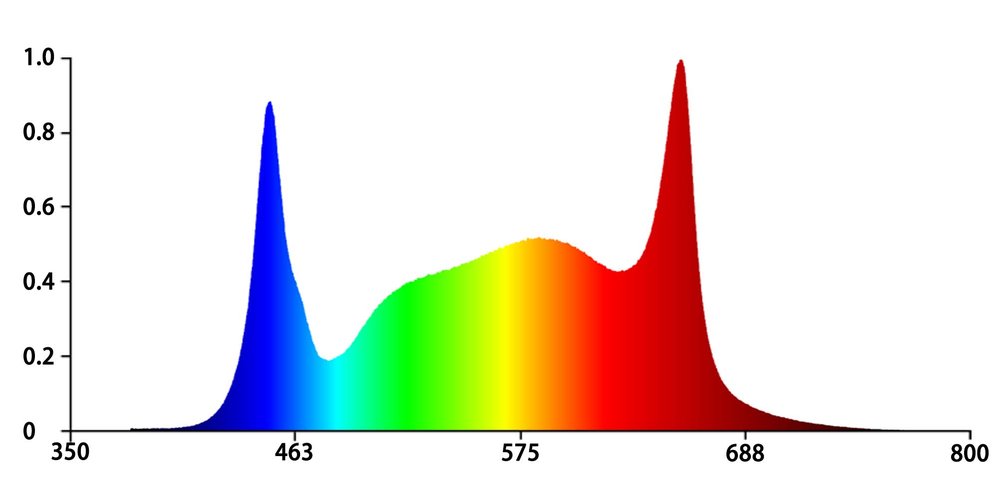
Alternative Spectrum: G19F — Optimized for Fast Growth
The G19F spectrum is another low-green option available for the G80 series. It shifts the balance slightly more toward red wavelengths compared to G24B, promoting faster stem elongation and leaf expansion.
G19F is well-suited for vegetative-stage growing where rapid biomass accumulation is the priority. Lettuce, herbs, and young plants in the early growth phase respond particularly well to this spectrum’s higher red-to-blue ratio.
Growers who run multi-room facilities often use G19F in their veg rooms and switch to G24B in their flower rooms, creating a spectrum strategy that optimizes each growth stage independently.
Custom Spectrum Options
One of the significant advantages of the RX-G80 series is that Koray offers custom spectrum configurations for commercial and OEM customers. If your operation has specific spectral requirements — perhaps a targeted red-to-far-red ratio for photoperiod control, or added UV for secondary metabolite stimulation — Koray’s engineering team can develop a custom LED recipe tailored to your needs.
Custom spectrum orders typically involve collaboration with Koray’s R&D team, spectral measurement and verification at their 2,800 m² testing facility, and prototype validation before full production. This capability has made Koray a preferred supplier for research institutions and advanced commercial growers worldwide.
How G80 Spectra Compare Across the Koray Product Line
To understand where the G80 spectra fit in Koray’s broader product ecosystem, it helps to compare them with other spectrum codes used across different product lines:
The G37 spectrum (used in the G1000 series) features a pronounced 437nm blue peak and is optimized specifically for medicinal plant tents. The F175 spectrum (used in GE35 and PT8 series) is a general-purpose full-spectrum ideal for strawberries, vegetables, and most common crops. The K6/K6C spectrum adds extra red content and is specifically designed for flowering ornamentals, succulents, and carnivorous plants like Venus flytraps.
The G24B and G19F spectra used in the G80 series sit at the premium end of Koray’s spectrum lineup, offering the highest efficacy and most targeted spectral tuning for commercial-scale medicinal and high-value crop production.
Why Low-Green Spectrum Matters for Commercial Growing
You might wonder why Koray deliberately reduces green light in the G24B and G19F spectra. The answer lies in plant physiology:
While plants do use some green light for photosynthesis (particularly in lower canopy leaves where blue and red have been filtered out by upper leaves), excessive green light triggers a “shade avoidance” response. Plants interpret abundant green light as a signal that they are being shaded by other plants, causing them to stretch taller with wider node spacing — an undesirable trait for most commercial crops.
By reducing green content while maintaining strong blue and red peaks, the G80’s G24B and G19F spectra promote compact, bushy growth with tight internodes, larger flowers, and higher yields per square meter. This is why professional medicinal plant growers consistently prefer low-green spectra like G24B.
Spectrum and the G80’s Optical System
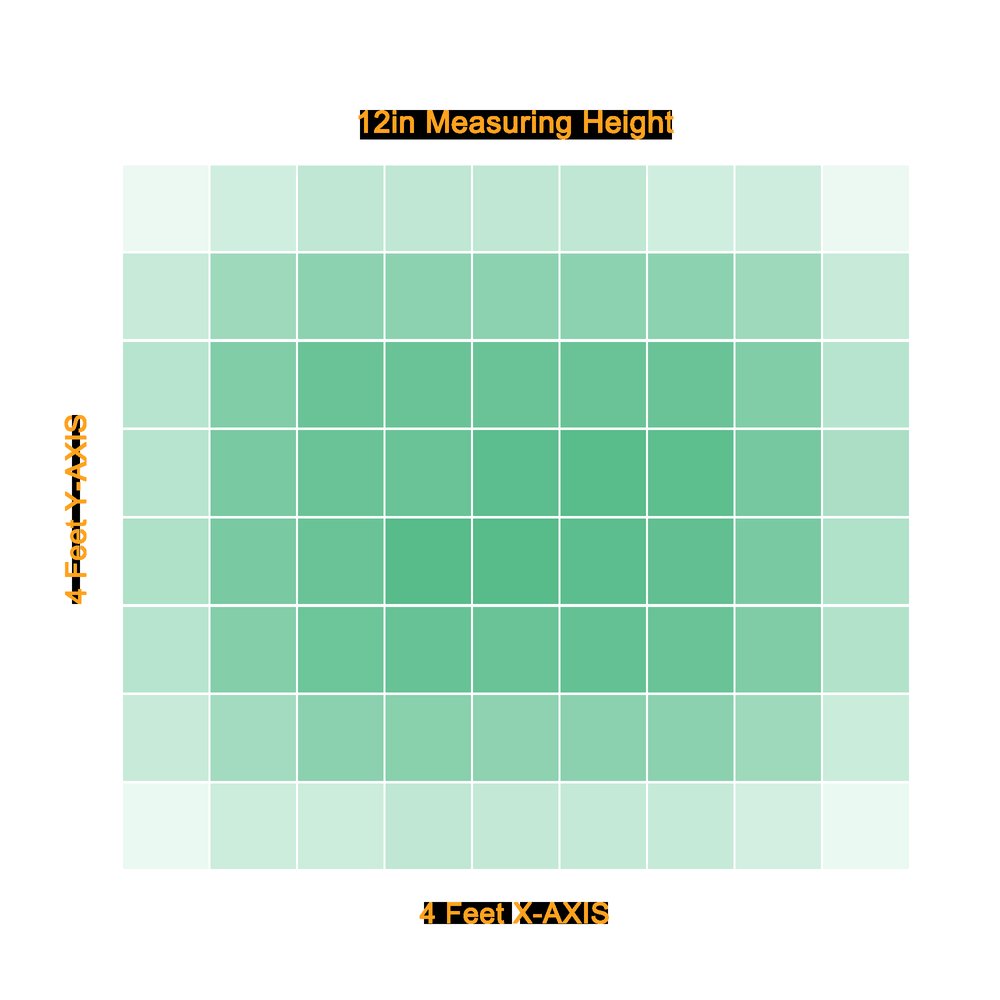
The effectiveness of any spectrum depends not just on the LED chips used, but on how the light is delivered to the canopy. The RX-G80 series uses Koray’s proprietary secondary optical system to ensure that the spectral output is uniform across the entire coverage area.
This means the G24B spectrum at the edge of your 1.2 x 1.2 meter growing area has the same spectral composition as the light at the center — no unwanted spectral shifts at the perimeter. Combined with the no-hotspot design that allows mounting as close as 0.2 meters, the G80 ensures every plant in your canopy receives the same optimized spectral treatment.
Dimming and Spectrum Stability
An often-overlooked aspect of spectrum selection is how the spectrum behaves at different dimming levels. Some LED grow lights shift their spectral output when dimmed — typically becoming more green/yellow at lower power settings. The RX-G80 series maintains spectral stability across its entire dimming range (PWM, resistor, and 0-10V), meaning your G24B spectrum stays true whether you’re running at 100% or 50% power.
This is critical for growers who use dimming to adjust PPFD levels for different growth stages. With the G80, you can confidently dim the fixture during early veg without inadvertently changing the spectral balance your plants rely on.
Choosing the Right G80 Spectrum for Your Crop
Here’s a quick reference for selecting the best G80 spectrum based on your growing goals:
For medicinal plants and flowers: Choose G24B. The low-green, high-blue-red ratio maximizes flower density, potency, and resin production.
For vegetative growth and leafy greens: Choose G19F. The higher red ratio promotes fast biomass accumulation and leaf expansion.
For research and specialized applications: Contact Koray about custom spectrum options. Their engineering team can develop a spectrum tailored to your exact requirements.
For multi-stage single-room grows: Use G24B as your primary spectrum and adjust intensity through dimming. The G24B performs well across all growth stages when paired with appropriate PPFD levels.
Conclusion: The Right Spectrum Makes All the Difference
The Koray Lighting RX-G80 series offers the G24B low-green full-spectrum as its primary option, with G19F available for vegetative-focused grows and custom spectrum configurations for specialized needs. All G80 spectra benefit from Koray’s secondary optical system, ensuring uniform spectral delivery across your entire canopy.
Whether you’re growing medicinal flowers, tomatoes, or leafy greens, choosing the right G80 spectrum — combined with the series’ class-leading efficacy and uniform coverage — can significantly impact your yield, quality, and bottom line.
Visit www.koraylights.com to explore the full RX-G80 series and find the perfect spectrum for your grow.




Leave A Comment