
What Is the Beam Angle of the RX-PAR38 Lens?
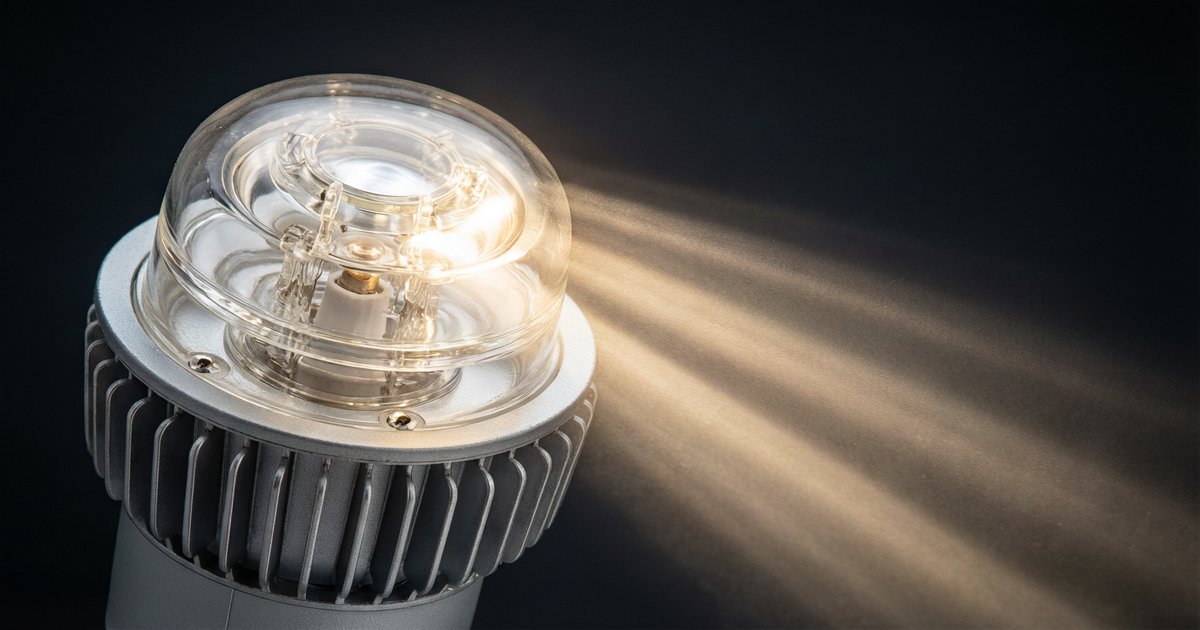
The RX-PAR38 grow bulb from Koray Lighting features a 60° beam angle, as indicated by its model designation RX-PAR38-60D — where the “60D” literally stands for 60 degrees. This beam angle is not an arbitrary specification; it represents a carefully calculated balance between light intensity and coverage area, making this one of the most versatile PAR38 grow bulbs available for indoor horticulture. Whether you are running a compact home grow tent or a commercial vertical farming rack, understanding what this 60° beam angle means — and how it compares to narrower or wider alternatives — will help you make better decisions about light placement, plant spacing, and overall canopy coverage.
What Does Beam Angle Mean for Grow Lights?
Beam angle describes how light spreads outward from a source. Measured in degrees, it defines the cone of illumination projected from the fixture. A narrow beam angle concentrates photons into a smaller area, producing higher intensity at the center but covering less surface. A wide beam angle distributes those same photons across a broader area, increasing coverage but reducing peak intensity at any given point.
For indoor growers, beam angle directly affects three critical factors:
- PPFD distribution — how evenly photosynthetic photon flux density is delivered across the canopy
- Coverage footprint — the diameter of the illuminated area at a given hanging height
- Light penetration — the intensity available to reach lower leaves and dense foliage
Choosing the right beam angle is not about finding the widest possible spread. It is about matching the light distribution pattern to your specific growing environment, plant types, and cultivation goals.
The 60° Beam: Design and Purpose
This grow bulb uses a precision-engineered secondary optics lens to shape its 60° beam. Unlike basic LED bulbs that rely on raw chip emission patterns, it passes light through a purpose-designed lens that controls the spread and ensures uniform PPFD across the entire illuminated area.
This 60° angle sits in what many professional growers consider the “sweet spot” for general-purpose indoor cultivation. It delivers enough lateral spread to cover multiple small-to-medium plants from a single bulb, while maintaining sufficient intensity at the center of the beam to drive photosynthesis in the most demanding crops — including flowering-stage tomatoes, peppers, and cannabis.
It is available in three spectrum options — S85, S93, and K6 — allowing growers to pair the 60° beam geometry with the spectral profile best suited to their crop. Combined with an E27 base for standard socket compatibility, waterproof construction, and low heat output, this PAR38 grow bulb integrates seamlessly into existing grow setups without requiring specialized fixtures or cooling infrastructure.

How 60° Compares to Other Common Beam Angles
To understand why 60° matters, it helps to see how it sits within the broader landscape of grow light beam angles:
30° (narrow beam): Concentrates light into a tight, intense circle. Ideal for targeting a single tall specimen or penetrating through a dense canopy where height is a factor. The trade-off is limited coverage — you may need multiple fixtures to illuminate a standard 1m x 1m grow area.
60° (medium beam): The sweet spot of this fixture. Balances intensity and coverage, making it suitable for most common indoor growing scenarios. One or two bulbs can effectively cover a 4-plant setup at typical hanging distances.
90° (wide beam): Delivers broad coverage with moderate intensity. Well-suited for low-canopy spreads, seedling trays, and leafy greens where extreme PPFD is not required. Intensity drops off more quickly with distance compared to narrower beams.
120° (very wide beam): Maximum spread, lowest per-area intensity. Useful for ambient supplemental lighting in greenhouses or for very low-light crops. Rarely the best choice as a primary light source for flowering plants.
The 60° beam angle of this PAR38 bulb occupies the practical middle ground. It provides roughly twice the coverage area of a 30° beam at the same distance, while delivering significantly higher PPFD than a 90° or 120° source using the same wattage.
Coverage Area at Different Hanging Distances
Beam angle alone does not tell the full story — hanging distance determines the actual footprint on the canopy. With its 60° beam, here is what growers can expect at typical mounting heights:
- At 0.3 meters: approximately 0.3–0.4 m diameter circle with even PPFD distribution. Ideal for seedlings, clones, and compact setups where the light sits close to the canopy.
- At 0.5 meters: approximately 0.5–0.6 m diameter circle. This is the typical working range for vegetative and early flowering stages, covering multiple small plants effectively.
These coverage figures assume the bulb is mounted in a standard socket without additional reflectors or secondary containment. The precision lens ensures that the PPFD remains relatively uniform across the entire circle — you will not find a bright hotspot in the center surrounded by dim edges, which is a common problem with lower-quality LED grow bulbs that lack proper optics.
For larger grow areas, multiple fixtures can be arranged in a grid pattern. The 60° beam angle allows adjacent circles to overlap efficiently, minimizing dark zones between fixtures while avoiding wasteful redundancy.
Koray Secondary Optics: Beyond Just the Angle
Beam angle is only one dimension of light quality. Two fixtures with identical 60° beam angles can produce dramatically different PPFD maps depending on how well the optics control the light. This is where Koray’s secondary optics technology makes a meaningful difference.
The company has invested heavily in optical engineering since its founding in 2009, accumulating over 200 patents in lighting design. The secondary optics used in this lens are not simply a diffuser cap placed over the LED chip. They are a shaped lens system that redirects and homogenizes the light output, producing a smooth, even PPFD distribution from edge to edge of the beam.
The practical result is that plants at the outer edge of the coverage area receive comparable light levels to plants at the center. This eliminates the common problem where center plants thrive while edge plants lag behind — a frequent issue with grow lights that rely on raw LED emission without optical correction.
Combined with the 60° geometry, these precision optics ensure that the PAR38 delivers not just wide coverage, but usable coverage — every square centimeter within the beam footprint contributes to plant growth.

Choosing the Right Beam Angle for Your Setup
The ideal beam angle depends on your specific growing situation. Here is a practical guide:
Choose a narrow beam (30°) when: You are growing tall, single-stem plants and need maximum light penetration to lower canopy layers. Also suitable when fixtures must be mounted high above the canopy and you need to compensate for distance-related intensity loss.
Choose a medium beam (60°) when: You are growing a mix of plants at moderate heights in a standard grow tent or rack. This is the most versatile option and the reason this bulb is the best-selling PAR38 form factor in the Koray lineup. It works well for herbs, leafy greens, flowering vegetables, and ornamental plants alike.
Choose a wide beam (90–120°) when: You need broad, low-intensity coverage for seedling propagation, microgreens, or supplemental lighting in an otherwise well-lit greenhouse environment.
For growers who are just starting out or who run a mixed-crop operation, the 60° PAR38 is the safest and most flexible choice. It does not force you into a narrow use case — it adapts to your needs as they evolve.
If you operate a smaller space where a full PAR38 is too large, the RX-PAR30 offers a similar optical design in a compact PAR30 form factor, delivering the same quality of secondary optics in a physically smaller package.
Summary
The RX-PAR38 grow bulb carries a 60° beam angle — designated by the “60D” in its model number RX-PAR38-60D. This medium beam angle provides an optimal balance between light intensity and coverage area, making it suitable for the majority of indoor horticulture applications. At typical hanging distances of 0.3 to 0.5 meters, a single fixture covers a 0.3–0.6 m diameter area with uniform PPFD, thanks to precision secondary optics that eliminate center hotspots and ensure even light distribution.
Backed by over 200 patents, CE, RoHS, and FCC certifications, and a 35,000+ hour lifespan, this grow light represents a commitment to engineering products that deliver measurable horticultural performance — not just impressive spec sheets. For growers seeking a reliable, versatile PAR38 grow bulb with a well-considered beam angle, it is a proven choice.

Leave A Comment