
What Dimming Methods Does the G80 Support?
Dimming control is one of the most important features for commercial indoor growers who need to fine-tune light intensity across different growth stages, crop types, and environmental conditions. The Koray Lighting RX-G80 series — one of the most widely adopted commercial grow light platforms for medicinal plants and high-value crops — offers multiple dimming methods to accommodate diverse facility requirements. In this comprehensive guide, we break down every dimming method supported by the G80 series, explain how each one works, and help you determine which method is best for your specific growing operation.
Overview of the RX-G80 Dimming Ecosystem
The RX-G80 series includes models ranging from 500W to 1500W, all sharing the same core platform design built around Koray’s G24B low-green full-spectrum technology. Regardless of which wattage you choose, every G80 fixture supports three primary dimming methods: PWM dimming, RX resistor dimming, and 0-10V analog dimming. This triple-method approach ensures that the G80 can integrate with virtually any control infrastructure, from simple manual setups to fully automated commercial grow room systems.
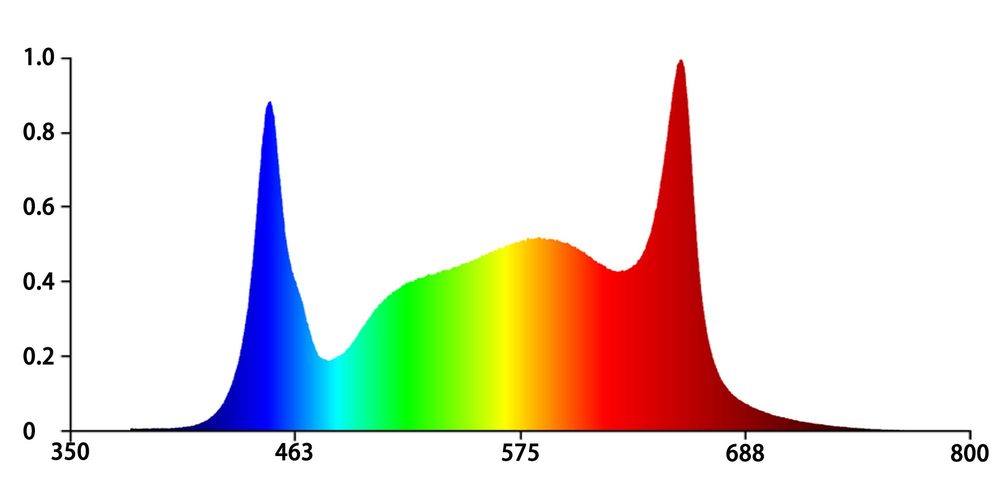
Before diving into each method, it is worth noting that the G80’s dimming system is designed to work seamlessly with the fixture’s Koray secondary optical system. Unlike some grow lights that change their spectral output when dimmed — shifting color temperature in ways that can stress plants — the G80 maintains consistent spectral quality across its entire dimming range. This means the G24B spectrum you calibrated for during full-power operation remains stable whether you are running at 25% or 100% output.
PWM Dimming (Pulse Width Modulation)
PWM, or Pulse Width Modulation, is the most precise dimming method supported by the G80 series. It works by rapidly switching the LED array on and off at a frequency too fast for the human eye to detect. The ratio of “on” time to “off” time within each cycle determines the effective light output. For example, a 50% PWM duty cycle means the LEDs are on half the time and off half the time, producing approximately 50% of maximum light output.
The advantage of PWM dimming is its precision and efficiency. Because the LEDs are either fully on or fully off during each switching cycle, there is minimal heat generation in the driver circuitry. This means the fixture maintains its thermal efficiency even at reduced power levels. For commercial growers who need to make fine adjustments — say, reducing PPFD from 1200 to 1000 μmol/m²/s during a specific week of flowering — PWM provides the granularity needed to hit exact targets.
PWM dimming is also the preferred method when integrating with digital controllers and automation systems. Most modern environmental controllers output PWM signals, making it straightforward to connect the G80 to existing facility infrastructure. The G80’s PWM input accepts standard duty cycle signals, allowing for smooth, flicker-free dimming from 0% to 100%.
RX Resistor Dimming
RX resistor dimming is a proprietary method developed by Koray Lighting that offers a simpler alternative to PWM while still providing reliable intensity control. This method uses a variable resistor (potentiometer) connected to the fixture’s control port. By adjusting the resistance value, you change the current flowing through the LED driver, which in turn adjusts the light output.
The practical advantage of RX resistor dimming is its simplicity. There is no need for a digital controller or complex wiring — just a physical knob or dial that you turn to increase or decrease light intensity. This makes it ideal for smaller operations or single-room setups where a full automation system would be overkill. A grower managing a single 4×4 tent with a G80-800W can simply install a potentiometer on the wall and adjust the light level by hand.
RX resistor dimming is also useful as a backup control method. If your primary digital controller fails or needs maintenance, you can switch to manual resistor dimming to keep your lights running without interruption. This redundancy is particularly valuable in commercial facilities where any lighting downtime can directly impact crop quality and harvest timelines.
0-10V Analog Dimming
The 0-10V analog dimming method is an industry-standard control protocol widely used in commercial lighting systems. In this system, a control signal between 0 volts and 10 volts determines the light output. At 0V, the fixture dims to its minimum output (or off, depending on configuration). At 10V, the fixture runs at full power. Any voltage in between produces a proportional light output — for example, 5V would yield approximately 50% output.
0-10V dimming is the most universally compatible method supported by the G80 series. Nearly every commercial environmental controller, timer, and building management system on the market supports 0-10V output. This means the G80 can integrate with systems from brands like Priva, Argus, Climate Control, and many others without requiring any special adapters or protocol converters.
For large-scale commercial facilities managing hundreds of fixtures, 0-10V dimming is often the preferred choice because of its scalability. A single controller can manage multiple G80 fixtures simultaneously through a shared 0-10V bus. This centralized approach simplifies the management of entire grow rooms, allowing operators to adjust light levels for all fixtures with a single command.
Choosing the Right Dimming Method for Your Operation
The best dimming method depends on your facility size, automation level, and budget. For small to medium operations with fewer than 20 fixtures, RX resistor dimming offers a cost-effective and straightforward solution. You get reliable manual control without the complexity of digital systems.
For medium to large operations that use environmental controllers, 0-10V analog dimming provides the best balance of compatibility and scalability. It works with virtually any controller brand and can manage large numbers of fixtures from a central point.
For research facilities, precision growing operations, or any setup that demands the finest level of control, PWM dimming delivers the highest accuracy and the most seamless integration with digital automation platforms. If you are using the HortiGuru app for smart control, PWM is the recommended method for achieving the most precise automated dimming schedules.
Dimming and Energy Savings
One of the most significant benefits of the G80’s multi-method dimming capability is the potential for energy savings. In a typical commercial grow cycle, plants do not require maximum light intensity at every stage. During early vegetative growth, for example, you might run the G80 at 60-70% output. During late flowering, you might push to 90-100%. By dimming appropriately throughout the cycle, you can reduce total energy consumption by 15-25% compared to running the fixture at full power continuously.
The G80 series is already one of the most energy-efficient platforms in its class. The G80-800W, for instance, delivers the same PPFD output as competing 1000W fixtures while consuming 20% less power. When you combine this inherent efficiency with intelligent dimming strategies, the cumulative energy savings become substantial. Over the course of a year, a commercial facility running 100 G80 fixtures with optimized dimming schedules can save tens of thousands of dollars in electricity costs.
Smart Control Integration with HortiGuru
All three dimming methods on the G80 series can be automated through Koray’s compatible HortiGuru application. The HortiGuru app allows growers to create custom dimming schedules that adjust light intensity based on time of day, growth stage, or environmental conditions. For example, you can program the app to gradually increase light output over a two-week period as plants transition from vegetative to flowering stage — mimicking the natural increase in sunlight intensity that plants would experience outdoors.
The app also supports remote monitoring and control, so you can adjust dimming settings from anywhere with an internet connection. This is particularly useful for facility managers who oversee multiple grow rooms or locations and need to make real-time adjustments without physically visiting each fixture.
Technical Specifications Summary
To summarize the dimming capabilities of the RX-G80 series: all models from 500W to 1500W support PWM dimming for precision digital control, RX resistor dimming for simple manual adjustment, and 0-10V analog dimming for universal controller compatibility. The fixture maintains consistent G24B spectral output across the entire dimming range, features no center hotspot thanks to Koray’s secondary optical design, and delivers a rated lifespan of 50,000 hours. Certifications include CE, RoHS, FCC, and ETL for global market compliance.
Conclusion
The Koray Lighting RX-G80 series supports three distinct dimming methods — PWM, RX resistor, and 0-10V analog — giving commercial growers the flexibility to choose the control method that best fits their facility infrastructure and operational requirements. Whether you need simple manual control, universal controller compatibility, or precision digital automation, the G80 series has you covered. Combined with the energy-efficient G24B spectrum, Koray’s hotspot-free optical system, and HortiGuru app integration, the G80 series delivers a level of dimming versatility that sets the standard for commercial grow light technology.











Leave A Comment