
Carnivorous plants are among the most fascinating and rewarding species to grow indoors, but they demand precise lighting conditions to thrive. If you are considering the RX-PAR38 LED grow light for your Venus flytraps, sundews, pitcher plants, or butterworts, you are on the right track. This comprehensive guide explains exactly how the RX-PAR38 performs for carnivorous plant cultivation, what spectrum to choose, and how to set up your growing arrangement for the best results.
Why Carnivorous Plants Need Specialized Grow Lights
In their natural habitats, carnivorous plants grow in open, sun-drenched bogs and marshes. Venus flytraps (Dionaea muscipula) originate from the coastal plains of North and South Carolina, where they receive 12 to 16 hours of direct sunlight during the growing season. Sundews (Drosera species) are found across every continent except Antarctica, typically in similarly bright, open environments. Pitcher plants (Nepenthes and Sarracenia) also require intense light to develop their characteristic trapping structures.
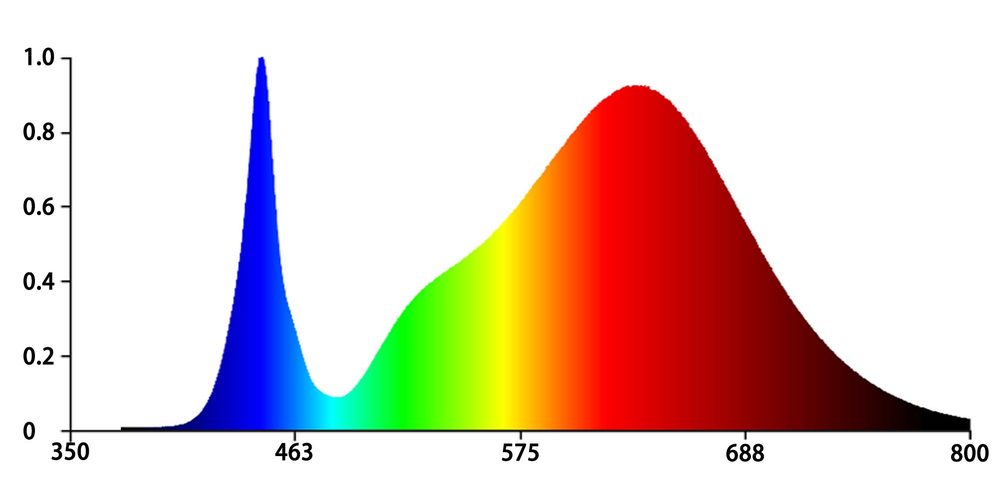
When growing these plants indoors, standard room lighting is nowhere near sufficient. Most carnivorous species require a PPFD (Photosynthetic Photon Flux Density) of 200 to 500 μmol/m²/s at the canopy level, with some high-light species like Nepenthes benefiting from even higher intensities. The light must also deliver the right spectral balance, particularly in the blue and red wavelengths that drive photosynthesis and pigmentation.
RX-PAR38 Specifications Relevant to Carnivorous Plants
The RX-PAR38 from Koray Lighting is a professional-grade PAR38-shaped LED grow light designed for targeted plant illumination. Here are the key specifications that matter for carnivorous plant growing:
The RX-PAR38 delivers a 60-degree beam angle, which provides focused coverage ideal for individual pots, terrariums, and small growing areas. At a hanging distance of 0.3 meters, it achieves PPFD levels sufficient for most carnivorous species. The light uses Koray’s proprietary secondary optics system, which eliminates the center hotspot problem common in cheaper LED grow lights. This is particularly important for carnivorous plants, because uneven light distribution can cause some traps to burn while others remain under-illuminated.
The fixture operates at high efficiency with a power factor above 0.9 and no visible flicker, which matters when you are running lights for 14 to 16 hours per day. The IP65 waterproof rating means the RX-PAR38 can handle the high humidity environments that carnivorous plants require, typically 50 to 80 percent relative humidity.
Choosing the Right Spectrum: K6 vs S91
Koray Lighting offers the RX-PAR38 in multiple spectrum options, and choosing the right one makes a significant difference for carnivorous plants. The two most relevant spectra are the K6 and S91.
The K6 spectrum features enhanced red wavelengths, which promote compact, vivid growth in succulents and carnivorous plants. Under K6 lighting, Venus flytraps develop deeper red coloration in their traps, sundews produce more abundant dew, and pitcher plants form richer pigmentation. The additional red output complements the natural light reception these plants experience in open bog environments.
The S91 spectrum is a warm white full-spectrum option with excellent color rendering (high Ra value). It provides a balanced light that makes carnivorous plants look their natural best while still delivering the photosynthetic intensity they need. If you are growing carnivorous plants as decorative houseplants and want them to look attractive in a living space, S91 is an excellent choice.
For serious carnivorous plant collectors who prioritize growth intensity and coloration, the K6 spectrum is generally preferred. For those who want a more natural-looking display in a home or office environment, S91 strikes an ideal balance between plant performance and visual appeal.
Setup Guide: Growing Carnivorous Plants Under the RX-PAR38
Setting up your carnivorous plant grow area with the RX-PAR38 involves a few key considerations. First, determine the appropriate hanging distance based on your species. For Venus flytraps and most temperate sundews, position the light at 0.2 to 0.3 meters above the plant canopy. For lowland Nepenthes, which tolerate higher light levels, you can position the light at 0.15 to 0.25 meters. For shade-tolerant species like Darlingtonia californica, increase the distance to 0.3 to 0.4 meters.
Use a timer to maintain a consistent photoperiod. Most temperate carnivorous plants thrive on a 14 to 16-hour light schedule during the active growing season (spring through autumn). Reduce this to 10 to 12 hours during winter dormancy for temperate species. Tropical species like Nepenthes benefit from a consistent 14-hour photoperiod year-round.
The RX-PAR38 uses a standard E27 base, so it fits directly into common socket fixtures. For terrarium setups, you can mount the light on a gooseneck clamp lamp positioned above the enclosure. For open shelf or bench growing, a simple E27 socket fixture with a reflective dome works well. Because the RX-PAR38 produces minimal heat compared to fluorescent or HPS alternatives, you can mount it closer to the plants without risk of thermal damage.
Species-Specific Recommendations
For Venus flytraps, use the K6 spectrum at 0.25 meters distance with a 14-hour photoperiod. This produces compact traps with intense red coloration. For sundews (Drosera capensis, D. adelae, and others), the K6 spectrum at 0.2 to 0.3 meters encourages abundant dew production and healthy growth. For Nepenthes, either spectrum works well; use K6 for highland species that benefit from intense light, or S91 for lowland species in a display setting. For Pinguicula (butterworts), the K6 spectrum at 0.25 meters promotes compact rosette formation and vivid leaf coloration.
Common Questions About the RX-PAR38 and Carnivorous Plants
Many growers wonder whether a single RX-PAR38 can cover an entire terrarium. The 60-degree beam angle provides a coverage diameter of approximately 0.4 meters at 0.3 meters distance, which is ideal for individual pots or small terrariums. For larger enclosures, use multiple fixtures spaced 0.4 to 0.5 meters apart.
Another common question is whether the RX-PAR38 generates too much heat for enclosed terrariums. Because it is a high-efficiency LED, the RX-PAR38 produces significantly less heat than equivalent fluorescent or incandescent sources. In most terrarium setups with adequate ventilation, heat is not a concern. However, always monitor temperature inside closed enclosures and maintain airflow.
The RX-PAR38 is also suitable for providing supplemental light to carnivorous plants on a windowsill. During winter months when natural light is insufficient, adding the RX-PAR38 for 8 to 12 hours per day can prevent the etiolation and dormancy issues that commonly afflict windowsill-grown carnivorous plants.
Koray Lighting has been manufacturing professional horticultural lighting since 2009, with over 200 patents and products exported to more than 60 countries. The RX-PAR38 reflects this expertise, combining Koray’s secondary optics technology with proven LED efficiency to deliver a grow light that performs consistently for demanding applications like carnivorous plant cultivation.

Leave A Comment