
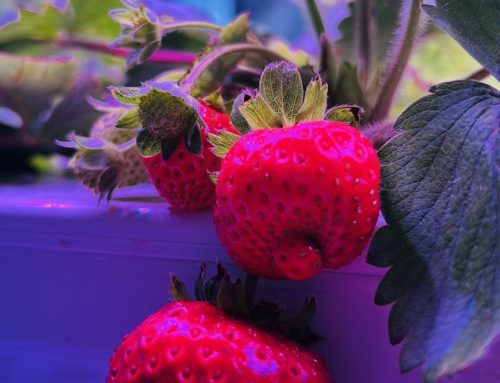
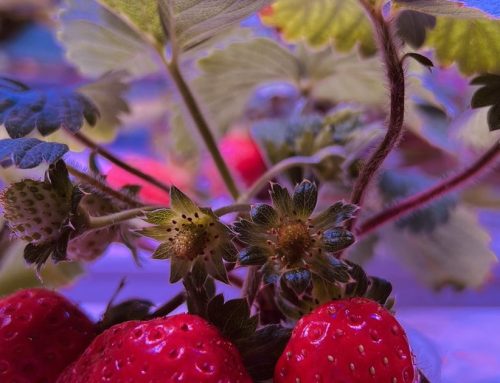
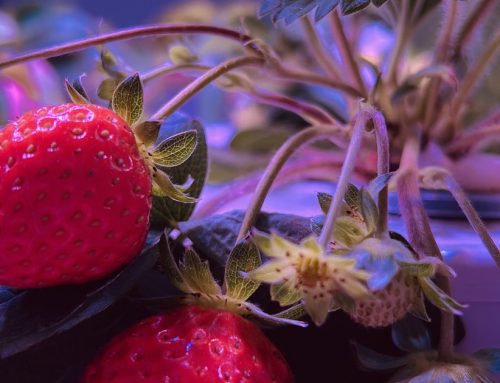
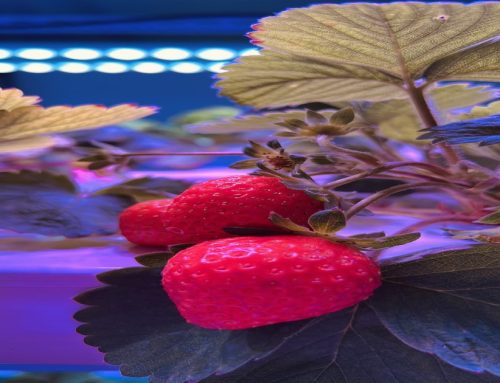
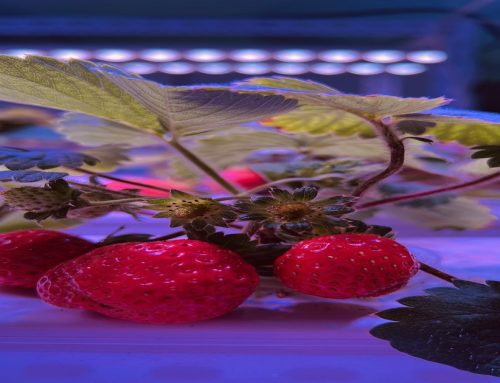
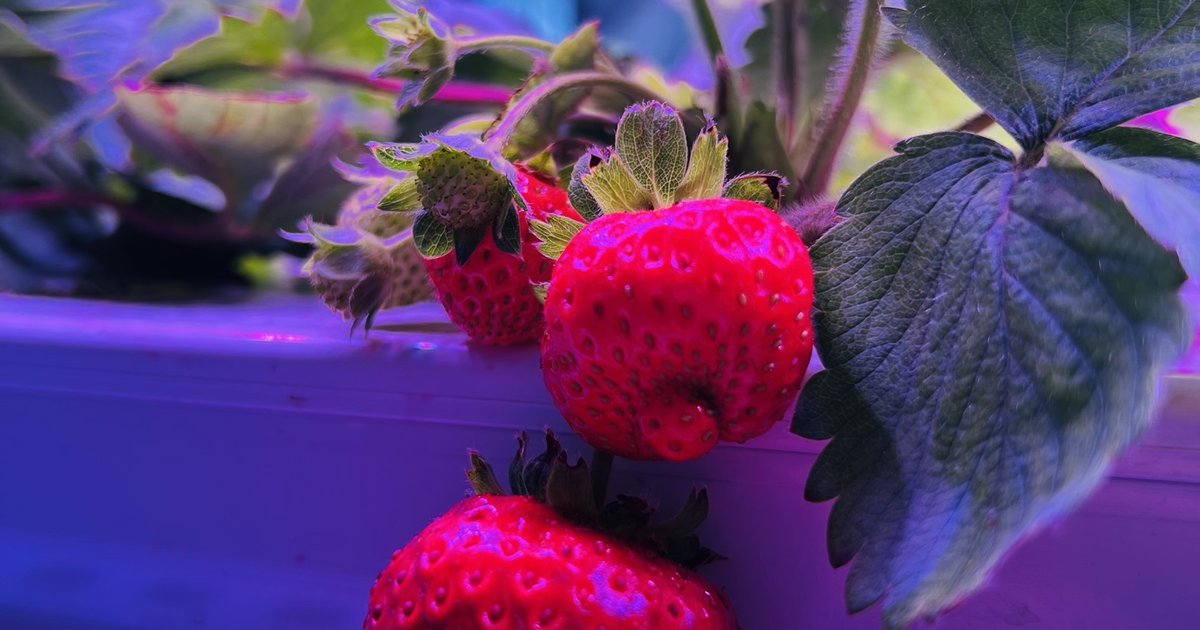
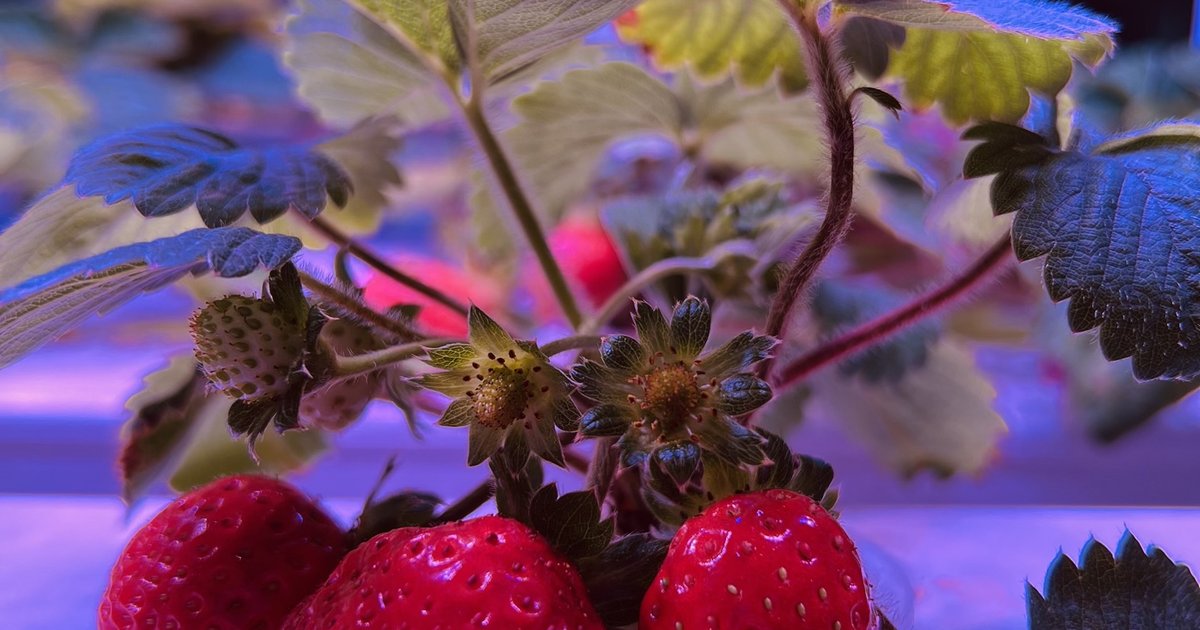
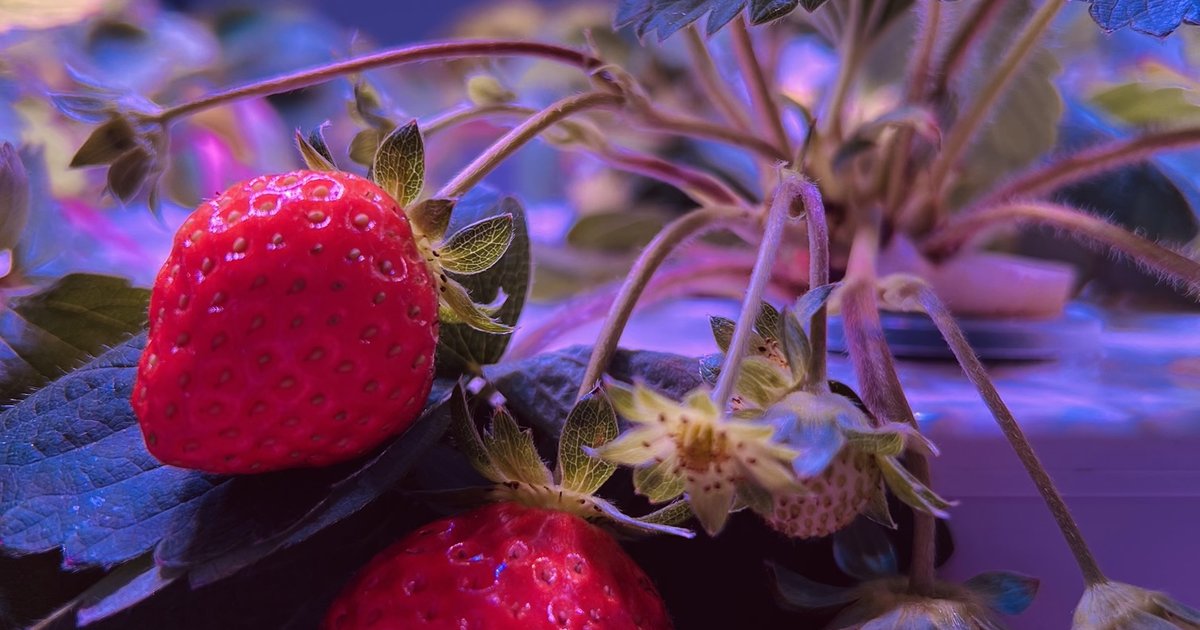
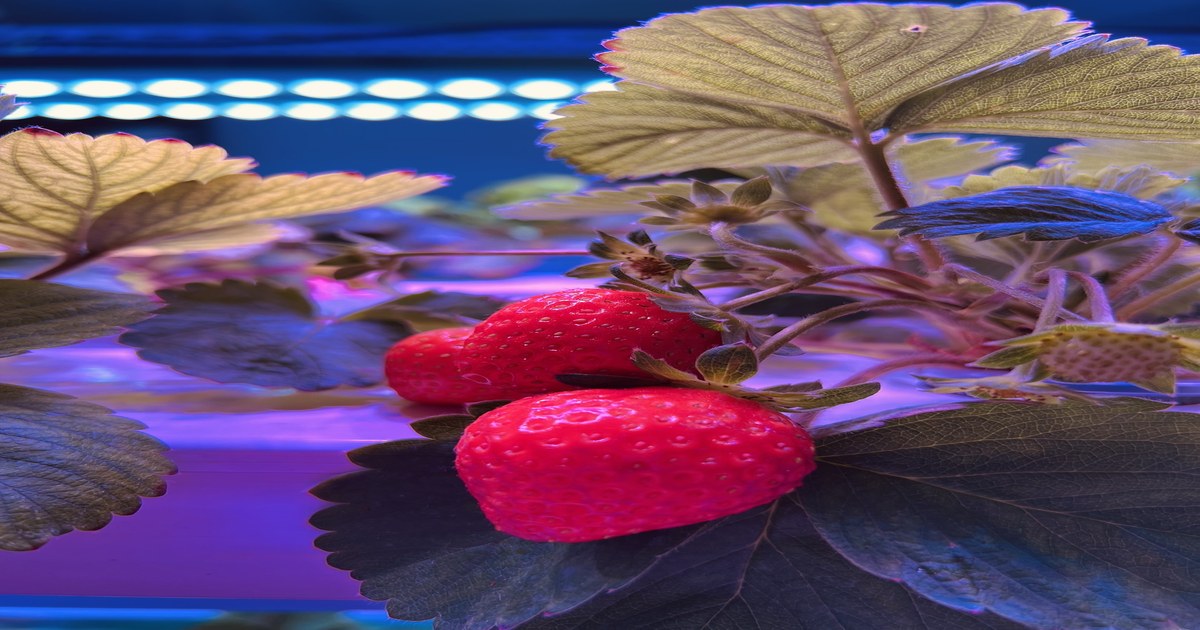
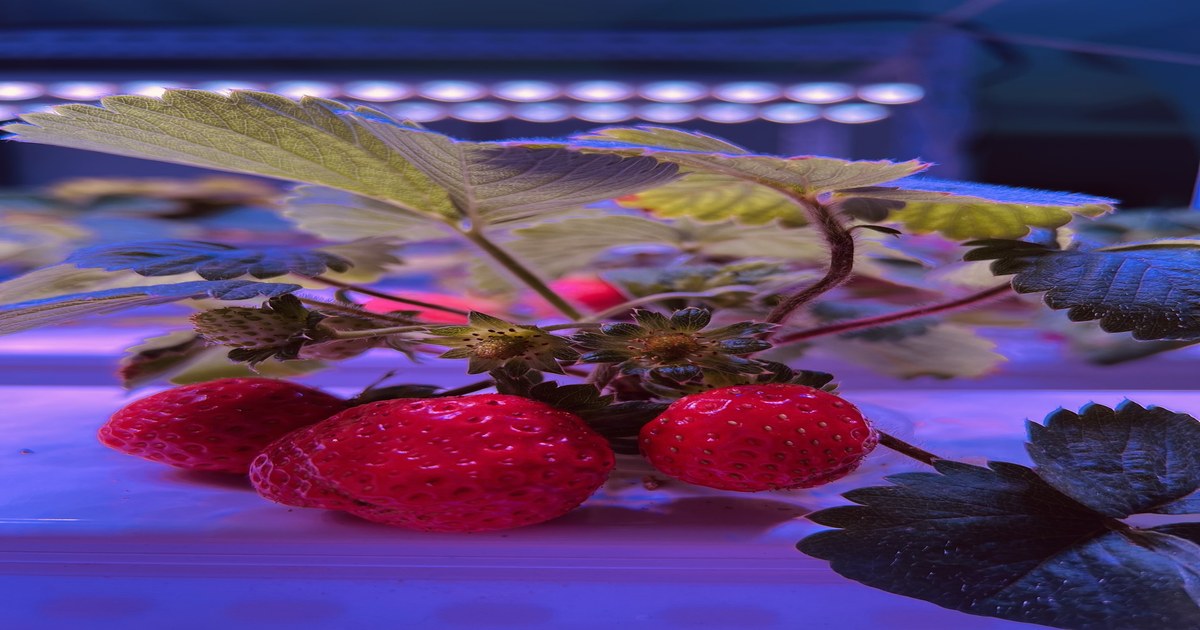
Strawberries are one of the most light-demanding soft fruits, requiring 400-600 µmol/m²/s PPFD during flowering and fruiting, with 12-16 hours of daily photoperiod. The Koray GE35 series was engineered specifically for this application, combining the right spectrum, intensity, form factor, and durability for commercial strawberry production.
The GE35’s F175 spectrum is optimized for fruiting crops. It emphasizes red (660nm) and far-red (730nm) wavelengths that trigger flowering hormones and accelerate fruit development, while maintaining sufficient blue (450nm) for compact vegetative structure. Growers report 15-20% faster fruit set and improved Brix (sugar content) compared to generic white LEDs.
At 0.2m distance, the GE35-120 (60W, 1200mm) delivers 530 µmol/m²/s PPFD across a 0.3m coverage width — ideal for single-row strawberry troughs on vertical racks. The GE35-60 (30W, 606mm) provides 535 µmol at the same distance for shorter shelves or supplemental lighting between rows.
The IP64 waterproof rating is critical for strawberry environments. Irrigation systems, high humidity (70-85% RH), and occasional splash exposure would quickly degrade unprotected fixtures. The GE35’s sealed aluminum housing and waterproof end caps ensure reliable operation in these conditions without corrosion or electrical failure.
Thermal management matters for strawberries because they are sensitive to radiant heat. The GE35’s aluminum extrusion heat sink keeps surface temperature below 45°C at full power, preventing leaf scorch even at close mounting distances. This allows fixtures to be positioned 15-25 cm above the canopy for maximum light utilization.
For a commercial vertical strawberry farm with 8-layer racks, the GE35 offers significant advantages over T5 fluorescent tubes: 50% less energy consumption, 3x longer lifespan (35,000 vs 12,000 hours), no mercury content, and stable output without the 20-30% lumen depreciation that fluorescents suffer within the first year.
The GE35 supports AC 100-277V input and can be customized to DC 48V for solar-powered or battery-backed installations. Standard 0-10V dimming allows integration with environmental controllers for photoperiod and intensity management across growth stages — from 200 µmol for runners to 600 µmol for peak fruiting.

Leave A Comment