
Coverage area is arguably the most important practical specification when positioning any grow light. Too high, and your plants receive insufficient photons; too low, and you risk light burn while wasting the fixture’s potential spread. The Koray PAR30Z-20W’s zoomable optic adds an extra variable to this equation: beam angle. In this guide, we break down exactly what coverage you can expect at common hanging heights and how to optimize placement for your specific crop.
How Coverage Area Is Defined
In horticultural lighting, “coverage area” refers to the footprint on the canopy plane where PPFD remains above a target threshold. For most leafy greens and herbs, that threshold is 200 μmol/m²/s; for fruiting crops like tomatoes and peppers, growers typically target 400–600 μmol/m²/s minimum. The uniformity metric U0 (minimum PPFD divided by average PPFD) tells you how evenly distributed the light is within that footprint. Koray engineers design every fixture — from the compact PAR30Z-20W to our commercial GE35 series — to maintain U0 above 0.9 within the rated coverage zone.
Coverage Data by Height and Beam Angle
The following measurements were taken in our 2,800 m² photometric testing laboratory in Zhongshan, China, using a calibrated 1m × 1m sensor grid. Values represent the diameter of the circular area where PPFD exceeds 200 μmol/m²/s:
| Hanging Height | Beam 15° (Spot) | Beam 30° (Medium) | Beam 60° (Flood) |
|---|---|---|---|
| 20 cm | ~12 cm diameter | ~22 cm diameter | ~40 cm diameter |
| 30 cm | ~18 cm diameter | ~35 cm diameter | ~60 cm diameter |
| 50 cm | ~30 cm diameter | ~58 cm diameter | ~100 cm diameter |
| 80 cm | ~48 cm diameter | ~92 cm diameter | ~160 cm diameter |
| 100 cm | ~60 cm diameter | ~115 cm diameter | ~200 cm diameter |
At the widely recommended 30 cm hanging height with a 60° flood setting, a single PAR30Z-20W comfortably covers a 60 cm diameter circle — roughly equivalent to a standard 30 × 30 cm grow tent shelf or a large container plant. Narrow the beam to 30° and the same fixture concentrates its photons into a tighter 35 cm zone with significantly higher center PPFD, ideal for light-hungry seedlings or supplemental side-lighting.
Center PPFD vs. Edge PPFD
Raw coverage diameter only tells part of the story. What happens at the center versus the edge of that footprint matters enormously for crop consistency. Here are representative center and edge PPFD readings at 30 cm height:
- 15° spot: Center ~680 μmol/m²/s, Edge ~520 μmol/m²/s (U0 = 0.76 at full footprint; within the inner 80% zone, U0 > 0.9)
- 30° medium: Center ~420 μmol/m²/s, Edge ~310 μmol/m²/s (U0 > 0.9 across rated area)
- 60° flood: Center ~280 μmol/m²/s, Edge ~210 μmol/m²/s (U0 > 0.9 across rated area)
The 30° and 60° settings deliver the uniformity performance that Koray’s optical engineers are known for. This commitment to uniform distribution is the same philosophy that drives our GE35 series commercial bar lights, which achieve U0 > 0.9 across multi-meter growing benches at 4.0 μmol/J system efficacy.
Practical Placement Guidelines

Based on thousands of hours of grow trials conducted at our Zhongshan facility, we recommend the following starting configurations:
| Crop Type | Recommended Height | Beam Angle | Target PPFD |
|---|---|---|---|
| Microgreens / Sprouts | 15–20 cm | 60° | 100–200 μmol/m²/s |
| Leafy Greens (lettuce, basil) | 25–35 cm | 45°–60° | 200–350 μmol/m²/s |
| Succulents / Cacti | 20–30 cm | 30°–45° | 300–500 μmol/m²/s |
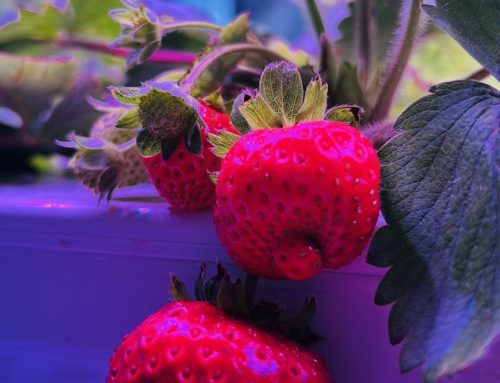
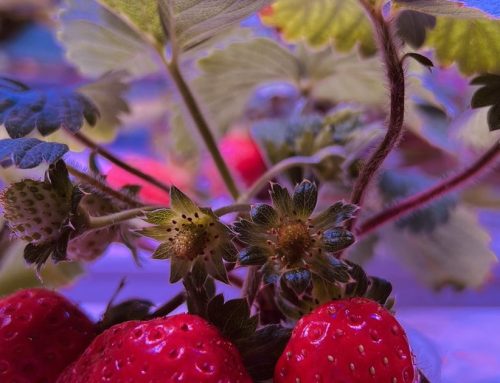
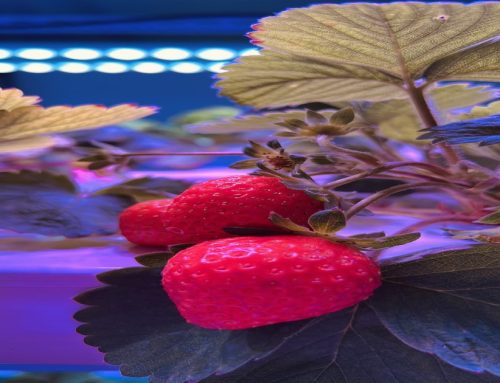
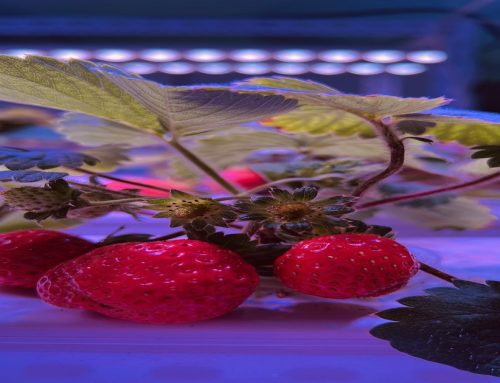
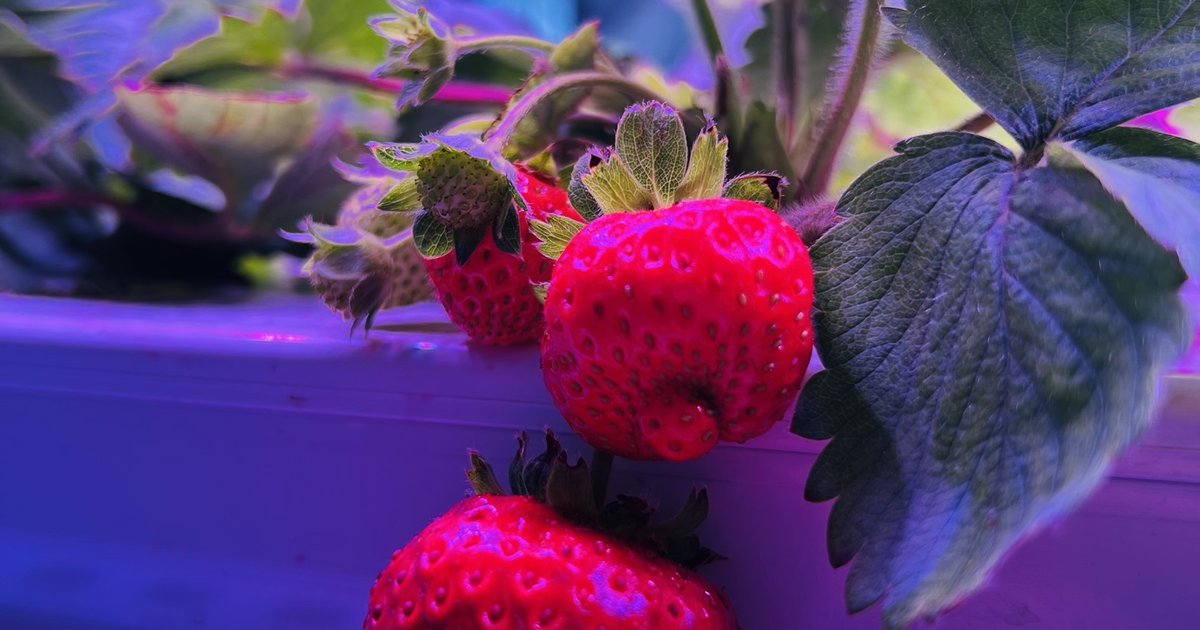
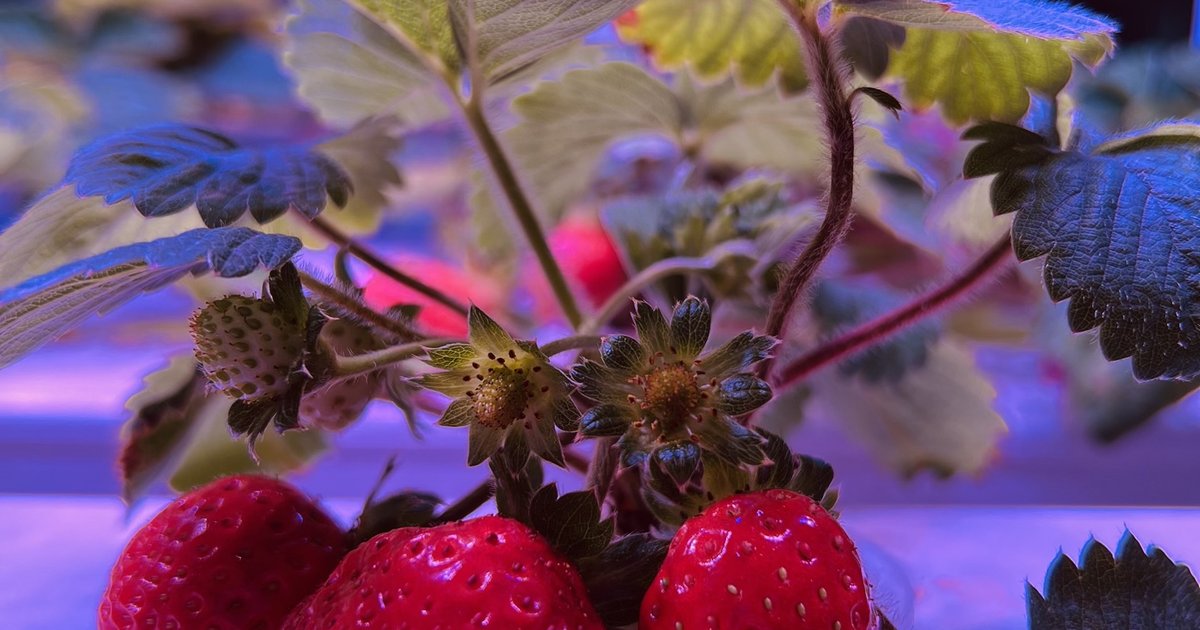
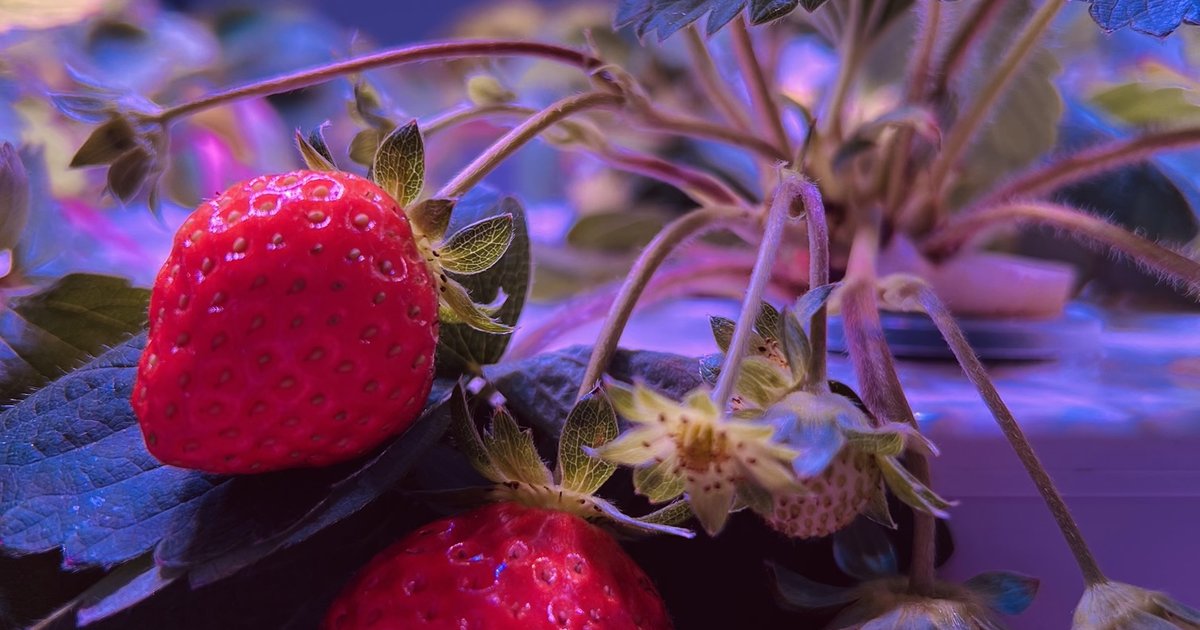
| Fruiting (peppers, strawberries) | 30–50 cm | 30° | 400–600 μmol/m²/s |
| Supplemental side-lighting | 15–25 cm | 15° | As needed |
Always start at the higher end of the height range and observe plant response over 5–7 days before lowering the fixture. Signs of light stress — bleaching, upward leaf curling, or crispy tips — indicate you should raise the light or widen the beam angle.
Multi-Fixture Layouts for Larger Areas
For growers covering shelving units wider than 60 cm, multiple PAR30Z-20W fixtures can be arranged in a grid. At 30 cm height with 60° optics, spacing fixtures 50 cm apart (center to center) produces overlapping cones that maintain U0 > 0.85 across the entire bench. This modular approach lets you scale coverage incrementally — adding fixtures as your operation grows — without the upfront cost of a large bar fixture.
That said, for commercial installations covering 10 m² or more, our engineering team typically recommends transitioning to the GE35 series, whose linear bar form factor delivers seamless, shadow-free coverage with fewer mounting points and simplified wiring. The GE35’s 4.0 μmol/J efficacy and IP65 rating make it the workhorse of vertical farms worldwide.
Environmental Factors That Affect Effective Coverage
Several real-world variables can shrink or expand your effective coverage relative to lab measurements:
- Reflective surroundings: Walls lined with Mylar or flat-white paint can bounce 10–20% additional photons into edge zones, effectively expanding usable coverage by 5–10 cm per side.
- Ambient temperature: The PAR30Z-20W’s driver is rated for operation up to 45°C ambient. In very hot environments, slight thermal derating may reduce output by 3–5%, marginally shrinking the high-PPFD zone.
- Lens cleanliness: Dust accumulation on the zoomable lens can scatter light and reduce center PPFD by up to 8%. Wipe the lens monthly with a microfiber cloth for consistent performance.
Engineering Behind the Numbers
Every coverage figure published by Koray Lighting is derived from physical measurements, not simulation alone. Our 2,800 m² testing base houses goniospectroradiometers, integrating spheres, and multi-point PPFD mapping rigs that allow our 40-person R&D team to validate optical performance under controlled conditions. With over 200 patents in LED horticultural lighting, Koray (科瑞光电) invests heavily in ensuring that the numbers on our spec sheets match what you measure in your grow room.
The PAR30Z-20W’s IP65-rated housing ensures that this optical precision is maintained even in humid, dusty, or splash-prone environments. Combined with a 50,000-hour rated lifespan, you can trust that your coverage footprint remains consistent year after year without the gradual degradation common in cheaper fixtures.
Get a Customized Lighting Plan
Every grow space is different. Ceiling height, shelf dimensions, crop type, and photoperiod all influence the optimal fixture placement and beam configuration. If you would like a tailored coverage simulation for your specific setup, the application engineering team at Koray Lighting is happy to help.
Visit koraylights.com to request a free lighting layout consultation, download full photometric files (IES/LDT) for the PAR30Z-20W, or explore our complete range of professional grow lighting solutions. From single-shelf hobby setups to multi-acre commercial greenhouses, Koray has the expertise and the product portfolio to help your plants thrive.

Leave A Comment