
Energy cost is one of the largest operating expenses in indoor farming, and the difference between an efficient grow light and an outdated one can translate into thousands of dollars per year per growing rack. The Koray RX-PT8T F175 spectrum delivers a claimed 24% energy savings over its predecessor — but what does that actually mean in real-world operating costs? This article breaks down the numbers with concrete calculations that commercial growers can use to evaluate their return on investment.
The PT8 F175: Key Efficiency Specifications
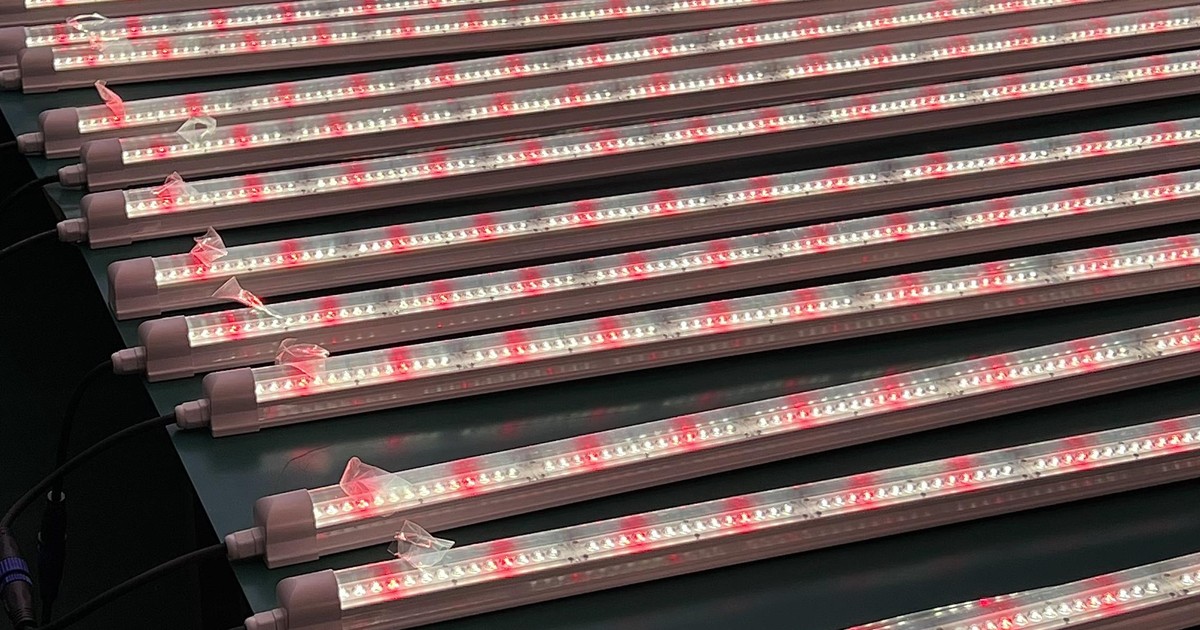
The current-generation PT8T F175 draws 32 watts of power and produces 86 umol/s PPF with a light output of 5,200 lumens. Its PPFD performance at key distances is 365 umol/m2/s at 0.15 m, 275 umol/m2/s at 0.2 m, and 185 umol/m2/s at 0.3 m. The tube carries an IP66 waterproof rating, operates flicker-free, and maintains a power factor above 0.9.
The 24% energy savings figure means that the previous-generation PT8 tube delivering equivalent PPFD output consumed approximately 42 watts. By reducing power draw from 42W to 32W while maintaining the same photosynthetic light output, Koray achieved a meaningful reduction in per-tube energy consumption without sacrificing growing performance.
Calculating Real-World Energy Savings Per Shelf
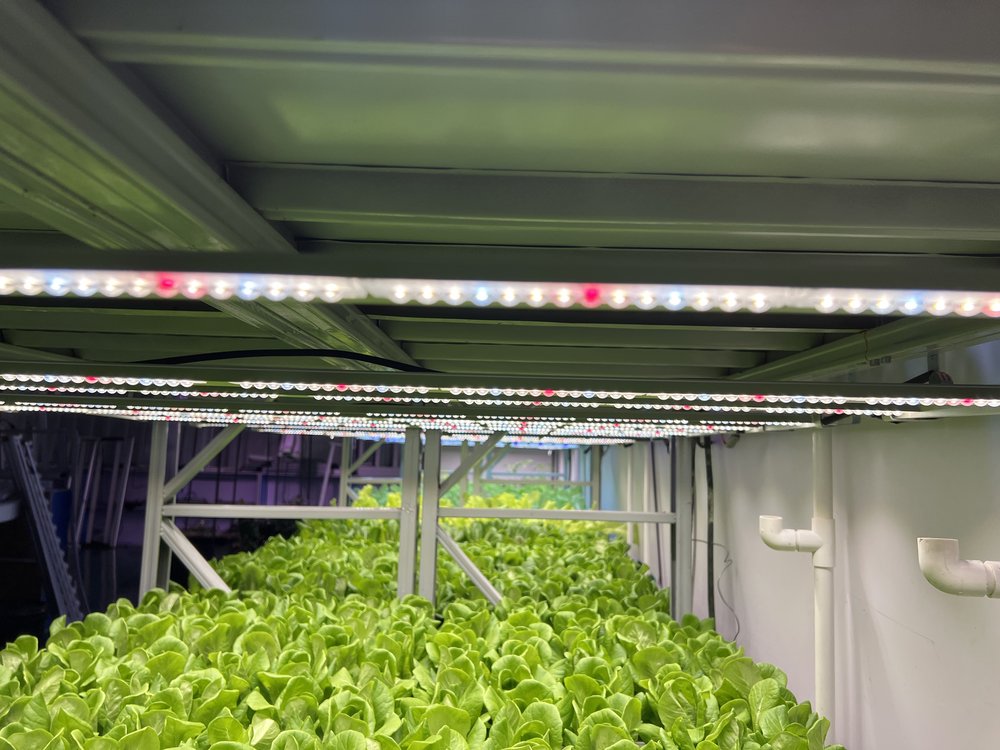
Let us work through a practical example. A standard commercial culture rack measures 1.2 m x 0.6 m with 4 tiers. Each tier uses 4 PT8 tubes, for a total of 16 tubes per rack. The lights operate 16 hours per day, 365 days per year — a common schedule for lettuce and leafy green production.
With the old-generation tubes at 42W each: 16 tubes x 42W = 672W per rack. Operating 16 hours daily: 672W x 16h = 10,752 Wh = 10.75 kWh per day. Annual consumption: 10.75 kWh x 365 = 3,924 kWh per rack per year.
With the new PT8 F175 at 32W each: 16 tubes x 32W = 512W per rack. Daily consumption: 512W x 16h = 8,192 Wh = 8.19 kWh per day. Annual consumption: 8.19 kWh x 365 = 2,990 kWh per rack per year.
The difference is 3,924 minus 2,990 = 934 kWh saved per rack per year. At an average commercial electricity rate of $0.12 per kWh (common in many US states), that translates to $112 saved per rack annually. For a 50-rack facility, the annual savings reach $5,600 — a significant amount that goes directly to the bottom line.
Scaling the Savings: From Single Rack to Full Facility
Commercial vertical farms often operate hundreds of racks. Let us scale the calculation to a 200-rack facility growing lettuce year-round. Annual energy savings: 200 racks x 934 kWh = 186,800 kWh. At $0.12 per kWh, the annual savings are $22,416. At higher electricity rates common in California or the Northeast ($0.18-0.25 per kWh), the savings climb to $33,624-$46,700 per year.
These savings are purely from the lighting upgrade — they do not include the reduced cooling load. LED grow lights produce less waste heat than older technologies, which means your HVAC system works less hard. In a well-insulated indoor farm, the cooling energy savings can add another 10-20% on top of the direct lighting savings.
The V3 Spectrum: Even Greater Savings at 33%
While the F175 saves 24% over the previous generation, the PT8 V3 spectrum achieves an even more impressive 33% energy reduction. The V3 delivers 93 umol/s PPF at just 32W, with an efficacy of 2.9 umol/J — one of the highest figures in the tube-light category. Its PPFD reaches 416 umol/m2/s at 0.15 m, making it suitable for higher-light crops like tomatoes and peppers.
For growers who need maximum PPFD, the V3 offers a compelling proposition: you get more light per tube while using a third less energy than the old generation. In a 200-rack facility using V3 tubes, the annual savings could exceed $30,000 depending on local electricity rates.
Beyond Energy Bills: Total Cost of Ownership
Energy savings are just one component of total cost of ownership. The PT8 series also offers a 35,000-hour lifespan, which at 16 hours per day translates to approximately 6 years of continuous operation before replacement. Older tube lights typically last 20,000-25,000 hours, meaning you would need to replace them at least once during the same period.
Factor in the labor cost of tube replacement — in a 200-rack facility with 3,200 tubes, a full replacement round requires significant labor hours and may temporarily disrupt growing schedules. The PT8’s longer lifespan reduces replacement frequency by 40-50%, adding another layer of cost savings beyond the energy bill.
The IP66 waterproof rating also reduces maintenance costs. The tubes can be cleaned with direct water spray without risk of damage, which is essential in commercial environments where dust, algae, and mineral deposits accumulate on light surfaces and reduce output over time.
Koray’s Secondary Optics: Efficiency Beyond the LED Chip
The energy savings of the PT8 F175 are not just about using better LED chips. Koray’s proprietary secondary optics technology shapes the light beam at the individual LED level, directing photons precisely where they are needed rather than allowing them to scatter wastefully. This optical engineering delivers more than 40% higher PPFD at the canopy compared to previous-generation tube lights that use the same LED chips but lack secondary optics.
In practical terms, this means you can achieve the same canopy-level PPFD with fewer tubes or at greater mounting distances, both of which translate to additional energy and hardware savings. Some growers find they can reduce the number of tubes per shelf by one or two while maintaining their target PPFD, further improving the energy economics.
Return on Investment Timeline
For a commercial grower upgrading from old-generation tubes to the PT8 F175, the payback period depends on the scale of the operation and local electricity costs. Using the single-rack example above with $112 annual savings and an estimated tube cost of $30-45 per unit, the investment in 16 new tubes ($480-720) pays back in approximately 4-6 years — which conveniently aligns with the tube’s lifespan. From that point forward, every year of operation is pure savings.
For larger facilities, the payback is faster because the per-unit logistics cost is lower and the energy savings compound across more racks. A 200-rack facility spending $9,600-14,400 on new tubes recoups the investment in 4-6 years while saving $22,000+ annually — a strong return by any measure.
Koray Lighting: Engineering Efficiency Into Every Tube
Koray Lighting, established in 2009 in Zhongshan, Guangdong, has built its reputation on delivering measurable efficiency improvements through optical engineering rather than marketing claims. With over 200 patents and a 2,800 square meter testing facility, Koray ensures that every PT8 tube meets its rated specifications before shipping. The PT8 series carries CE, RoHS, and FCC certifications, and the company exports to more than 60 countries worldwide.
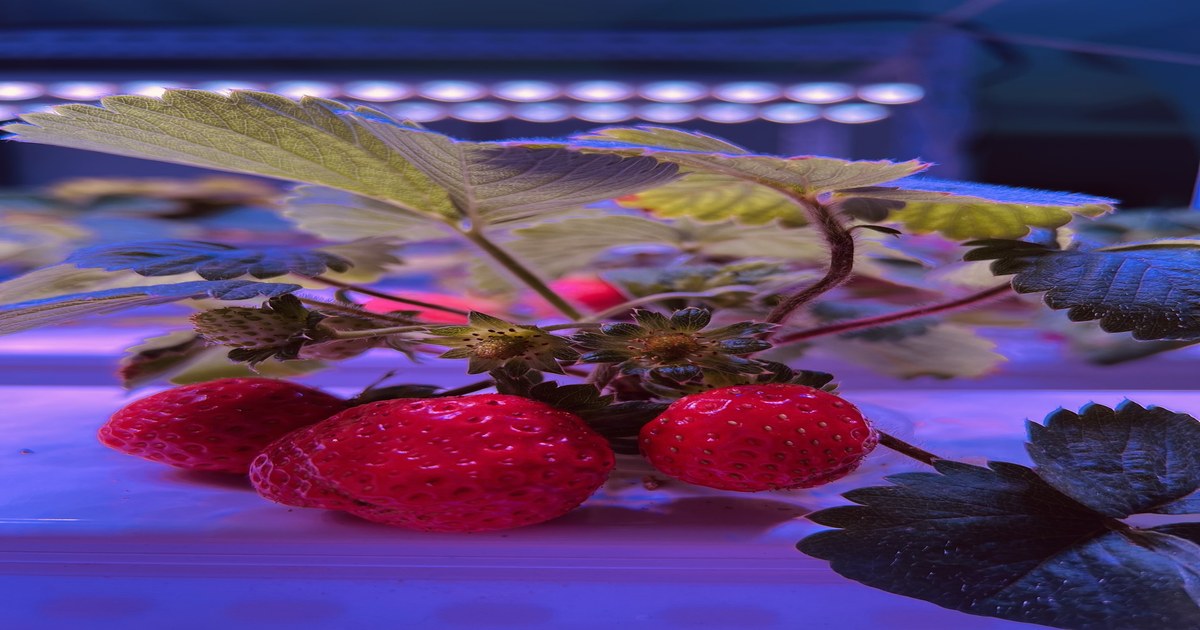
The 24% energy savings of the PT8 F175 is not an isolated achievement — it is part of a consistent pattern of generational improvement across Koray’s entire product line. Whether you are growing lettuce, herbs, strawberries, or medicinal plants, the PT8 series delivers the light your plants need while keeping your operating costs as low as possible.
Frequently Asked Questions
How much electricity does the new PT8 F175 save compared to the old version?
The PT8 F175 saves 24% energy compared to the previous generation. It draws 32W while delivering the same PPFD output that the old version achieved at 42W. Per tube, this saves about 10W of continuous power draw.
What is the annual energy savings for a commercial grow rack using PT8 F175?
For a 4-tier rack with 16 PT8 F175 tubes running 16 hours daily, the annual savings are approximately 934 kWh per rack, or about $112 at $0.12/kWh. For a 200-rack facility, this scales to over 186,000 kWh and $22,000+ per year.
Is the V3 spectrum more efficient than the F175?
Yes, the V3 spectrum achieves 33% energy savings over the old generation with an efficacy of 2.9 umol/J. It delivers 93 umol/s PPF at 32W, making it one of the most efficient tube grow lights available.
How long does it take for the PT8 F175 upgrade to pay for itself?
For a single rack, the payback period is approximately 4-6 years depending on electricity rates and tube costs. For larger facilities with 100+ racks, the payback is typically 4-5 years, after which all energy savings are pure profit.








Leave A Comment