How Many Hours of Light Do Succulents Need Per Day?
The Science of Succulent Light Duration
Succulents have fascinated gardeners and indoor plant enthusiasts for decades with their extraordinary forms, water-storing tissues, and stunning color palettes. While most growers understand that succulents need “lots of light,” the specific question of how many hours per day is far more nuanced than a simple answer. Light duration — combined with light intensity (PPFD) and spectral quality — determines whether your succulents thrive with compact, colorful growth or deteriorate into stretched, pale specimens.
In their natural habitats, succulents receive 10–14 hours of intense sunlight daily in desert and semi-arid regions near the equator. Replicating this indoors with grow lights requires understanding the relationship between duration, intensity, and the plant’s biological processes. This article breaks down exactly how many hours of light your succulents need and how to optimize your lighting schedule for different species and setups.
Daily Light Integral: The Metric That Combines Duration and Intensity
Before discussing hours, it’s essential to understand Daily Light Integral (DLI) — the total number of photosynthetically active photons delivered to a surface over a 24-hour period, measured in mol/m²/day. DLI is calculated by multiplying PPFD (μmol/m²/s) by the number of light seconds per day and dividing by one million. This single number tells you the total “light food” your succulent receives daily.
Most succulents require a DLI of 15–30 mol/m²/day to maintain compact growth and vibrant coloration. Low-light species like Haworthia can thrive at 10–15 mol/m²/day, while high-light species like Lithops and Agave may need 25–35+ mol/m²/day. The DLI framework explains why light duration and intensity are interchangeable to some degree: you can achieve the same DLI with high PPFD for fewer hours or lower PPFD for more hours — though there are practical limits to both approaches.
Recommended Light Hours by Succulent Type
For low-light succulents (Haworthia, Gasteria, Sansevieria), running a grow light at moderate intensity (200–300 μmol/m²/s) for 10–12 hours per day delivers a DLI of 8–13 mol/m²/day, which is sufficient for healthy, compact growth. A Koray PAR30Z-20W with S91 spectrum at 0.3 meters provides approximately 140–220 μmol/m²/s, so running it for 12 hours achieves roughly 6–9 mol/m²/day — adequate for these shade-tolerant species, especially if they receive some ambient window light during the day.
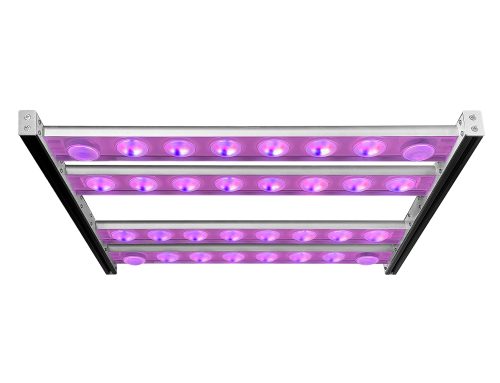
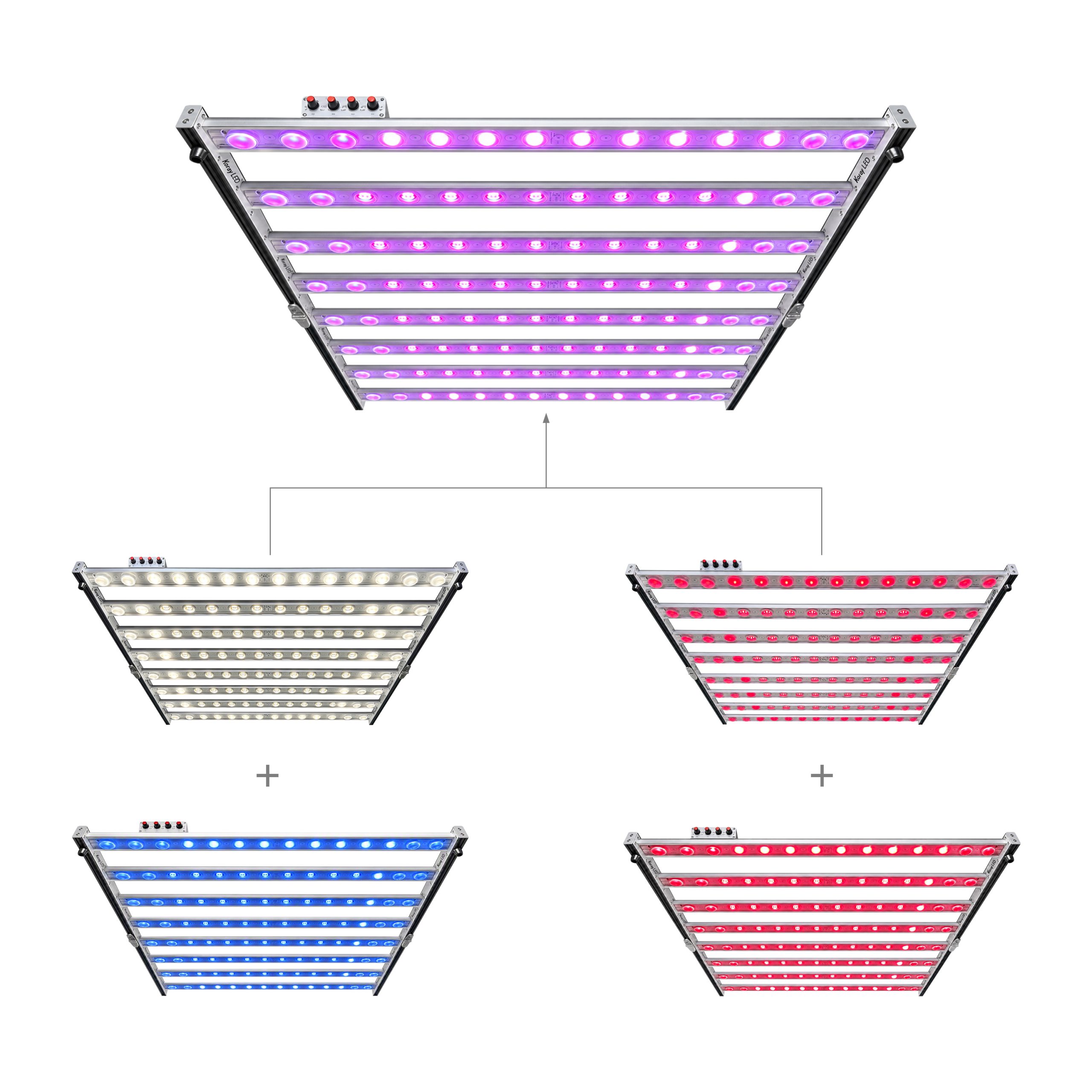
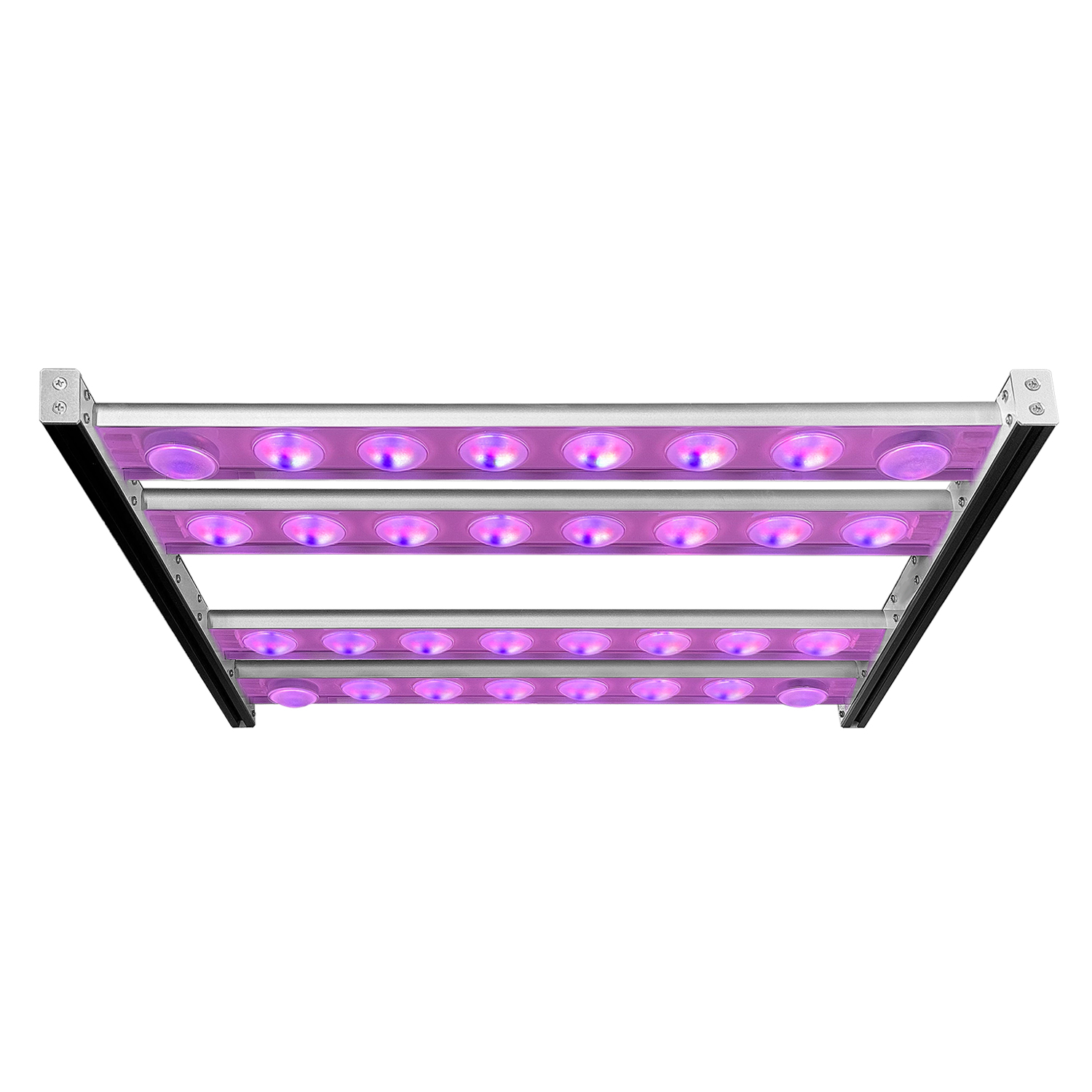
For medium-light succulents (Echeveria, Graptopetalum, Sedum, Crassula), the target is 12–14 hours per day at 400–600 μmol/m²/s, yielding a DLI of 17–30 mol/m²/day. This is the sweet spot where most popular decorative succulents maintain tight rosettes and develop their best stress colors. The Koray GE35-120T-K6 at 0.3 meters delivers approximately 530 μmol/m²/s from its K6 multi-red spectrum, so 12 hours of operation provides about 23 mol/m²/day — right in the optimal zone.
For high-light succulents (Lithops, Conophytum, Agave, Aloe), aim for 14–16 hours per day at 600–800+ μmol/m²/s, targeting a DLI of 30–46 mol/m²/day. These desert natives are adapted to near-continuous intense sunlight and will stretch under anything less. The GE35-120T-K6 at 0.2 meters delivers 760 μmol/m²/s, providing approximately 39 mol/m²/day over 14 hours — excellent for even the most light-demanding species.
Can You Run Lights 24/7? Why Succulents Need a Dark Period
A common misconception is that more light is always better. In reality, succulents — like most plants — require a dark period for healthy growth. During darkness, plants perform critical biological processes including respiration (converting stored sugars into usable energy), cellular repair, and CAM photosynthesis preparation. Most succulents use Crassulacean Acid Metabolism (CAM), a specialized photosynthetic pathway where stomata open at night to absorb CO₂ and close during the day to minimize water loss. Without a dark period, CAM cycling is disrupted and growth actually slows.
A minimum dark period of 6–8 hours per day is recommended for most succulents. This means the maximum practical light duration is 16–18 hours. Running lights beyond this provides diminishing returns and can actually stress plants by disrupting their circadian rhythms. A standard schedule of 14 hours on, 10 hours off works well for most succulent collections during active growth periods.
Seasonal Adjustments for Succulent Light Schedules
Succulents respond to seasonal changes in day length (photoperiod), and adjusting your light schedule throughout the year can improve health and even trigger flowering.
During spring and summer (active growth), maintain 14–16 hours of light per day at full intensity. This mimics the long, bright days of their native habitats and supports vigorous growth, root development, and coloration.
During fall, gradually reduce to 12 hours. This signals many species to begin preparing for dormancy and can trigger beautiful stress coloration as the plant concentrates pigments.
During winter, reduce to 10–12 hours at slightly lower intensity if possible. Many succulents enter a semi-dormant state in winter and benefit from this rest period. However, maintain at least 300 μmol/m²/s during the lit hours to prevent etiolation even during dormancy. Species that remain actively growing through winter (like many Aloes and Haworthias) can stay at 12–14 hours.
Practical Lighting Setups for Different Scale Operations
For a home desktop collection, a single Koray T10 floor lamp with F175 spectrum positioned at 0.3 meters provides approximately 146 μmol/m²/s over a 0.7×1.3 meter area. Running this for 14 hours daily delivers about 7.3 mol/m²/day — sufficient for low-to-medium light succulents like Haworthia, small Echeverias, and Sedum. The T10’s adjustable height (0.25–0.98 meters) lets you fine-tune intensity for different species on the same shelf.
For a 4-tier rack system (typical home grower setup with 4 shelves of 1.2×0.5 meters), installing one Koray GE35-120T-K6 bar per shelf provides 530 μmol/m²/s at 0.3 meters. Running all four bars for 12 hours daily delivers approximately 23 mol/m²/day per shelf — enough for medium-to-high light succulents including Echeveria, Graptopetalum, and even Lithops. Total power consumption is only 320W (4 × 80W), making this setup remarkably energy-efficient.
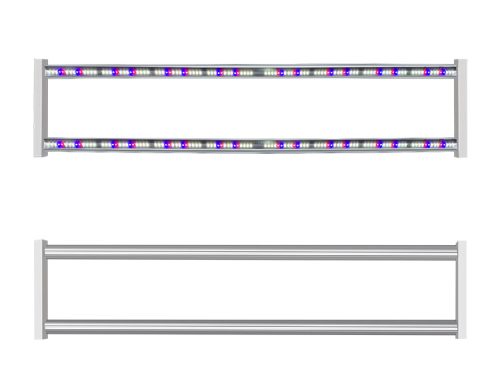
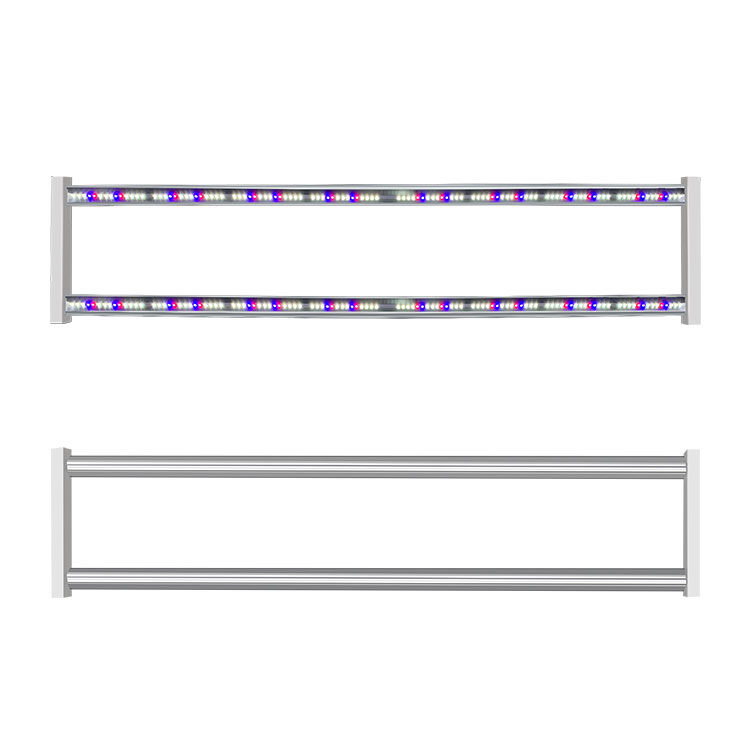
For commercial succulent nurseries with multi-layer racks, the Koray G138 series with K6C spectrum offers a modular solution. Available in 600mm, 900mm, and 1200mm lengths, these bars can be configured to match any shelf width. The IP64 waterproof rating ensures reliable operation in humid greenhouse environments, and the DC centralized power option simplifies wiring for large installations.
Signs Your Succulents Are Getting Too Much or Too Little Light
Even with the right hours on paper, observe your plants and adjust based on their response. Signs of insufficient light duration include: gradual elongation of stems, leaves becoming thinner and more widely spaced, loss of vibrant colors (returning to green), and lower leaves dropping prematurely. If you notice these signs, increase daily light hours by 1–2 hours or raise the PPFD by moving lights closer.
Signs of excessive light duration (rare but possible) include: bleached or white patches on leaves (photobleaching), leaves curling inward excessively, and brown dry spots. If this occurs, reduce daily hours by 1–2 or raise the lights slightly. Most succulents can handle high PPFD if they receive a proper 6–8 hour dark period.
Automating Your Succulent Light Schedule
Consistency is key for succulent health. Use a simple timer or smart plug to maintain the same light schedule every day. Fluctuating light durations confuse plants and can trigger stress responses. The Koray GE35 series supports 0-10V dimming and centralized DC control, allowing integration with environmental controllers that can adjust both intensity and duration based on season, temperature, and even plant growth stage.
For growers using the Koray HortiGuru smart control system, you can program different schedules for different growth phases — higher intensity and longer duration during vegetative growth, then tapering to shorter days during dormancy. This level of automation takes the guesswork out of succulent lighting and ensures your plants receive optimal DLI year-round.
Key Takeaways for Succulent Light Duration
Most succulents need 12–14 hours of light per day at appropriate PPFD levels to maintain compact, colorful growth. Low-light species can manage with 10–12 hours, while high-light desert species benefit from 14–16 hours. Always maintain a minimum 6–8 hour dark period for healthy CAM photosynthesis cycling. Calculate your target DLI (15–30 mol/m²/day for most species) based on your light’s PPFD output and daily duration. The Koray GE35-120T-K6 with K6 spectrum is purpose-built for succulent growing, delivering the high PPFD and optimized red-rich spectrum that these plants need to stay compact and vividly colored throughout the year.
By Koraylights|2026-09-29T01:04:58+00:00September 29th, 2026|Uncategorized|0 Comments




Leave A Comment