
The Science Behind Succulent Stress Colors
One of the most fascinating aspects of succulent cultivation is the dramatic color transformation these plants undergo under intense light. Greens shift to blues, purples, and reds. Rosettes that once looked plain become vivid works of art. This phenomenon — known as “stress coloring” — is not a sign of poor health, as the word “stress” might imply. Rather, it is a sophisticated biological response to high light intensity, and understanding the science behind it allows growers to reliably produce stunning results.
Succulents produce several classes of pigments in response to light. Chlorophyll, the green pigment responsible for photosynthesis, is always present. But under high-light conditions, succulents also produce anthocyanins (red, purple, and blue pigments), carotenoids (yellow, orange, and red pigments), and sometimes betacyanins (red-violet pigments found in cacti and portulacaceae). These pigments serve as a natural sunscreen, protecting the plant’s photosynthetic apparatus from damage when light energy exceeds what the plant can process.
The Role of PPFD and Spectrum
The intensity of light — measured as PPFD (photosynthetic photon flux density) in μmol/m²/s — is the primary driver of stress coloration. When PPFD exceeds approximately 400 μmol/m²/s at the succulent canopy, the plant begins producing protective pigments at an accelerated rate. At 500 to 700 PPFD, the color transformation becomes dramatic and visible within 2 to 4 weeks.
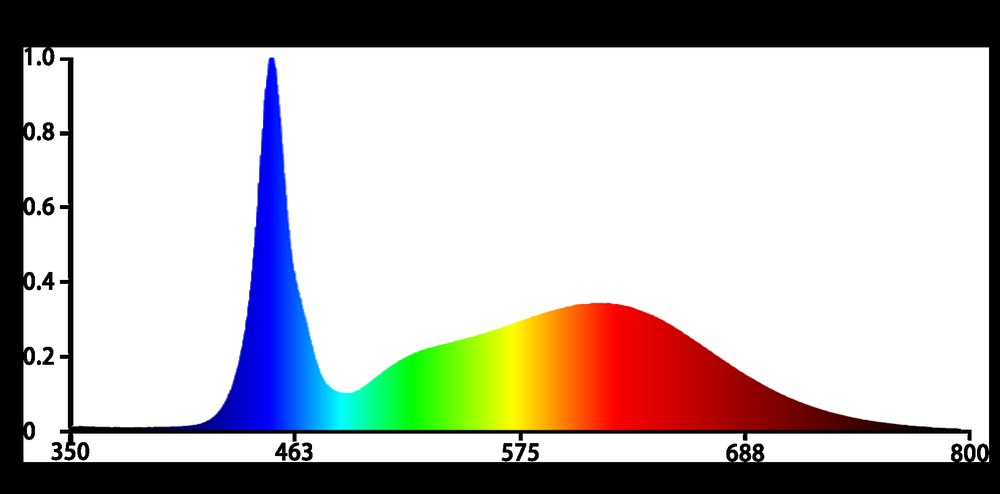
But intensity alone is not the whole story. The spectral composition of the light also plays a critical role. Blue wavelengths (400–500 nm) are particularly effective at triggering anthocyanin production. This makes evolutionary sense: in nature, high blue light exposure signals open, unshaded conditions where protective pigments are needed. Red wavelengths (600–700 nm) enhance overall photosynthetic efficiency and contribute to the depth and richness of coloration.
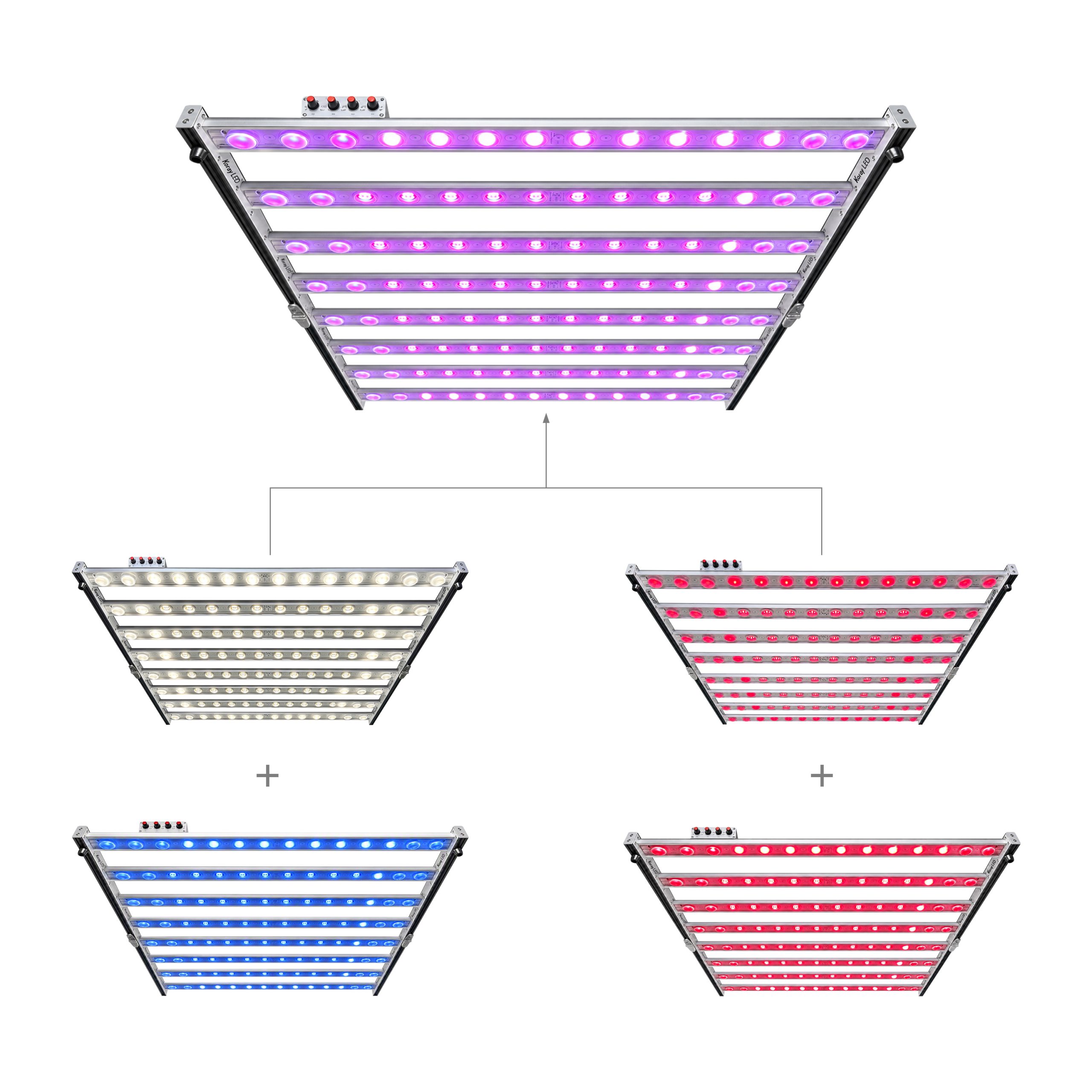
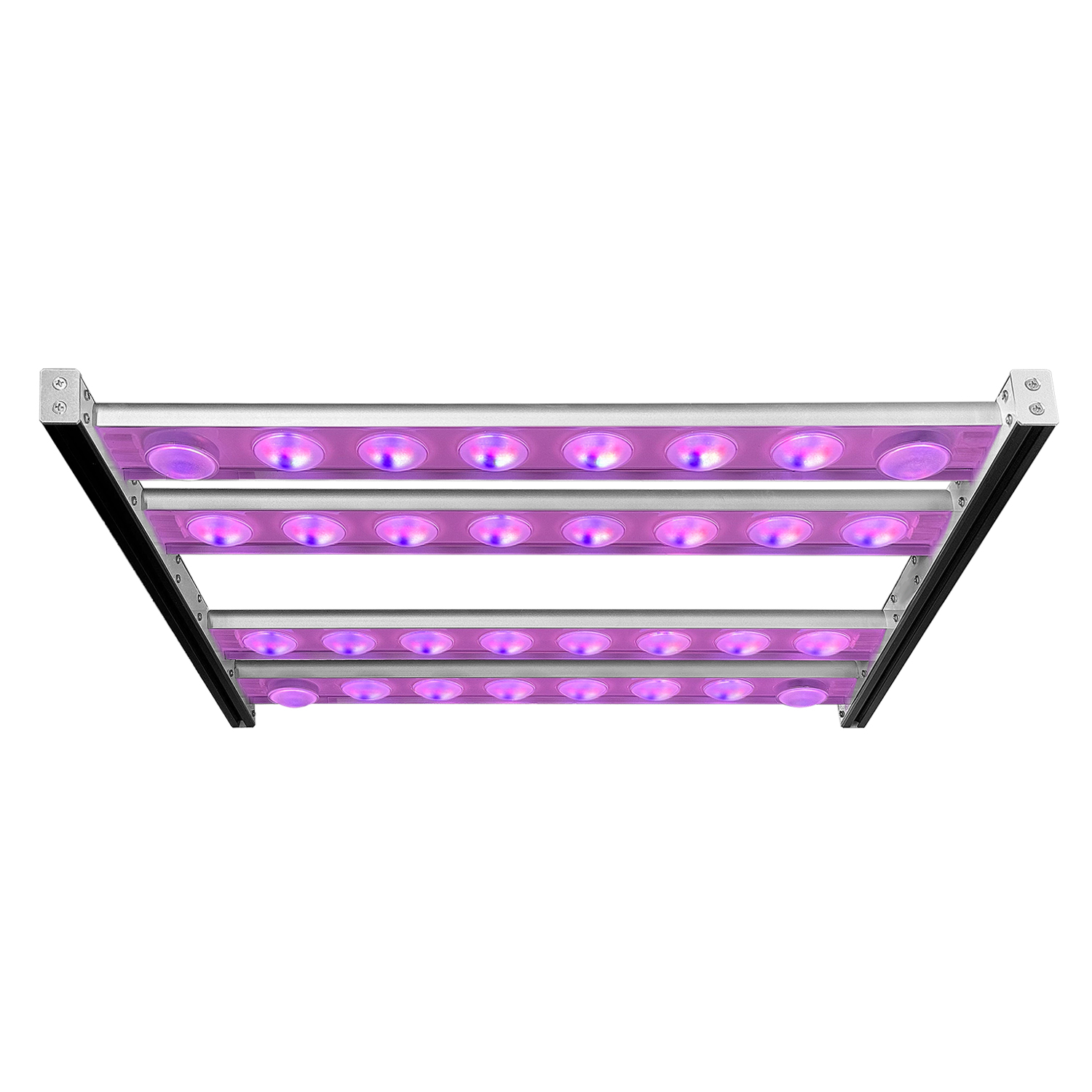
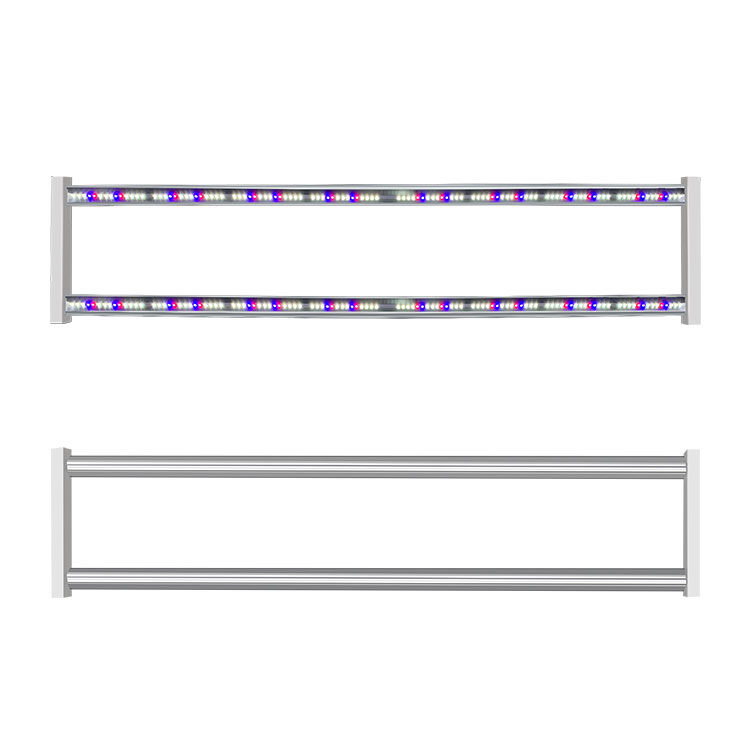
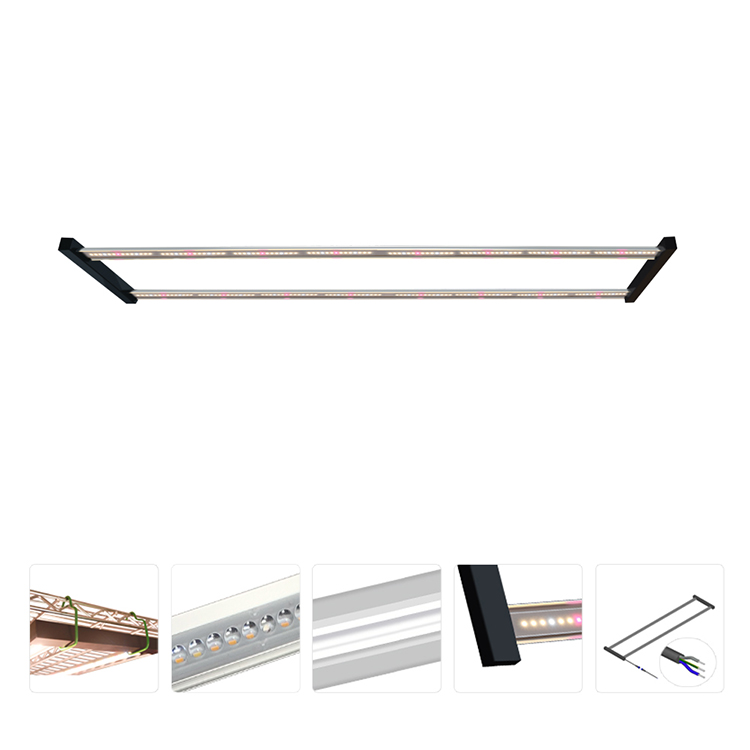
The Koray K6C spectrum is engineered specifically for this purpose. With enhanced output in both the blue and red regions, it creates the ideal conditions for stress coloration while maintaining photosynthetic efficiency. Commercial succulent growers using the Koray GE35-120T-K6 (80W, PPFD 760 at 0.2m) consistently report faster and more vivid color development compared to generic full-spectrum LEDs.
Practical Light Targets for Color Development
To reliably produce stress colors in succulents, aim for the following targets:
PPFD: 450 to 700 μmol/m²/s at the canopy surface. Below 300 PPFD, most succulents will remain green. Between 300 and 450, some color development occurs but slowly. Above 450, color changes become rapid and pronounced.
DLI: 20 to 35 mol/m²/day. This can be achieved with 450 PPFD over a 12-hour photoperiod (DLI ≈ 19.4) or 550 PPFD over 10 hours (DLI ≈ 19.8). Higher DLI accelerates coloration.
Photoperiod: 10 to 14 hours. Succulents are not photoperiod-sensitive in the way flowering plants are, so the exact duration is flexible. What matters is the total daily light accumulation.
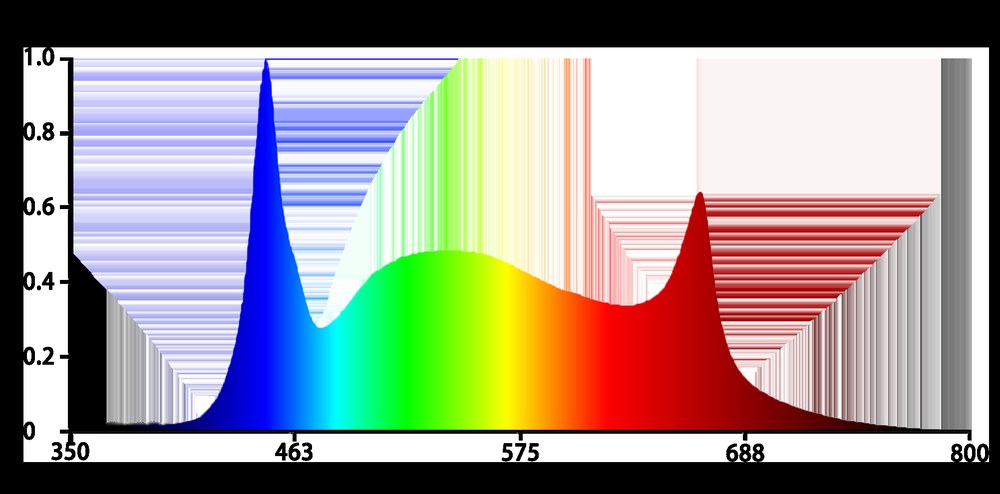
For growers using the Koray S91 warm-white spectrum (3000K, Ra95), the results are slightly different from K6. The S91 provides a gentler color shift — more subtle blues and pinks rather than intense reds — while rendering the plants in a visually pleasing way that is ideal for home display and retail settings where appearance to customers matters.
Species-Specific Responses
Different succulent genera respond to light stress in different ways. Understanding these differences helps you set realistic expectations and choose the right light setup for your collection.
Echeveria produces the widest range of stress colors: pinks, reds, purples, and even near-black coloration in cultivars like ‘Black Prince’ and ‘Black Knight’. The anthocyanin pathway is dominant in this genus. High PPFD with the Koray K6 spectrum brings out the deepest colors.
Sedum and Graptopetalum tend toward pink, peach, and orange tones. These genera respond well to both blue-heavy and red-enhanced spectra. The Koray GE35 with F175 spectrum (general full-spectrum) also produces good results for these species.
Crassula (including Jade Plant and Campfire) responds to intense light with red leaf margins and, in the case of Campfire, brilliant orange-red foliage. These plants need 500+ PPFD to show their best colors.
Haworthia is an exception among succulents — it naturally grows in partial shade and does not produce dramatic stress colors. In fact, too much light can cause Haworthia leaves to turn brownish-red in an unhealthy way. Keep Haworthia at 200 to 300 PPFD for optimal appearance.
Avoiding Light Damage
While stress coloring is desirable, there is a line between beautiful stress and actual damage. If PPFD exceeds 800 to 1000 μmol/m²/s for extended periods, succulent leaves may show signs of photoinhibition: bleached white or gray patches, crispy brown tips, or shriveled leaves that lose turgor despite adequate watering.
The solution is not to reduce light to the point where color is lost, but to find the sweet spot — typically 500 to 700 PPFD — where color development is maximized without damage. The Koray GE35 series with adjustable power (the DC-2H-VR model can be dialed from 35W to 75W) allows fine-tuning of intensity to match your specific setup and species mix.
Temperature also interacts with light stress. Cool temperatures (10 to 18°C / 50 to 65°F) amplify stress coloration because the plant processes light energy more slowly, increasing the need for protective pigments. The combination of high PPFD and cool nights produces the most intense colors — which is why succulents grown outdoors in autumn often display their most vivid hues.
Setting Up for Success
For indoor growers, the most reliable approach is a multi-shelf rack with Koray GE35-120T-K6 bars mounted 20 to 25 cm above each shelf. This delivers 530 to 760 PPFD depending on exact distance, well within the stress-coloring zone. Run the lights 12 hours per day on a timer, and maintain room temperature between 18 and 24°C during the day. If possible, allow a 5 to 8°C drop at night to simulate natural temperature swings.
For smaller collections or display situations, the Koray PAR30Z-20W with S91 spectrum offers an elegant solution. The zoomable lens lets you dial in the exact coverage you need, and the warm-white 3000K light makes succulents look stunning in a home setting while still delivering the 220 PPFD at 0.2m (and higher with the beam narrowed) needed for color development.
Conclusion
Light is the single most powerful tool for controlling succulent coloration. By providing 450 to 700 PPFD with a spectrum rich in blue and red wavelengths, you trigger the plant’s natural protective pigments — anthocyanins and carotenoids — that produce the reds, purples, pinks, and oranges that make succulents so visually captivating. Koray Lighting’s K6 and S91 spectrum options, available across the GE35 bar, PAR38, and PAR30Z product lines, are engineered to deliver exactly the spectral quality and intensity that succulent stress coloring demands.


Leave A Comment