
How Do I Know If My Succulent Is Getting Enough Light?
Succulents are among the most popular indoor plants, prized for their compact rosettes, vivid colors, and minimal watering needs. Yet the single most common mistake growers make is underestimating how much light these plants actually require. Unlike low-light tolerant houseplants such as pothos or snake plants, succulents are high-light species that evolved in arid, open environments with intense solar radiation. When grown indoors without adequate supplemental lighting, they quickly reveal their dissatisfaction through a cascade of visual symptoms.
Understanding the signs of insufficient light, knowing the target PPFD and DLI values, and choosing the right grow light can mean the difference between a thriving, colorful succulent collection and a leggy, stretched-out disappointment. This guide walks you through everything you need to know.
What Are the Visual Signs of a Light-Starved Succulent?
The most telltale sign that your succulent is not receiving enough light is a phenomenon called etiolation. This is when the plant stretches elongates, and grows upward rapidly as it reaches for more light. The internodes the spaces between leaves become noticeably longer than normal, giving the plant a spindly, awkward appearance. In rosette-type succulents like Echeveria, the compact circular shape opens up and the lower edges of the leaves point downward instead of maintaining their tight, upward-curving form.
Another key indicator is loss of coloration. Succulents that normally display vibrant reds, purples, oranges, or pink-tipped edges will gradually revert to plain green when light levels drop. These stress colors, technically called anthocyanin and carotenoid pigments, are actually produced in response to high light intensity and UV exposure. Without sufficient light, the plant stops producing these pigments and defaults to chlorophyll green. If your once-vivid Echeveria “Perle von Nurnberg” has turned completely green, it is telling you it wants more light.
You may also notice the plant leaning or tilting noticeably toward the nearest light source. This phototropic response means the succulent is directionally sensing where light comes from and growing asymmetrically to capture more of it. In severe cases, the lower leaves may yellow, become mushy, and drop off as the plant aborts tissue it can no longer sustain with its limited energy budget.
What PPFD Do Succulents Need?
Succulents generally require a PPFD (Photosynthetic Photon Flux Density) between 300 and 600 micromoles per square meter per second (umol/m2/s) at the canopy level for healthy, compact growth. For maintaining compact form and encouraging coloration, aim for the higher end of this range, around 400 to 600 umol/m2/s. Light succulents like Haworthia and Gasteria can thrive at 200 to 350 umol/m2/s, while high-light genera such as Echeveria, Graptoveria, and most cacti perform best at 500 to 700 umol/m2/s.
In terms of DLI (Daily Light Integral), succulents typically need between 10 and 20 mol/m2/day. This is calculated by multiplying the PPFD by the number of seconds of light exposure per day and dividing by one million. For example, running a grow light at 400 umol/m2/s for 14 hours gives a DLI of approximately 20.2 mol/m2/day, which is ideal for most succulent species.
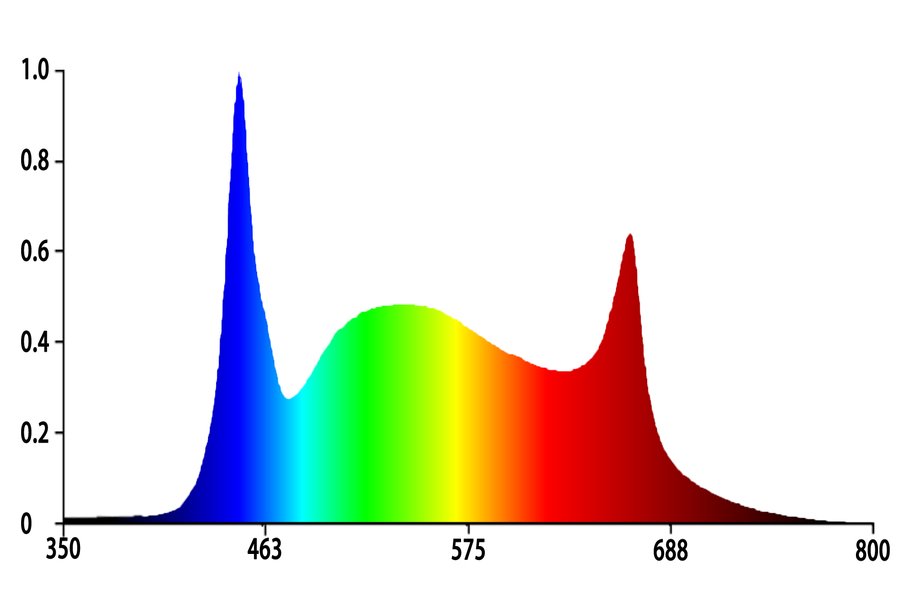
The Koray RX-PAR38 grow light with the S91 spectrum is an excellent choice for succulent cultivation. It delivers a warm full-spectrum output with high red content that promotes compact growth and vibrant coloration. At a hanging distance of 0.3 meters, the RX-PAR38-60D provides approximately 500 umol/m2/s at center, which falls perfectly within the target range for most succulent species. The 60-degree beam angle ensures even coverage across a shelf of succulent pots without creating harsh hotspots.
How Many Hours of Light Do Succulents Need Per Day?
For indoor succulent growing, a photoperiod of 12 to 16 hours per day is recommended. This mimics the long daylight hours of their native arid habitats. A common and effective schedule is 14 hours on and 10 hours off, which provides sufficient daily light integral while giving the plants a necessary dark period for proper CAM (Crassulacean Acid Metabolism) photosynthesis.
Succulents use a specialized form of photosynthesis called CAM, where they open their stomata at night to absorb CO2 and close them during the day to minimize water loss. This means they actually benefit from a distinct dark period. Running grow lights 24 hours a day is not only wasteful but can disrupt this natural cycle and lead to physiological stress. Use a simple timer to maintain a consistent photoperiod.
What Spectrum Is Best for Succulent Coloration?
The light spectrum plays a crucial role in succulent morphology and coloration. Blue light (400 to 500nm) is particularly important for maintaining compact growth. It inhibits stem elongation and promotes tight internode spacing, which is exactly what you want in a well-formed succulent. Red light (600 to 700nm) drives photosynthesis efficiently and, when combined with high intensity, triggers the production of anthocyanin pigments that create the desirable red, purple, and pink hues.
The Koray K6C spectrum, available on the GE35 series LED bars, is specifically designed with enhanced red output for flowering plants, succulents, and carnivorous plants. This spectrum provides the right balance of blue for compactness and red for coloration. When used at the recommended PPFD levels, growers report noticeably more vivid colors within two to three weeks of switching to the K6 spectrum.
Full-spectrum white LEDs with a color temperature of 5000K to 6500K also work well for succulents. They provide a balanced light that looks natural in home environments while delivering the blue wavelengths needed for compact growth. The Koray S91 spectrum used in the PAR30Z-20W and RX-PAR38 series offers a warm full-spectrum output that makes succulent colors appear vivid to the human eye while still providing adequate blue light for healthy growth.
How Far Should the Grow Light Be From Succulents?
Hanging distance depends on the light intensity and the specific succulent species. For most PAR38-style grow lights like the Koray RX-PAR38, a distance of 20 to 30 centimeters (8 to 12 inches) is ideal. This places the canopy within the target PPFD range of 300 to 600 umol/m2/s. For lower-light succulents like Haworthia, you can increase the distance to 35 to 45 centimeters. For high-light cacti and Echeverias, keep the light closer at 15 to 25 centimeters.
Always monitor your plants after adjusting the light distance. If you notice white or brown bleached spots on the leaves, the light is too close and may be causing photoinhibition or thermal damage. Increase the distance by 5 centimeters and observe for a week. Conversely, if the plant continues to stretch or lose color, move the light closer or increase the photoperiod by one to two hours.
Can Succulents Survive on Artificial Light Alone?
Yes, succulents can absolutely thrive under artificial lighting as their sole light source. Many professional succulent growers and collectors operate entirely indoor grow rooms with no access to natural sunlight. The key is providing sufficient PPFD, the right spectrum, and an appropriate photoperiod.
A well-designed indoor succulent shelf using Koray GE35-120T-K6 LED bars mounted under each shelf can support hundreds of plants in a relatively small space. The GE35-120T-K6 delivers 760 umol/m2/s at 0.2 meters with its 80W output and 45-degree lens, providing more than enough intensity for even the most demanding succulent species. The IP64 waterproof rating means the bars can handle the occasional misting that some growers prefer for their collections.
In summary, the secret to successfully growing succulents indoors lies in matching the light intensity to the species, maintaining a consistent photoperiod of 12 to 16 hours, choosing a spectrum that promotes both compactness and coloration, and regularly observing your plants for visual feedback. With the right LED grow light setup from Koray Lighting, your succulent collection will not just survive indoors, it will flourish with the compact form and stunning colors that make these plants so captivating.

Leave A Comment