
Indoor strawberry cultivation has surged in popularity over the past decade, driven by consumer demand for fresh, pesticide-free berries year-round. Yet growing strawberries indoors presents a unique challenge: these fruiting plants demand precise light intensity, the right spectrum, and consistent daily light integral (DLI) to produce sweet, well-shaped fruit. Among the many LED grow lights on the market, the Koray GE35 series has emerged as a top choice for both commercial strawberry farms and hobbyist growers. In this comprehensive guide, we answer the most common questions about using the GE35 for strawberry growing.
Why Do Strawberries Need Specialized Grow Lights?
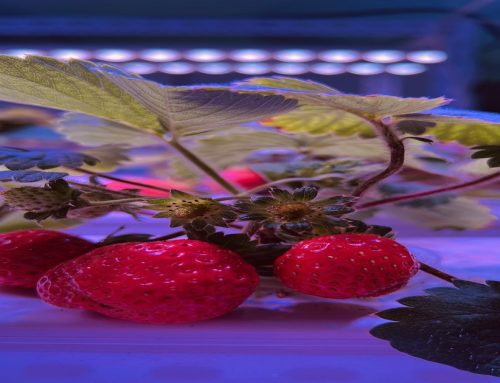
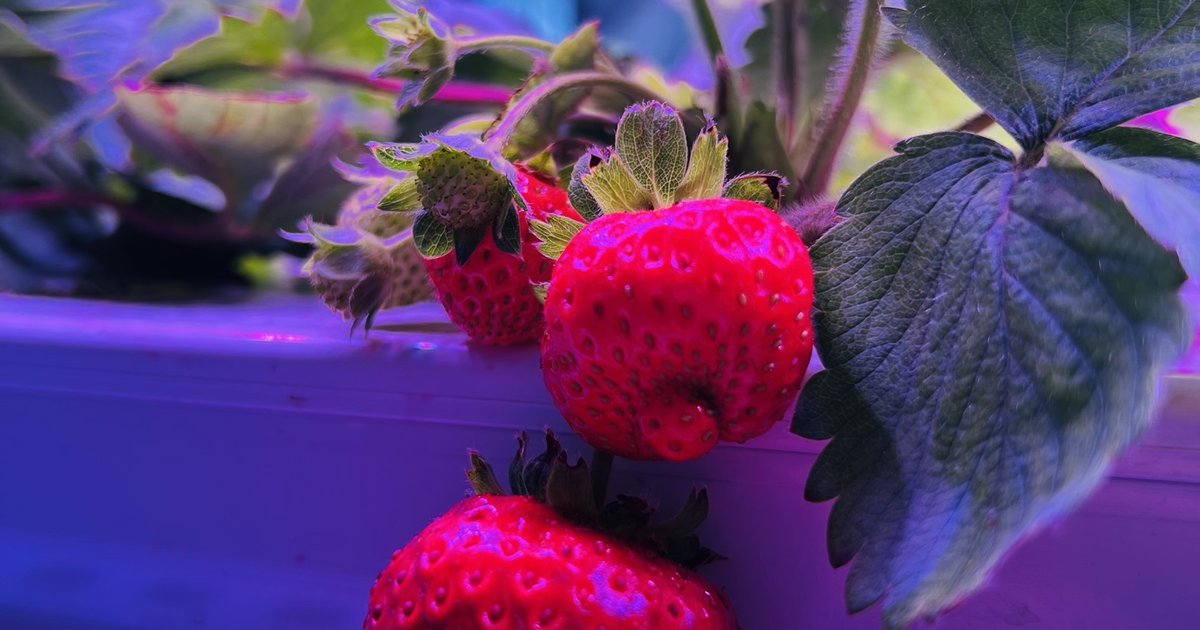
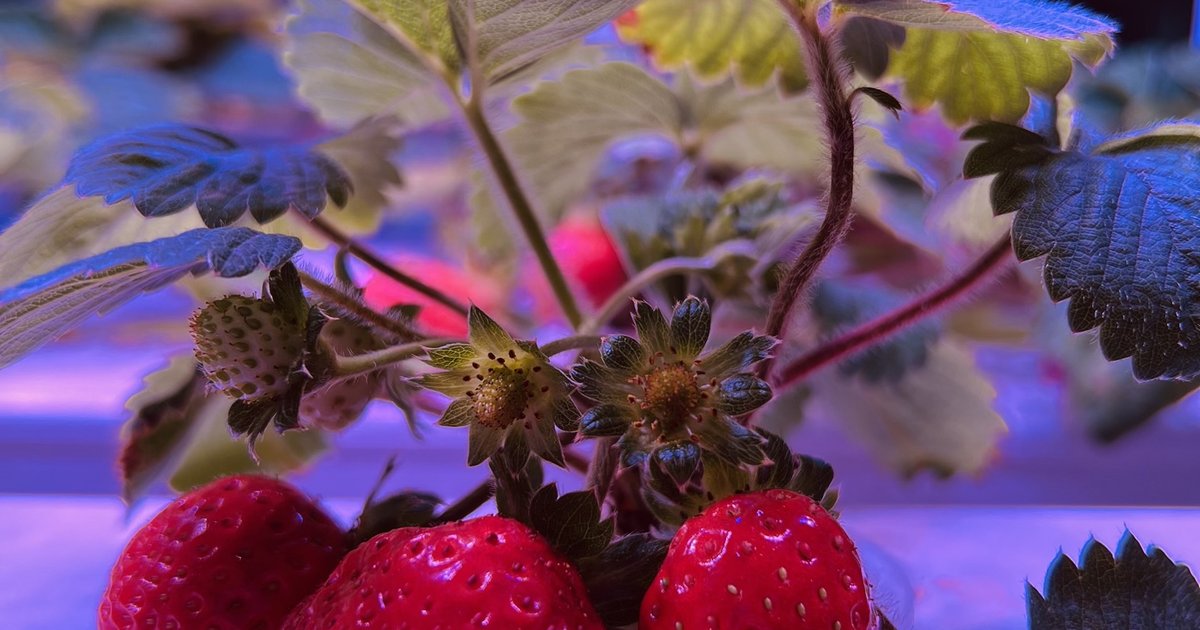
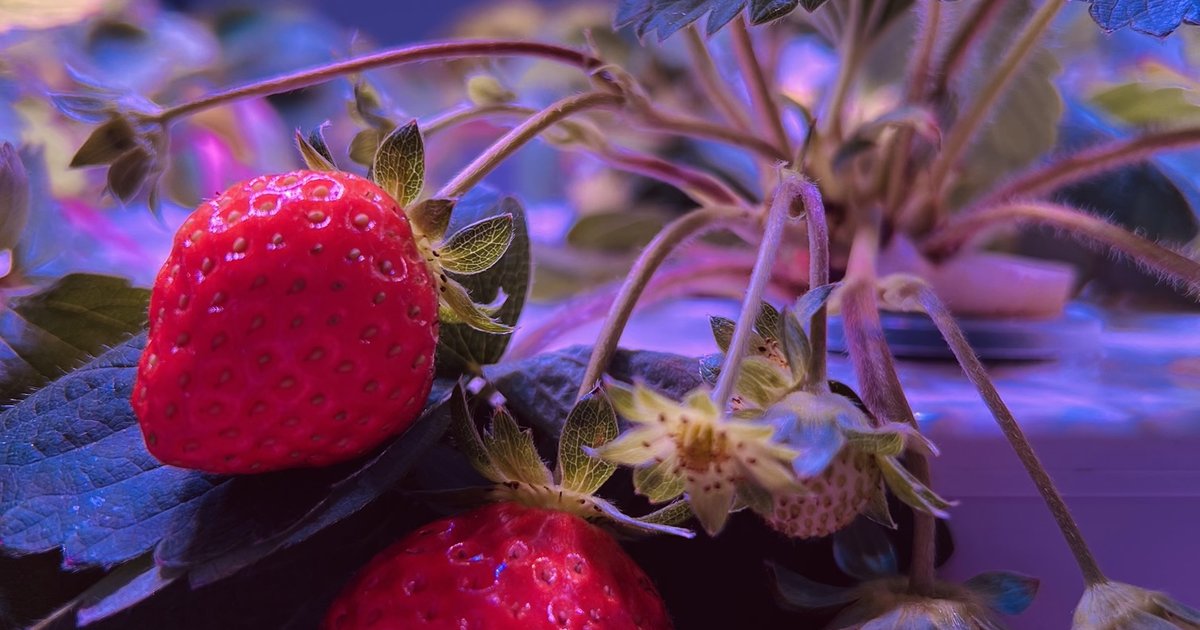
Unlike leafy greens that thrive on moderate light, strawberries are light-hungry fruiting crops. During their fruiting stage, strawberries require a PPFD (Photosynthetic Photon Flux Density) of 400-600 μmol/m²/s and a DLI (Daily Light Integral) of 15-20 mol/m²/day. Insufficient light leads to small, pale berries with poor flavor, while the right light intensity drives vigorous photosynthesis, abundant flowering, and high sugar accumulation.
Strawberries also benefit from a full-spectrum light source that mimics natural sunlight. The Koray GE35-120T-F175 model uses the F175 spectrum, a general-purpose full-spectrum formula specifically designed to support most crops including strawberries, vegetables, and herbs. With a PPF output of 150 μmol/s and efficacy of up to 2.5 μmol/J, the GE35 delivers the photon density strawberries need at every growth stage.

What PPFD Levels Do Strawberries Need at Each Growth Stage?
Strawberry light requirements change throughout the plant’s life cycle. Understanding these stages helps you configure your GE35 lighting for maximum yield.
Seedling stage: Young strawberry plantlets need a gentle PPFD of 100-200 μmol/m²/s. At this stage, the GE35-120-V6 (without lens) delivers 250 μmol/m²/s at 0.3 meters, which can be reduced by raising the light to 0.4-0.5 meters or dimming via 0-10V control.
Vegetative stage: During active leaf and runner development, strawberries benefit from 200-400 μmol/m²/s. The GE35-120T-F175 with its collimating lens produces 360 μmol/m²/s at 0.3 meters, perfectly within this range.
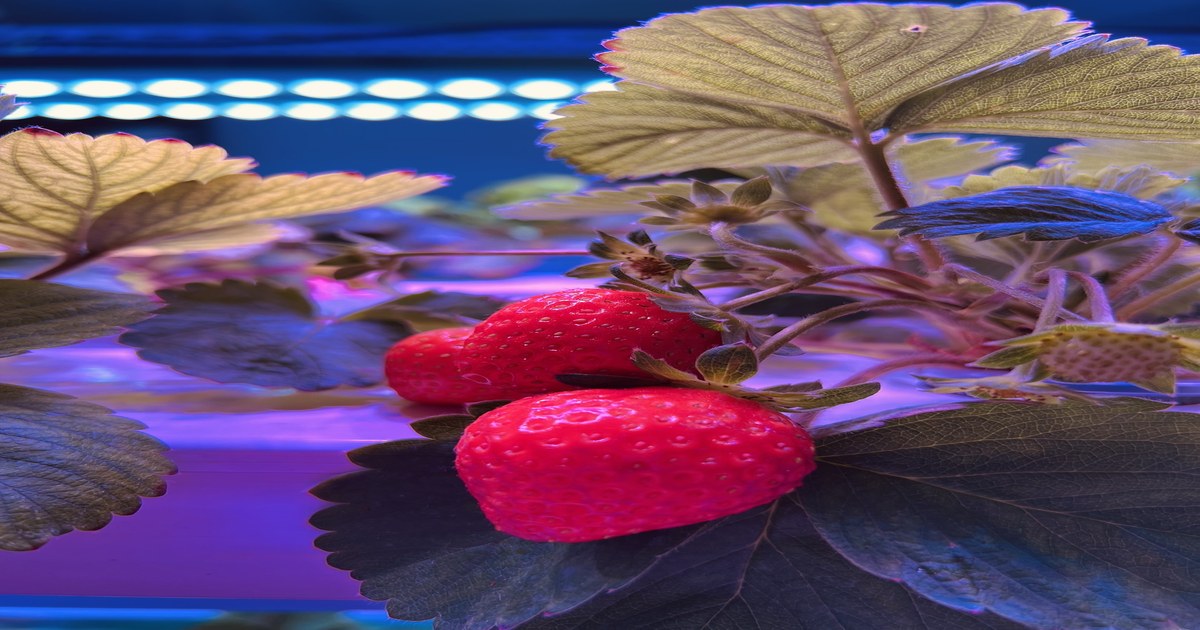
Flowering and fruiting stage: This is when strawberries demand the most light. A PPFD of 400-600 μmol/m²/s promotes heavy flowering and sugar-rich fruit. The GE35-120T-K6 model, designed for flowering crops, delivers 530 μmol/m²/s at 0.3 meters with its 45-degree lens and 80W power draw, making it an excellent choice for fruiting strawberries.
How Does the F175 Spectrum Benefit Strawberries?
The F175 spectrum used on the GE35-120T-F175 provides a balanced full-spectrum output that covers the entire photosynthetically active radiation (PAR) range from 400-700nm. This balanced spectrum includes adequate blue light for compact vegetative growth, sufficient red light to drive flowering and fruiting, and enough green light for canopy penetration. For strawberries, this means healthy leaf development, abundant flower sets, and consistent fruit ripening.
Compared to older fluorescent tube lighting, the GE35 F175 spectrum delivers over 40% higher PPFD per unit of energy consumed, thanks to Koray’s proprietary secondary optics technology. This technology eliminates the center hotspot common in single-point LED designs and distributes light evenly across the growing area, ensuring every strawberry plant receives uniform illumination.

Can the GE35 Be Used in Vertical Strawberry Farms?
Absolutely. The GE35 series was designed with vertical farming and multi-tier rack systems in mind. With a slim profile of just 38x40mm in cross-section and lengths of 600mm, 900mm, and 1200mm, the GE35 bars fit neatly onto standard shelf widths. The IP64 waterproof rating means the fixtures can withstand the high humidity environments typical of strawberry vertical farms, where transpiration and misting systems keep ambient moisture elevated.
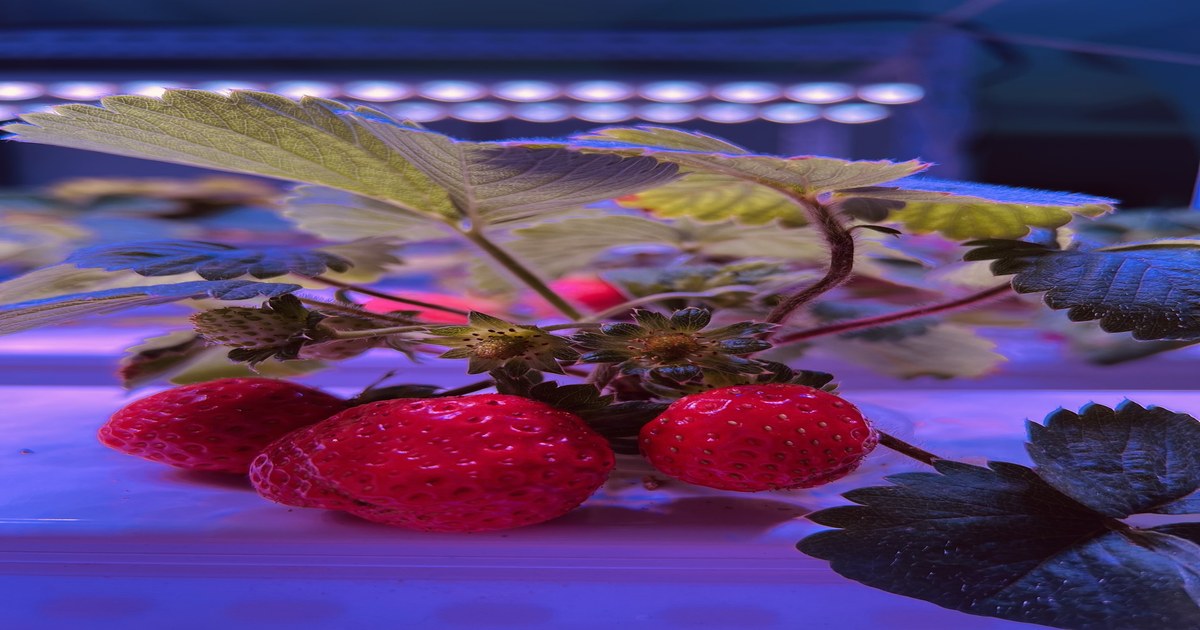
In a typical vertical strawberry setup, growers install one or two GE35-120T-F175 bars per shelf at a hanging distance of 0.2-0.3 meters above the canopy. At 0.2 meters, the GE35-120T-F175 delivers 530 μmol/m²/s, more than enough for fruiting strawberries. The AC120-277V input with power factor greater than 0.9 ensures efficient operation across different electrical systems, while the high PF reduces wasted energy in large-scale installations.
How Many GE35 Bars Do I Need for a Strawberry Shelf?
For a standard 1.2-meter shelf growing strawberries, we recommend installing two GE35-120T-F175 bars side by side. This configuration provides an average PPFD of approximately 400-500 μmol/m²/s across the entire shelf area, with excellent uniformity. Each bar consumes only 60W, so the total energy draw per shelf is just 120W.
If you are growing day-neutral or everbearing strawberry varieties that fruit continuously, this light level supports steady production over many months. For June-bearing varieties that have a concentrated fruiting period, you can increase the photoperiod to 14-16 hours per day to maximize yield during the fruiting window.
What Is the Energy Efficiency of the GE35 for Strawberry Production?
The GE35 series achieves efficacy ratings between 2.5 and 3.5 μmol/J depending on the model and spectrum. To put this in perspective, traditional T5 fluorescent tubes typically deliver 1.0-1.5 μmol/J. Switching from T5 to GE35 means you can produce the same amount of photosynthetic light using 50-60% less electricity.
For a commercial strawberry farm operating 100 shelves with dual GE35 bars, the total lighting power is approximately 12kW. Running 16 hours per day, this costs roughly $5.76 per day at $0.12/kWh, or about $2,100 per year. The same light output from T5 fixtures would require approximately 24kW and cost over $4,200 per year. The GE35 pays for itself in energy savings alone within the first year.
Does the GE35 Produce Excessive Heat for Strawberries?
Strawberries are sensitive to heat, with optimal growing temperatures between 18-25°C. The GE35 series uses high-efficiency LEDs that convert most of their energy into light rather than heat. At 60W power consumption, the GE35-120T-F175 produces minimal radiant heat, allowing you to mount the fixture as close as 0.2 meters above the canopy without risking heat stress to the plants.
The aluminum housing acts as a passive heat sink, dissipating thermal energy efficiently without the need for noisy fans. This passive cooling design also means there are no moving parts to fail, contributing to the GE35’s 50,000-hour rated lifespan. For temperature-sensitive crops like strawberries, this low-heat output is a significant advantage over HPS and even some LED alternatives.
What Certifications Does the GE35 Hold?
The Koray GE35 series carries CE, RoHS, and FCC certifications, ensuring compliance with international safety and electromagnetic compatibility standards. This makes the GE35 suitable for installation in commercial facilities across Europe, North America, and Asia. Koray Lighting, founded in 2009 and based in Zhongshan, Guangdong, holds over 200 patents and exports to more than 60 countries worldwide.
With its combination of high efficacy, full-spectrum output, waterproof design, and versatile form factor, the GE35 series represents one of the most cost-effective and reliable lighting solutions for indoor strawberry cultivation available today.

Leave A Comment